
The contemporary world is passing through a period of global turbulence in which established systems of values are being subjected to serious strain. Under such conditions, society’s fundamental priorities, such as moral, cultural and ideological, acquire particular importance as a spiritual framework capable of preserving social cohesion. The philosophy of values teaches us that values serve not only as personal points of orientation, but also as the collective bonds that hold society together. Classical social thinkers, from Émile Durkheim to Max Weber, emphasised that it is precisely those value norms shared by the majority that shape collective consciousness and ensure social integration. Today, in an age of rapid change, we are witnessing a transformation of mass consciousness–a reassessment of values under the influence of both internal developments and external challenges. Russia is no exception. On the one hand, the country must respond to the challenges of a globalised world: geopolitical instability, cultural competition and the constant flow of information. On the other, it is searching for an ideological synthesis at the national level: an attempt to reconcile traditional spiritual and moral foundations with the demands of the contemporary age. The ‘Russian idea’–a distinctive value code of the people that might serve as a basis for national unity–has long been a subject of discussion in Russia’s intellectual tradition. That search has become particularly acute today. Society seeks to draw upon time-tested ideals of family, justice and patriotism while recognising the need to renew and reinterpret them in the light of twenty-first-century realities. Against this background, it is especially important to understand how proclaimed priority values are reflected in the mass consciousness of Russians: whether they are genuinely rooted in people’s beliefs and behaviour, whether they command equal support across different social groups, and what contradictions accompany their perception. To address these questions, this article offers a sociological analysis of value orientations based on the latest data from 2022–20251. The findings provide an empirical picture of public support for these values and a basis for a philosophical and sociological analysis of how value-based unity can be maintained within the pluralistic and rapidly changing conditions of contemporary society, as well as for identifying the steps required for a successful ideological synthesis in Russia.
Overall Level of Support for Priority Values
The first group–the state, family, patriotism, service and strength–comprises values of a broadly traditionalist character. Taken together, they enjoy the widest support and unquestionably occupy a central place in the value system of Russians: more than 68% identify a strong family as one of the most important values in their lives (see Fig. 1).
SELECT THE VALUES THAT ARE MOST IMPORTANT TO YOU.
YOU MAY SELECT UP TO FIVE ANSWERS.
(closed-ended question, up to five responses; % of all respondents)
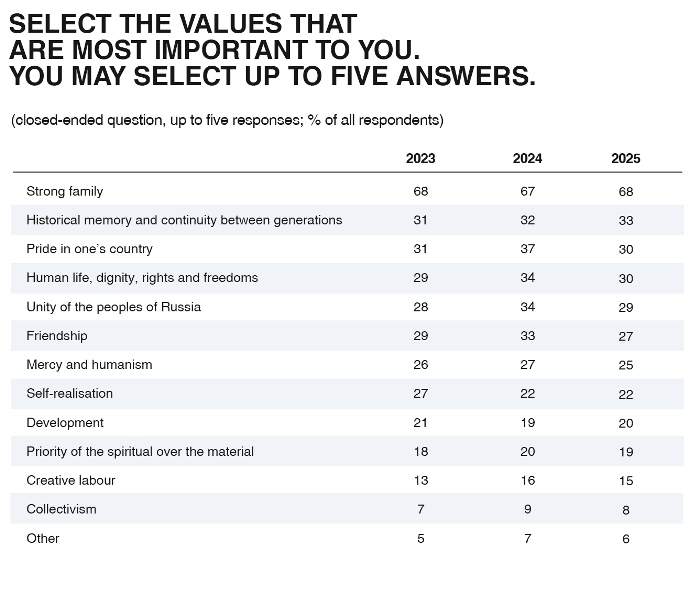
Fig. 12. Traditional Values: Expectations and Reality (VCIOM, 8 July 2025)
Results of a nationwide survey on traditional values. The top three values among Russians are a strong family (68%), historical memory and continuity between generations (33%), and pride in one’s country, together with human rights and freedoms (30% each).
The family is perceived as an indispensable source of support and a ‘safe haven’ in unstable times. In the same VCIOM survey, “Russians’ Most Important Values”, the majority of respondents endorsed the ideal of a close-knit family with children: for 57%, the ideal family is one with children, characterised by love and mutual support3.
Patriotic values are likewise strongly represented. Pride in one’s country ranks among the leading value orientations: around 30–33% of respondents identify pride in their country and historical memory as among their most important values (see Fig. 1)4.
According to a survey conducted for Russia Day in 2025, 80% of respondents agreed that Russia is a great country with a special mission (see Fig. 2).
RUSSIA’S GREATNESS
Do you personally agree or disagree that Russia is a great country that can only be understood by believing in its great destiny?
(closed-ended question, one response; % of all respondents)
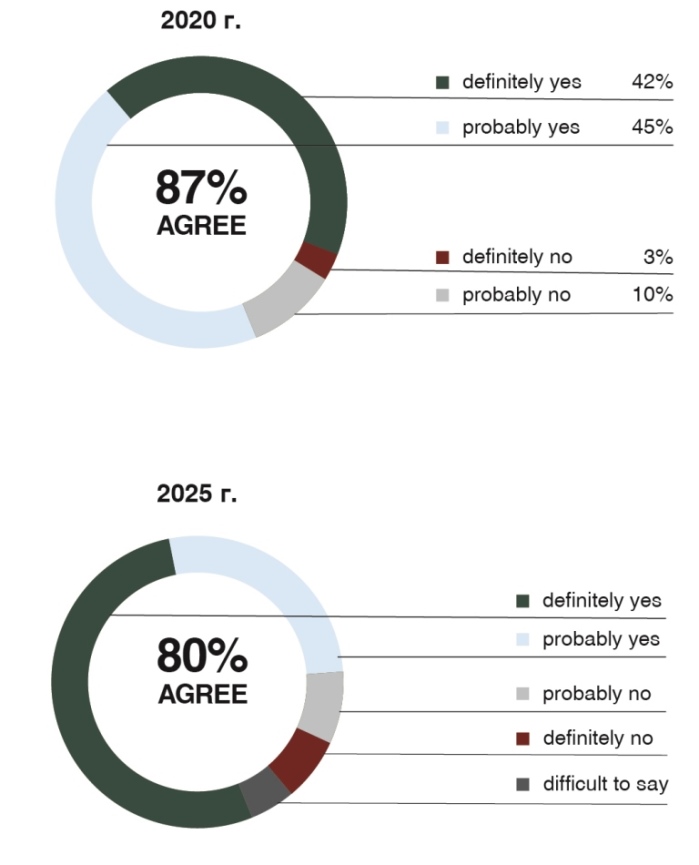
Fig. 25. Russia Day–2025 (VCIOM, 11 June 2025)
Results of a survey of Russians conducted to mark Russia Day. Russia’s greatness: 80% agree that Russia is a great country with a special mission.
The same survey shows that patriotism and the image of the Motherland evoke predominantly positive emotional responses. When respondents were asked what they associated with the word ‘Russia’, patriotism and pride ranked first, cited by 40% of those surveyed (see Fig. 3).
This suggests that the values of patriotism and loyalty to the Motherland are firmly rooted in mass consciousness (see Figs 2 and 3).
In mass consciousness, the idea of strength is often associated with unity and cohesion. According to research into political values, respondents stress that ‘strength lies in unity of views’, while a substantial proportion believe that the emergence of a unifying national idea would bring society together and make the country stronger (see Fig. 4).
Against this background, attitudes in contemporary Russia are noticeably shifting towards the idea of a strong state and an orderly, governable society. Value profiles reveal a preference for the primacy of national legislation and for the state’s role as the principal guarantor of security (see Fig. 5).
Survey data confirm this tendency: 73% of respondents believe that state sovereignty has benefited the country6, 80% trust the armed forces and take pride in their strength, while 69% are prepared to accept personal restrictions for the sake of national defence7. Taken together, these attitudes and indicators point to a high degree of legitimacy accorded to the state’s monopoly on the use of force, the priority attached to security as a key social value, and a sustained public demand for the further strengthening of statehood, sovereignty and social cohesion.
Service to society is a more complex value and does not rank among the personal priorities of the majority. Even so, around a third of Russians (particularly younger people) attach importance to the idea of ‘being useful to others’ and contributing to a common cause (see Fig. 6). Thus, alongside the predominance of personal and family-oriented priorities, a substantial proportion of the population also embraces the value of public duty.
TOP 3 ASSOCIATIONS WITH THE WORD ‘RUSSIA’
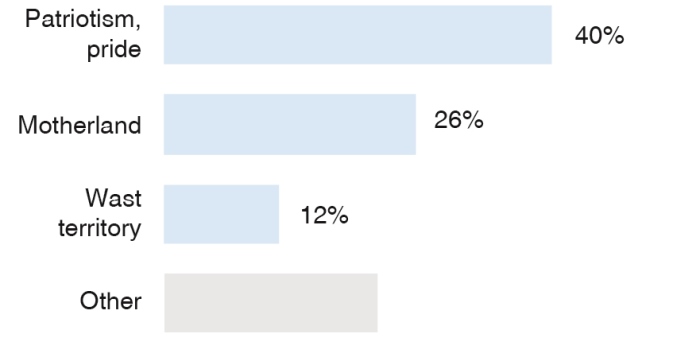
Fig. 38. Russia Day–2025 (VCIOM, 11 June 2025)
Results of a survey of Russians conducted to mark Russia Day. Russia’s greatness: 80% agree that Russia is a great country with a special mission.
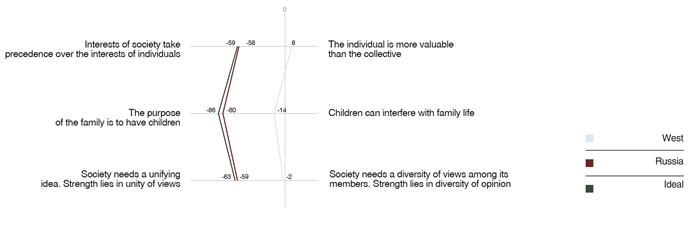
Fig. 49.
Value Profiles: The Ideal, Russia and the West as Seen by Russians (deviation >60%). P. 12 – EON Research Centre, NEW ERA Centre for Humanitarian Technologies Research, 2022
Based on the balance of assessments (blue – ideal, red – Russia, grey – West), Russia’s score of ‘−63’ indicates that the majority of respondents favour the proposition ‘strength lies in unity of views’ over the alternative. Moreover, the gap between the ideal and Russia on this point is minimal. Methodologically, this indicates that the proposition forms part of the ‘core’ of respondents’ understanding of their own normative ideal.
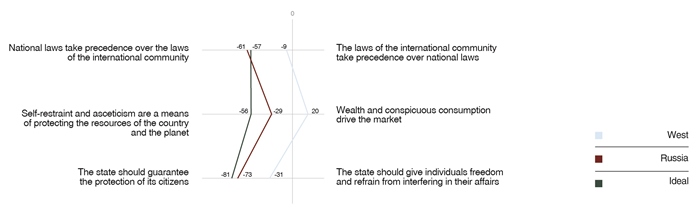
Fig. 510. Value Profiles: The Ideal, Russia and the West as Seen by Russians (deviation 30-60%). P. 13 – EON Research Centre, NEW ERA Centre for Humanitarian Technologies Research, 2022
Based on the balance of assessments (blue – ideal, red – Russia, grey – West), Russia’s scores of ‘−61’ and ‘−73’ indicate that the majority of respondents favour the propositions ‘national laws take precedence over the laws of the international community’ and ‘the state should guarantee the protection of its citizens’ over the respective alternatives. Moreover, the gap between the ideal and Russia on this point is minimal. Methodologically, this indicates that the proposition forms part of the ‘core’ of respondents’ understanding of their own normative ideal.
YOUNG PEOPLE’S VALUES
Question to respondents: ‘How important are the following aspects of your life to you?’
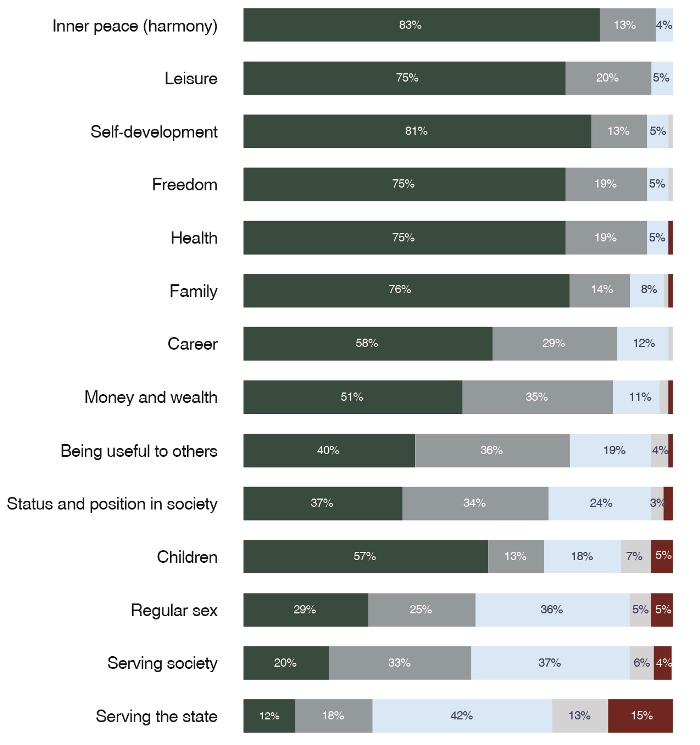
Fig. 611. Young People’s Values. ‘How important are the following aspects of your life to you?’, where dark blue – ‘a top priority’, light blue – ‘rather important’, grey – ‘difficult to say’, pink – ‘rather unimportant’, red – ‘not important at all’. P. 4 – NEW ERA Centre for Humanitarian Technologies Research, 2024
For most of the items at the top of the scale (‘inner peace’, ‘self-development’ and others) the dark-blue segment predominates: a substantial proportion of young people regard them as top priorities. Against this background, values associated with service to society appear more complex and are pushed towards the periphery of young people’s life plans. For ‘serving society’, the dark-blue segment (‘a top priority’) accounts for only around 20%. The importance attached to ‘serving the state’ is lower still: around 12% regard it as an unconditional priority and 18% as ‘rather important’, while almost half of respondents are either uncertain or answer negatively. By contrast, the idea of ‘being useful to others’ resonates much more strongly with young people: 40% select ‘a top priority’ (dark blue), with a further 36% choosing ‘rather important’ (light blue). Taken together, around three quarters of respondents therefore regard this as a value, while explicit rejection is minimal.
Thus, the values in the first group (statehood, family, patriotism, service and strength) enjoy a high degree of legitimacy overall. Family and patriotism occupy the top positions in the value hierarchy; the majority support the idea of a strong state and an orderly society; and a somewhat smaller, though still substantial, proportion embrace the values of service and collective unity.
The second group (agency, justice and solidarity) comprises socio-ethical values that shape the experience of freedom and underpin the social contract. Personal freedom is recognised as a value by Russians, but it is often understood not as political freedom so much as agency–as independence in one’s private life and the right to make one’s own choices. Individual freedom is particularly important to younger generations and urban groups. According to VCIOM’s July survey, around 29% of Russians identify human rights and freedoms as key values, while among those aged 18–24 the importance attached to freedom and self-realisation is noticeably higher than among older age groups (see Fig. 1)12. Thus, the value of freedom/agency understood as agency is clearly present in mass consciousness, particularly among younger people, although it does not outweigh other life priorities. It ranks below family and material well-being, while still remaining an important aspect of personal well-being.
The value of justice is of fundamental importance to Russian society. Ideas of social justice, equality before the law and the eradication of corruption consistently command broad public support. At the same time, empirical evidence shows that understandings of justice are structured in a more complex way. As the findings of a 2025 study of the legal culture of Moscow residents show, at the level of general principles the prevailing view is that the law should be observed strictly by all members of society, that circumventing it is unacceptable, and that laws themselves take precedence over individual notions of justice (see Fig. 7). It is precisely here that a tension emerges between moral justice and legal order. On the one hand, a substantial proportion of citizens are prepared to agree with the proposition that ‘laws may be broken if they contradict common sense and one’s sense of justice.’ On the other hand, this willingness does not negate the broader commitment to the rule of law as a norm. The majority declare that the law should take precedence over private moral intuitions, while simultaneously allowing that legal requirements may need to be adjusted to the circumstances when current law-enforcement practice is perceived as unjust. Justice therefore remains one of the most widely supported and socially mobilising values, but it operates within a field of continuing tension between the demand for strict observance of the law and the perceived legitimacy of departing from it in specific cases where citizens see a gap between the ‘letter’ and the ‘spirit’ of the law.
The value of solidarity and community is likewise understood in somewhat contradictory ways in everyday life. On the one hand, many Russians feel that society currently lacks cohesion. According to survey data, 28% identify the ‘unity of the peoples of Russia’ as an important value (see Fig. 1)13, while 73% believe that caution is necessary in dealing with other people14. More broadly, the perception that society is fragmented is widespread: more than half of the population (56%) believe that those around them are concerned only with their own interests15. These figures point to a deficit of trust and a low level of everyday solidarity. At the same time, almost one in four respondents (24%) said that most people can be trusted–a minority, certainly, but one that nevertheless indicates the existence of a core of social trust16. On the other hand, both historical experience and the sociology of emergencies suggest that Russians are capable of coming together rapidly in the face of an external threat or shared adversity. Research conducted by the EON Research Centre and the NEW ERA Centre for Humanitarian Technologies Research, for example, shows that respondents frequently observe that ‘Russians may appear divided, but in times of danger they can quickly unite’ (see Fig. 8).
This phenomenon of collective mobilisation has also manifested itself in the past (for example, in social cohesion during wartime and mutual assistance in emergencies). Solidarity can therefore be understood as a kind of latent value: in ordinary circumstances Russians tend to focus primarily on family and their immediate social circle, yet the ideal of national unity has not disappeared and may be activated by powerful external circumstances (see Fig. 9).
Here we can see how solidarity is experienced and what forms of meaning it assumes in the consciousness of young people. The focus-group materials presented in Fig. 9 suggest that young people perceive solidarity in at least two distinct modes. The first is solidarity through trial–solidarity as a shared burden, with collective effort understood as a resource for overcoming hardship and ensuring survival. The second is solidarity as choice, or solidarity as protection: images such as Bogatyrs and Minin’s Appeal portray solidarity as a common effort undertaken for the sake of security and the future (see Fig. 9A).
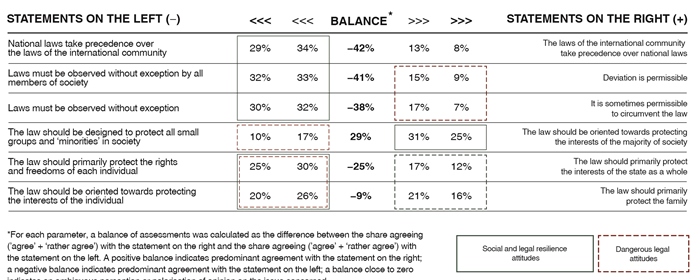
Fig. 717. pp. 6–7. Values Shaping the Foundations of Legal Culture. Conceptual Perceptions of Law and Legal Order (6) / Values Shaping the Foundations of Legal Culture. Law and Law Enforcement (7), where the blue frame denotes ‘social and legal resilience attitudes’ and the red frame denotes ‘dangerous legal attitudes.’
Around 60% of respondents explicitly state that the law must be strictly observed and that any attempt to distort it can be regarded as deceiving the state. Yet the same responses reveal an important discrepancy: around one third of those surveyed acknowledge that using and flexibly interpreting the law ‘in one’s own interests’ is a normal and widespread practice. Just over half tend to regard those who circumvent the law as dishonest, while around 30% describe them instead as ‘clever and resourceful.’
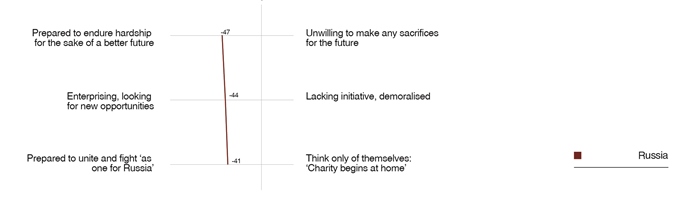
Fig. 818. p. 6. Socio-Psychological Perceptions of the Surrounding Society: Integration or Anomie – EON Research Centre, NEW ERA Centre for Humanitarian Technologies Research, 2022
Based on the balance of assessments (a positive balance for a given parameter indicates predominant agreement with the statement on the right, while a negative balance indicates predominant agreement with the statement on the left), the score of ‘−41’ for the proposition ‘Prepared to unite and fight “as one for Russia”’ indicates that the majority of respondents favour it over the alternative ‘Think only of themselves: “charity begins at home”’.
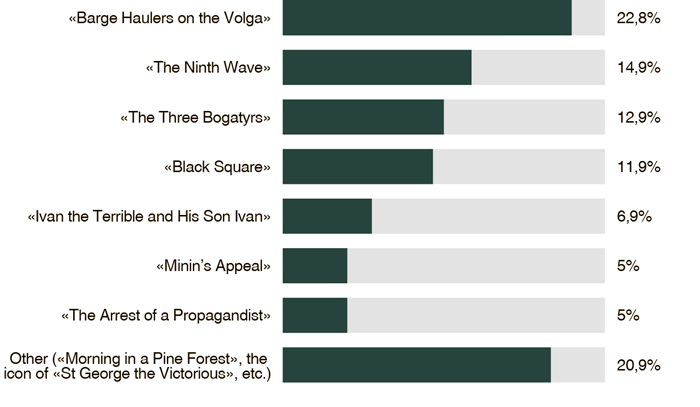
Fig. 919. p. 41: ‘If Russia Today Were a Picture, What Would It Be?’ – “The Image of Russia among Young People”, NEW ERA 2023 (focus-group results, 101 respondents).
The latent character of solidarity as a value is clearly reflected in the findings of the NEW ERA Centre for Humanitarian Technologies Research’s 2023 study. Respondents associated the image of contemporary Russia with paintings such as Barge Haulers on the Volga and Bogatyrs, supporting the proposition that, in conditions of shared adversity, the ideal of solidarity, collective unity and overcoming hardship becomes more salient in the consciousness of young people. The projective responses reveal two modes of solidarity in young people’s perceptions. Barge Haulers on the Volga represents solidarity through trial, i.e. the collective bearing of a common burden, although interpretations here are ambivalent and include such notions as ‘slavery’ and ‘subordination.’ Bogatyrs and other images, by contrast, represent solidarity as choice and solidarity as protection, i.e. voluntary cohesion and collective action for the sake of the country’s security and future. The visual material therefore does not present coercion as a norm; rather, it provides empirical evidence of the tense and ambivalent experience of solidarity both as a value and as a practice.
PROJECTIVE IMAGES (RUSSIA TODAY)
selected markers of solidarity, %
Source: NEW ERA Centre for Humanitarian Technologies Research, “The Image of Russia among Young People”, focus groups (n=101)
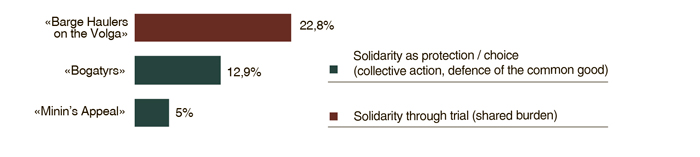
Fig. 9A20. Figure based on p. 41: ‘If Russia Today Were a Picture, What Would It Be?’ – “The Image of Russia among Young People”, NEW ERA 2023 (focus-group results, 101 respondents).
The visual images are used as projective markers and capture different modes of meaning associated with solidarity. Barge Haulers on the Volga represents solidarity as the collective bearing of hardship, whereas Bogatyrs and Minin’s Appeal mark solidarity as voluntary cohesion and collective defence of a shared good.
Crucially, Barge Haulers on the Volga also generates an alternative, critical interpretation that reveals the ambivalence with which solidarity is perceived. It is understood both as a national resource for cohesion in difficult periods and as a potential loss of agency, when the ‘common burden’ is experienced as ‘hopelessness.’ Distinguishing between these meanings provides a more accurate picture of the structure of public attitudes: society retains a strong readiness to unite ‘as one’ for the sake of preserving the country and overcoming external challenges, yet for part of the population the language of everyday solidarity and trust remains problematic and requires further substantive development in the communication of values.
The third group of values (truth, knowledge, good and creativity) describes the spiritual and intellectual core of society in the Russian context. For many Russians, honesty, openness and decency are not merely personal qualities but norms of public life: the aspiration to ‘feel oneself to be an honest and moral person’ is separately identified as an important life goal21. A 2023 VCIOM survey shows that honesty and sincerity are regarded as the principal foundations of trust, while lies and hypocrisy are seen as its main obstacles22. This gives rise to strong expectations of the state: when the authorities speak openly about difficulties, explain their decisions honestly and demonstrate a willingness to share responsibility with society, citizens are more prepared to endure temporary hardships for the sake of the country, while mutual trust is strengthened. In this sense, the value of truth performs a pro-state function: it serves as a resource for national unity and for the moral legitimation of Russian policy.
Knowledge and enlightenment have traditionally been held in high regard in Russian culture. Historically, education, science and intellectual development have been valued as means of both personal and national advancement. In sociological surveys, ‘education and culture’ are often mentioned among important values: for example, among young people’s life priorities, around 71% attach importance to creative self-realisation and education23. Yet in direct rankings of the most important values, knowledge rarely occupies the top positions, yielding to family, health and material success (see Fig. 1)24.
Knowledge and wisdom are, rather, perceived as a fundamental basis for achieving other goals. Nevertheless, within the value cluster considered here, enlightenment, intellectual development and the search for objective truth are all reflected in mass consciousness through the high prestige of education and science, respect for outstanding scientists, and interest in technological progress (see Fig. 10). State rhetoric centred on progress, innovation and the creativity of a ‘knowledge economy’ receives public support and resonates with the belief that advanced technologies benefit society and that development is impossible without knowledge and truth. Returning to the NEW ERA study cited above, we can trace this connection in greater detail (see Fig. 11).
Good and humanism are moral values that Russians commonly include within the notion of ‘traditional values.’ Survey data show that people regard kindness, mercy and respect for others as integral features of the national character. The concepts of conscience, honour and mutual assistance likewise form part of the everyday moral code: 34% believe that religion is needed above all to uphold moral norms, while many non-religious people nevertheless share the values of goodness and compassion on a secular basis25.
The image of Russia as a bearer of spirituality and humanity remains firmly embedded in mass consciousness. It is sustained by classical culture, the literary tradition and contemporary appeals to ‘traditional values.’ In this context, the value of good and moral virtue effectively functions as a widely recognised ethical standard. Practices that appeal to humane principles (helping those in need, charitable initiatives and volunteering) enjoy high levels of public approval and are perceived as a natural continuation of the national ethical tradition. At the same time, society retains a sober and self-critical view of its own condition: despite the declared importance of goodwill towards others, many respondents note a growth in individualistic attitudes26. This does not so much undermine the significance of the ideal as highlight the existence of a continuing value-based task: to narrow the gap between the desired standard and actual social practices.
IF THE IDEAL RUSSIA OF THE FUTURE WERE A BUILDING, WHAT WOULD IT BE?
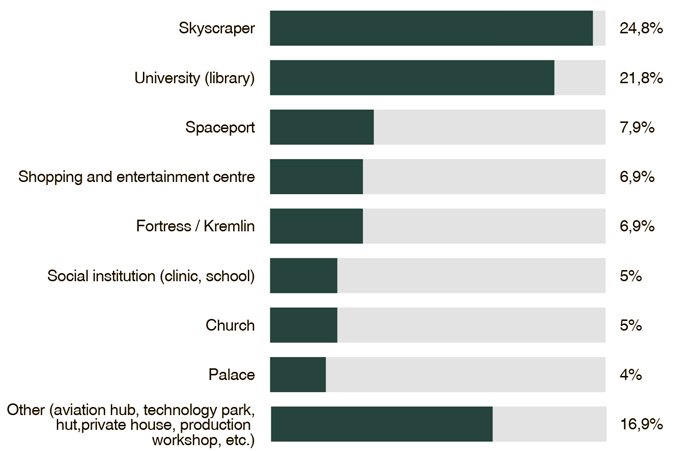
Fig. 1027. p. 69: ‘If the Ideal Russia of the Future Were a Building, What Would It Be?’ – “The Image of Russia among Young People”, NEW ERA Centre for Humanitarian Technologies Research, 2023 (focus-group results, 101 respondents).
In the focus groups, young people associated the ideal image of Russia’s future above all with development, knowledge and progress. ‘Skyscraper’ and ‘University (library)’ ranked highest.
IF THE IDEAL RUSSIA OF THE FUTURE WERE AN INDUSTRY, WHICH WOULD IT BE?
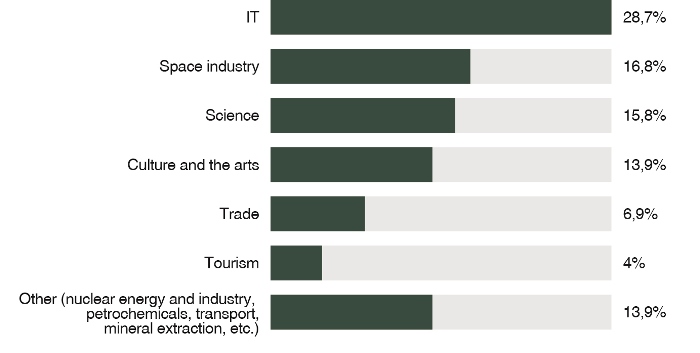
Fig. 1128. P. 67. ‘If the Ideal Russia of the Future Were an Industry, Which Would It Be?’ – “The Image of Russia among Young People”, NEW ERA Centre for Humanitarian Technologies Research, 2023 (focus-group results, 101 respondents).
In the focus groups, the ideal image of Russia’s future was inseparably associated with technological development, enlightenment and creativity.
The value of creativity (constructive labour and creativity) is undergoing a transformation in contemporary Russia. According to survey data,around 15% of respondents today explicitly identify creative labour as one of their key values in life (see Fig. 1)29, forming a stable core of people who adhere to a strong work ethic. Unlike the Soviet period, when the ideal of heroic labour was promoted as a mass cult, younger generations tend to interpret work more through the prism of personal well-being and professional self-realisation. At the same time, creativity in the broader sense (the desire to improve one’s everyday environment, contribute to the country’s development and invest in the future) retains an unequivocally positive status in public consciousness. Support for infrastructure modernisation, participation in volunteer and project-based initiatives, and local forms of civic engagement tend to emerge where people can see a concrete and tangible result.
IF THE IDEAL RUSSIA OF THE FUTURE WERE A SCULPTURE, WHICH WOULD IT BE?
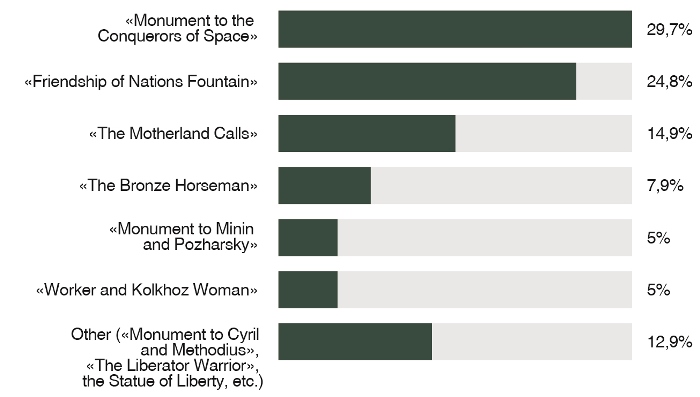
Fig. 12[30. P. 6. ‘If the Ideal Russia of the Future Were a Sculpture, Which Would It Be?’ – “The Image of Russia among Young People”, NEW ERA Centre for Humanitarian Technologies Research, 2023 (focus-group results, 101 respondents).
In the focus groups, the ideal image of Russia’s future was closely associated with the theme of space exploration and with the Monument to the Conquerors of Space. This points to a public demand, particularly among young people, for a ‘great dream’, a shared national goal and collective creativity.
At the same time, public expectations reveal a demand for a ‘great dream’–an image of national development capable of uniting society and allowing individuals to relate their own efforts to the country’s long-term goals. Russians often associate such a vision with space exploration, technological breakthroughs, and the building of a more just and solidaristic society (see Fig. 12)–aspirations traditionally linked in Russia with the values of creative labour and collective effort.
It is through this connection between everyday work and the image of a desired future that the logic of the fourth group of values (openness, faith and all-embracing universality) becomes clearer. As a value concept, all-embracing universality is associated with the idea of a great purpose that unites the people and gives meaning to the country’s existence–a kind of ‘Russian dream’. This is the most difficult of these values to measure sociologically. Explicitly, it appears in the demand for a national idea; indirectly, however, it is present in many orientations that Russians regard as important: the value of a strong family, a just and caring state, respect for history, and service to the Motherland. All of these contain an intuition of shared destiny and a common future, which forms an integral part of the common value space connecting different social groups and regions of the country.
In substantive terms, the fourth group reflects two complementary views of Russia’s place in the world. On the one hand, a significant proportion of citizens see the country as an integral part of a wider civilisation, open to cultural exchange, scientific and technological cooperation, and participation in international projects. For this group, it is natural to see Russia as drawing on the wider world as a resource for development, adopting the best it has to offer while remaining an independent centre of attraction in its own right. On the other hand, an equally visible position emphasises Russia’s distinctive path, its civilisational identity and its right to rely on its own values rather than imported models. Here, sovereignty, the protection of the cultural code and the preservation of traditional ways of life from the homogenising pressures of globalisation come to the fore. The idea of all-embracing universality thus manifests itself both as openness to the world and as concern for the integrity of one’s own civilisation. These two strands converge in the expectation of a strong, respected and responsible Russia that determines the terms of its own participation in global processes. Sociological data suggest that orientations towards openness and towards a distinctive national path are not distributed randomly, but correlate with socio-demographic profiles. Greater openness to the outside world is more often articulated by younger people, the highly educated and representatives of the creative industries, while older and more conservative groups place greater emphasis on traditionalism and relative closure. Yet both positions converge on one broad expectation: Russia should remain a strong, respected and autonomous participant in world affairs, engaging in dialogue on its own terms rather than as a dependent follower. (See Figs 13 and 14.)
Fig. 13 captures an important feature of this group of values: belief in the future is associated primarily with citizens’ own agency and with Russian institutions (the family, education, the state and the armed forces) while external actors, such as assistance from other countries and international organisations, occupy a peripheral position. Openness to the world therefore does not contradict the principle of self-reliance; on the contrary, the two complement one another.
Analytically, this points to a broader expectation that Russia will not only preserve but strengthen its position in the world in the future.
TOP-5
Aspects associated with hopes for a better future, %
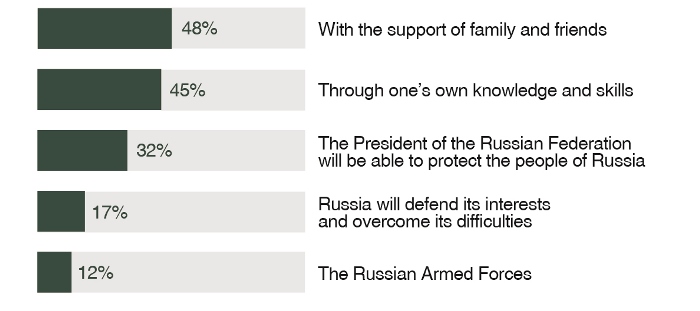
Fig. 1331. P. 7. “Perceptions of the Future and Its Drivers” – EON Research Centre, NEW ERA Centre for Humanitarian Technologies Research, 2022.
The slide shows that the overall emotional outlook towards the future is predominantly positive: 45% of respondents look ahead ‘with hope for improvement,’ while a further 20% do so ‘with optimism, seeing good prospects’; explicitly pessimistic attitudes account for only a small proportion. The main sources of hope are associated with the internal resources of Russian society: support from family and friends (48%), respondents’ own knowledge and skills (45%), and the role of the state, which is protection of the population by the President of the Russian Federation (32%), confidence that Russia will defend its interests and overcome its difficulties (17%), and reliance on the Armed Forces (12%).
POSSIBLE OUTCOMES OF THE CURRENT SITUATION
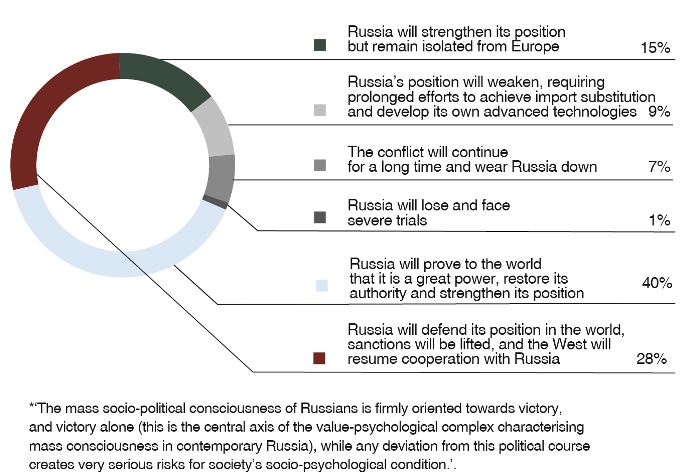
‘The mass socio-political consciousness of Russians is firmly oriented towards victory, and victory alone (this is the central axis of the value-psychological complex characterising mass consciousness in contemporary Russia), while any deviation from this political course creates very serious risks for society’s socio-psychological condition.’
Fig. 1432. P. 8. “Possible Outcomes of the Current Situation” – EON Research Centre, NEW ERA Centre for Humanitarian Technologies Research, 2022.
The slide shows that public perceptions of Russia’s future development are likewise dominated by optimistic and proactive scenarios. For 40% of respondents, the most likely outcome is that Russia will demonstrate to the world its status as a great power, restore its authority and strengthen its position; a further 28% expect the country to defend its interests, sanctions to be lifted and the West to resume cooperation with Russia.
Another 15% believe that Russia will strengthen its position but remain to some extent isolated from Europe. Negative scenarios (a prolonged and exhausting conflict (7%), a weakening of Russia’s position (9%), or Russia’s defeat (1%)) remain marginal.
The differences concern primarily the preferred model of engagement with the outside world, ranging from full integration to more restrained forms of cooperation. It is within this tense yet constructive dialogue between openness and preservation that the contemporary Russian image of the future is taking shape.
Faith and religiosity occupy a distinctive place within this group of values, since they provide a moral framework, sustain continuity between generations and serve as one of the resources of social integration in Russia’s multinational and multiconfessional society. According to VCIOM’s “Religion and Society” monitoring survey33, the majority of Russians identify themselves as believers: 67% of respondents describe themselves as Orthodox Christians, while 7% identify Islam as their religion. Smaller proportions belong to other confessions (1% each for Buddhism and Protestantism, while Catholicism and Judaism account for less than 1% each in this sample). At the same time, 3% describe themselves as believers without belonging to a particular confession, 4% say they waver between belief and unbelief, 11% identify as non-believers, 4% select ‘other’, and 2% find it difficult to answer (see Fig. 15). It is important to stress that these figures record respondents’ self-identification, rather than the extent of their religious practice.
Particular attention is also drawn to growing interest in religion and the Orthodox tradition among those aged 18–24. This suggests that, for the younger generation, religion is not simply a ‘relic of the past,’ but forms part of the search for personal and collective meaning (see Fig. 16)34.
In mass consciousness, Orthodoxy is perceived not only as a confessional affiliation but also as an important element of national culture and the moral code. For a substantial proportion of the population, religion serves as a source of moral guidance, goodwill, mercy and responsibility towards others35. At the same time, Russian society remains secular and multi-ethnic: different religious traditions coexist within it, above all Orthodoxy and Islam, while respect for confessional diversity and the refusal to turn any single religion into a state ideology are regarded as important conditions of social harmony. In practice, the degree of religious involvement may range from regular participation in church life to a predominantly ‘cultural’ religious identity. Nevertheless, a publicly respectful attitude towards faith and religious institutions functions as a widely shared social norm36.
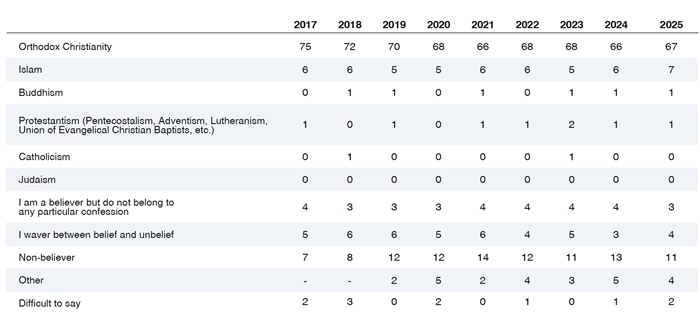
Fig. 1537. Religion and Society: Monitoring (VCIOM, 9 June 2025)
Trends in the religious self-identification of Russians from 2017 to 2025 (question: ‘Which worldview or religion do you consider yourself a follower of?’, (closed-ended question, one response; % of all respondents). Orthodox identity predominated throughout the period (67% in 2025; 75% in 2017), followed by Islam (7% in 2025; 5–6% in previous years) and other confessions, whose shares generally remained within the 0–2% range. In 2025, 11% of respondents identified as non-believers (compared with 7% in 2017); a further 4% said they wavered between belief and unbelief, 3% described themselves as believers without belonging to a particular confession, 4% selected ‘other’, and 2% found it difficult to answer.
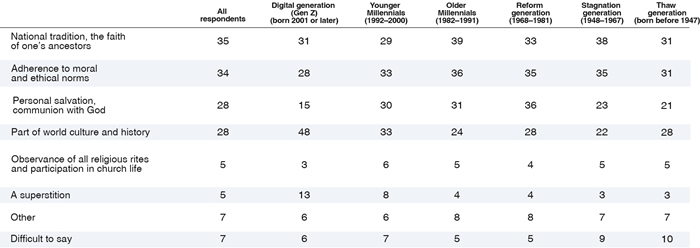
Fig. 1638. “Religion and Society: Monitoring” (VCIOM, 9 June 2025)
Interpretations of the meaning of religion in mass consciousness by generation (question: ‘For you personally, religion is primarily…’, closed-ended question, up to two responses; % of all respondents). The generational profile reveals a marked shift among younger respondents: among Gen Z (born in 2001 or later), religion is much more often understood as part of world culture and history (48%), while the emphasis on personal salvation is weaker (15%), and the proportion who regard religion as a superstition is higher (13%) than among older cohorts (3–4%).
Comparative Support for Values
For a clearer comparison of the level of sociological support for different values and the strength of public demand associated with them, Fig. 17 presents aggregated indicators drawn from the surveys. Comparing the overall level of support for the four broader value clusters, the strength of public demand in relation to particular items, and age differences reveals a key pattern: the more deeply rooted a value is in mass consciousness, the less strongly a perceived deficit in that value tends to be expressed. The items included in the figure should not be understood as literal reproductions of the names of the four clusters, but rather as their empirical manifestations. Thus, the cluster ‘state, family, patriotism, service, strength’ is represented through attitudes towards a strong family, historical memory, the unity of the peoples of Russia and service. The cluster ‘agency, justice, solidarity’ is represented through human rights and freedoms, everyday solidarity, equality before the law and willingness to help others. The cluster ‘truth, knowledge, good, creativity is represented through self-realisation, creative labour, good, and truthfulness on the part of the authorities. Finally, the cluster ‘openness, faith, all-embracing universality and the national idea’ is represented through the preservation of traditional spiritual values, the role of religion, the image of a developed Russia, and the perception of Russia as a great country. The figure therefore captures not a disparate set of value preferences, but a structured system in which each empirical indicator serves as a marker of a broader worldview complex. The most stable position is occupied by the first cluster (‘state, family, patriotism, service, strength’) which predictably emerges as the leading value group across age categories. Its predominance rests on the strong normative self-evidence of the family as a basic form of social stability, the importance of historical memory as a mechanism of intergenerational continuity, the value attached to the unity of the peoples of Russia as a foundation of civic cohesion, and service as a form of participation in a common cause. It is within this cluster that the pattern described above is particularly clear: the comparatively weaker public demand expressed in relation to some of these values does not indicate that they are losing importance. On the contrary, it points to the extent to which they have already been internalised and are perceived as values ‘by default.’ The second cluster (‘agency, justice, solidarity’) is functionally adjacent to the first and complements it. Here, agency is understood as the freedom to make dignified choices; justice as a demand for equality before the law and for a morally legitimate social order; and solidarity as everyday mutual assistance and readiness for collective action. The age differences observed here reflect not a divide in values, but differing generational emphases within a broadly shared Russian normative framework. A somewhat different configuration characterises the third cluster (‘truth, knowledge, good, creativity’). Here, what is most apparent is not so much a deficit in the values themselves as heightened public demand for practical forms through which they can be realised. Self-realisation and creative labour express an orientation towards active participation in the country’s development. Good retains the status of a stable moral constant, while truthfulness on the part of the authorities reflects a high degree of public sensitivity to the correspondence between declared principles and actual practices of governance.
RUSSIA’S VALUE GROUPS: PUBLIC DEMAND
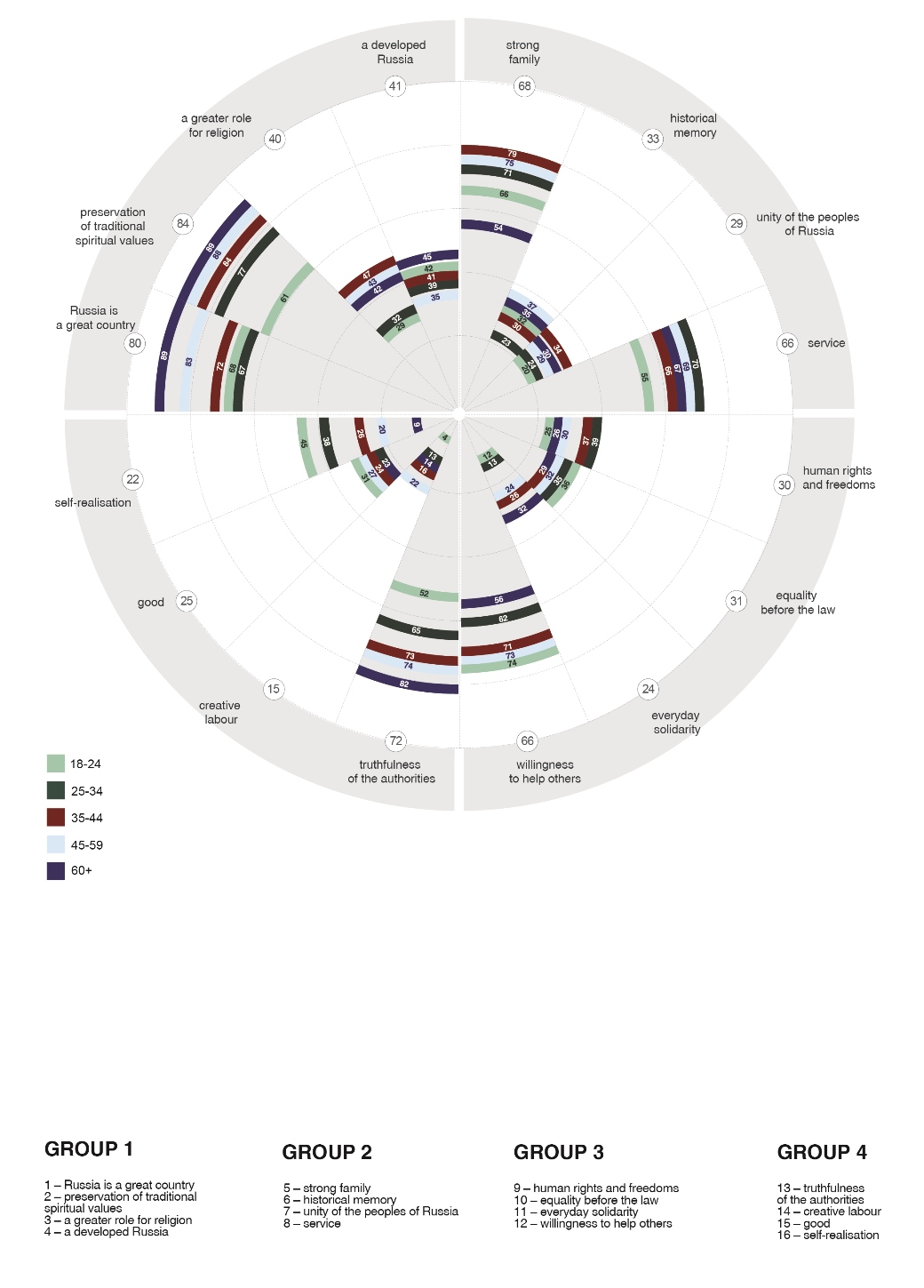
Fig. 1739. Comparative Level of Social Support for Values.
The figure presents the four broad value groups in Russian society analysed in this study. It shows the overall level of public support for each cluster and the proportion of respondents expressing demand for particular value orientations, taking age differences into account. For most indicators, a common generational breakdown is used40. For some indicators, age differences are presented across five age groups: 18–24, 25–34, 35–44, 45–46 and 60+. The first cluster is the clear leader across all age groups. The value of a ‘strong family’ remains central: overall, it is selected by 68% of respondents, while the generational breakdown shows 66% among the digital generation (born in 2001 or later), 71% among younger Millennials (1992–2000), 79% among older Millennials (1982–1991), 75% among the reform generation (1968–1981), 58% among the stagnation generation (1948–1967), and 50% among the Thaw generation (born before 1947). The overall weighting of the value indicators was calculated as the arithmetic mean of the figures aggregated by the gender composition of the sample (not shown in this illustration)41. ‘Historical memory,’ shown in the figure at 33%, follows a similar trajectory, which is likewise reflected in the generational breakdown: 32%, 23%, 30%, 37%, 35% and 34%, respectively42. A similar pattern is seen for the value of the ‘unity of the peoples of Russia,’ at 29% overall: 20%, 24%, 34%, 29%, 30% and 33%, respectively. For further details, see: “Traditional Values: Expectations and Reality”, VCIOM, 8 July 2025. Support for ‘service’ stands at 66% overall, with more even and pronounced levels among the middle and older age groups: 48% among those aged 14–17, 55% among those aged 18–24, 70% among those aged 25–34, 66% among those aged 35–44, 69% among those aged 45–59, and 67% among those aged 60 and over43. Age differentiation is most pronounced in the second and third clusters. ‘Human rights and freedoms’ are selected most often by respondents aged 25–44, with an overall figure of 30%: 25% among the digital generation, 39% among younger Millennials, 37% among older Millennials, 30% among the reform generation, 26% among the stagnation generation, and 22% among the Thaw generation44. ‘Everyday solidarity’ increases with age, with an overall figure of 24%: 12% among those aged 18–24, 13% among those aged 25–34, 26% among those aged 35–44, 24% among those aged 45–59, and 32% among those aged 60 and over45. ‘Equality before the law’ remains stable across all age groups, with an overall figure of 31%: 36% among those aged 18–24, 35% among those aged 25–34, 29% among those aged 35–44, 32% among those aged 45–59, and 29% among those aged 60 and over46. Particular attention should be paid to ‘willingness to help others,’ which stands at 66% overall and remains remarkably stable across age groups: 74%, 62%, 71%, 73% and 56%, respectively47. ‘Self-realisation’ displays an even more pronounced youth profile: 22% overall, but declining across generations from 45% among the digital generation and 38% among younger Millennials to 26% among older Millennials, 20% among the reform generation, 9% among the stagnation generation, and 8% among the Thaw generation48. ‘Creative labour’ shows a moderate profile, at 15% overall: 4% among the digital generation, 13% among younger Millennials, 16% among older Millennials, 22% among the reform generation, 14% among the stagnation generation, and 8% among the Thaw generation. ‘Good,’ by contrast, stands out as a stable moral constant across age groups, with an overall figure of 25%: 31%, 23%, 24%, 27%, 23% and 24%, respectively49. The value of ‘truthfulness on the part of the authorities’ reveals a high level of public demand, at 72% overall: 52% among those aged 18–24, 65% among those aged 25–34, 73% among those aged 35–44, 74% among those aged 45–59, and 82% among those aged 60 and over50. The fourth cluster shows the highest level of public demand. The importance of ‘preserving traditional spiritual values’ is recognised by 84% of Russians overall. By generation, this figure rises from 61% among the digital generation and 77% among younger Millennials to 84% among older Millennials, 88% among the reform generation, 89% among the stagnation generation, and 93% among the Thaw generation51. Demand for a ‘greater role for religion’ likewise increases with age, standing at 40% overall: from 29% among those aged 18–24 and 32% among those aged 25–34 in the two youngest groups to 47% among those aged 35–44, 43% among those aged 45–59, and 42% among those aged 60 and over52. Demand for a ‘developed Russia’ is comparatively moderate and stable, at 41% overall: 42% among the digital generation, 39% among younger Millennials, 41% among older Millennials, 35% among the reform generation, 45% among the stagnation generation, and 44% among the Thaw generation53. Finally, support for the image of ‘Russia as a great country’ is very high, at 80% overall: 68% among the digital generation, 67% among younger Millennials, 72% among older Millennials, 83% among the reform generation, 89% among the stagnation generation, and 89% among the Thaw generation54.
This cluster should therefore be interpreted as a space in which meanings and institutions are still being further developed and consolidated: society does not question the importance of truth, knowledge, good and creativity, but expects them to find more convincing expression in public policy, social organisation and everyday life. The strongest level of public demand is concentrated in the fourth cluster (‘openness, faith, all-embracing universality and the national idea’). Its empirical expression through the preservation of traditional spiritual values, the role of religion, the image of a developed Russia and the perception of Russia as a great country shows that mass consciousness seeks to combine spiritual and moral continuity with the vision of a historically ambitious, future-oriented national project. For older generations, this cluster is more often associated with religious and cultural foundations, tradition and moral order; for younger generations, with development, future prospects and the image of a strong Russia open to the world on its own sovereign terms. In this sense, the generational difference lies not in an opposition between tradition and modernisation, but in different ways of synthesising the two. Overall, the figure shows that the first two clusters form the normative core of Russia’s value consensus, while the third and fourth identify the areas of most intense public expectation, i.e. areas in which the values themselves are already recognised, but still require fuller symbolic and practical realisation.
Demographic and Regional Differences
An analysis of the value orientations of the Russian population shows that, despite the overall stability of fundamental attitudes, there are discernible differences among generations, educational groups and regions of residence. Younger people (broadly, those under the age of 30) generally share the fundamental values of older generations, including attachment to family, pride in their country and an expectation of justice, but are more likely to complement them with an emphasis on self-realisation, mobility and a broader horizon of life opportunities. According to VCIOM, among Russians aged 18–24, family well-being remains an important life goal, but so too are high levels of material and professional success, along with the desire to contribute to society through participation in public life55. In this sense, the younger generation is oriented not so much towards rejecting tradition as towards active engagement and the transformation of reality.
A distinctive feature of younger people’s value orientations is their attempt to combine the traditional with the modern. For most young people, family, friendship, personal dignity and a sense of belonging to their country remain important; at the same time, they emphasise freedom of choice, self-expression and fair ‘rules of the game’ in the public sphere. According to survey data, preserving traditional moral, national and religious values is regarded as important by 54% of Russians aged 18–24 and by 92% of respondents aged over 60. This reflects not a rupture between generations, but a difference in emphasis: younger people are more inclined to prioritise development and change, while older people place greater weight on continuity and stability56. This does not amount to a ‘conflict of generations’: a basic consensus remains around the family, a strong and peaceful Russia, and the idea of justice.
Differences in emphasis and modes of argument are also associated with educational attainment and the degree of engagement with the information environment. Studies of media consumption reveal stable differences between educational groups: respondents with higher education are more likely to obtain news from online publications, social media and Telegram channels, whereas among those with secondary education or below, television is more often the principal source of news (see Fig. 18). This divide is important for interpreting differences in values: a more diverse information environment is more likely to encourage independent comparison of sources and generate demand for procedural transparency: access to information, clear rules and properly functioning institutions. In addition, VCIOM monitoring data show that the Constitution, as the country’s principal ‘code of rights and freedoms,’ is better known among citizens with higher education, which likewise raises the level of attention they pay to institutional guarantees (see Fig. 19). In terms of values, this is more often reflected in the greater importance attached by more highly educated and urbanised groups to self-realisation, interesting work, creative freedom and civic participation.
Less highly educated and rural groups tend to rely more heavily on traditional sources of authority (the family, the local community, and state and religious institutions) and place greater value on the stability of established ways of life and social security. At the same time, both groups attach importance to justice and national dignity, although they interpret them somewhat differently: one places greater emphasis on individual rights and equality before the law, while the other stresses social order, mutual support and the responsibility of the state towards its citizens. Regional differences in values largely reflect Russia’s sheer scale and diversity. Broadly speaking, one may distinguish a more secular and urban culture in the major metropolitan centres from the more traditionally patriarchal culture of many regions with strong family, communal and confessional ties. In large cities, demand is more often expressed for broader civil liberties, transparent institutions and common ‘rules for everyone,’ whereas in smaller towns and rural areas particular importance is attached to stability, social cohesion and respect for state authority. In a number of regions with strong religious and communal traditions, expectations for the future are more optimistic, while larger families and support for older generations are accorded greater importance, helping to sustain moral norms and practices of mutual assistance.
WHICH SOURCES DO YOU MOST OFTEN USE TO GET NEWS AND INFORMATION?
Data as % of each group
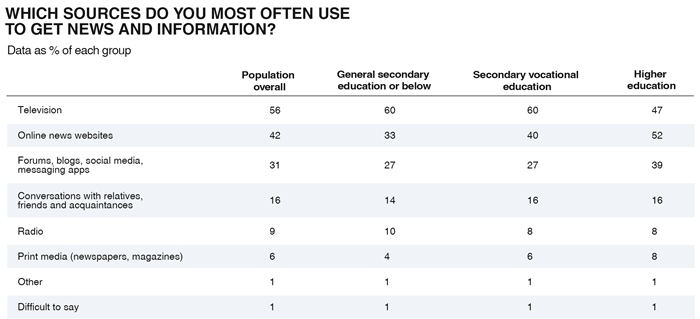
Fig. 1857. ‘Which Sources Do You Most Often Use to Get News and Information?’ (Public Opinion Foundation (FOM), “News Information and Television”, 29 November 2024)
The distribution of responses by educational group reveals a stable pattern of media segmentation. Among respondents with general secondary education or below, television remains the dominant source of news (60%), whereas its role is noticeably smaller among those with higher education (47%). By contrast, respondents with higher education show a stronger orientation towards the digital news environment: 52% use online news websites, compared with 33% among those with general secondary education or below and 40% among those with secondary vocational education; forums, blogs, social media and messaging apps are used by 39%, compared with 27% in each of the two secondary-education groups. Higher education thus functions as a kind of ‘media-mode switch’–from a predominantly television-based agenda to a more diversified digital environment–creating different conditions for the formation of trust, the interpretation of events and the framing of value-based arguments.
HAVE YOU EVER STUDIED THE CONSTITUTION OR FAMILIARISED YOURSELF WITH ANY OF ITS PROVISIONS?
IF SO, WHERE AND UNDER WHAT CIRCUMSTANCES?
(closed-ended question, any number of responses; % of those who know or have some knowledge of the main provisions of the Constitution)
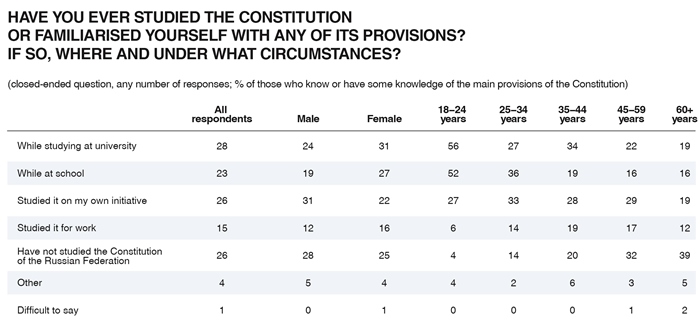
Fig. 1958. ‘Have You Ever Studied the Constitution or Familiarised Yourself with Any of Its Provisions? If So, Where and Under What Circumstances?’ (VCIOM, analytical review “The Constitution and Everyday Life”, 12 December 2023)
The data show that familiarity with the Constitution is acquired through both institutional channels and self-education: 28% of respondents report having studied it ‘while at university,’ 25% ‘while at school,’ 26% ‘on their own initiative,’ and 15% ‘for work.’ At the same time, a substantial proportion report that they have not studied the Constitution at all (26%). The age profile reveals a pronounced asymmetry in legal education. Among those aged 18–24, the share answering that they ‘have not studied the Constitution of the Russian Federation’ is minimal, at 4%, while institutional channels are at their strongest: 56% studied it at university and 52% at school. By contrast, among respondents aged 60 and over, the proportion who have ‘not studied’ the Constitution reaches 39%, while the figures for school-based (16%) and university-based (19%) exposure are considerably lower. Taken together, these findings confirm that educational trajectories and generational change create different ‘thresholds of attention’ to the language of rights, freedoms and institutional guarantees–and, consequently, different styles of value-based argument in public communication.
As a result, it is more accurate to speak not of a divide, but of diverse manifestations of a shared value field. The same fundamental orientations take different forms in different parts of the country. In some places, family values are expressed through large kinship networks and traditional roles; elsewhere, the emphasis falls on meaningful interaction and children’s development within an urban way of life. Patriotism may assume a more state-centred or a more cultural and symbolic form, while religiosity may range from active involvement in church life to a secular respect for ‘spiritual roots.’ Despite these differences, the core values remain shared: family, justice, dignity and pride in the Motherland form the foundation on which Russian society builds diverse paths of development and its vision of the country’s future.
Challenges and Potential for Embedding Values
Sociological data show that fundamental values (family, patriotism, justice and others) enjoy stable and widespread support in Russia. The tensions that emerge are associated less with the rejection of these orientations than with the natural strains experienced by a society undergoing an active process of value consolidation. The gap between declared ideals and everyday practices does not indicate a rejection of these values; rather, it identifies an area in which further work is required.
The diversity of views on openness to the world, the preservation of cultural distinctiveness, the role of religion and different forms of patriotism reflects the structural pluralism of a large multinational country rather than a fundamental divide within it. Essentially, what is at stake is the search for an optimal balance between integration into global processes and the protection of Russia’s own civilisational code. With careful state policy and a well-developed public dialogue, such pluralism can become a resource, making it possible to develop more resilient models, shared by the majority, for combining tradition with modernisation, civic loyalty with freedom of worldview. A critical attitude among some citizens towards the official proponents of the value agenda can be interpreted not as an erosion of the values themselves, but as a demand for higher-quality institutions and for examples of personal responsibility and justice ‘from above.’ If met adequately, high public expectations of the state and elites in matters of justice, honesty and service to society may, on the contrary, strengthen trust and make the value-based course more convincing and legitimate.
The tension between the values of service, solidarity and responsibility towards the country, on the one hand, and the growing emphasis on personal well-being, on the other, is largely shaped by global cultural trends. At the same time, Russian society retains considerable potential for mutual assistance and mobilisation in periods of crisis. The task is not to set the individual and the collective against one another, but to develop a specifically Russian model in which care for the family, health and personal self-realisation is organically combined with a readiness to act in the interests of the Motherland and the common good. The shared importance of such values as truth, good and faith underlines the need to give them substantive and institutional expression in law, education, cultural policy and the media. The debate on ‘traditional values’ and their place in public life that has developed in Russia is already moving in this direction. Under conditions of external pressure and information competition, a clearer articulation of the substance of these values becomes a factor in strengthening cultural and political sovereignty, while reducing the risk of their situational or opportunistic use.
Overall, the challenges identified here suggest that merely proclaiming values is indeed insufficient; yet it is precisely these values that can provide the organising framework for the country’s long-term development. If they are consistently affirmed through real policy decisions, dialogue with different social groups is expanded, and trust in institutions is strengthened, potential risks can be transformed into a resource for modernisation. In this context, Russia’s project of relying on its own spiritual and moral foundations appears not as a defensive reaction, but as a positive strategy for affirming national dignity and a sovereign path of development.
Conclusion
An analysis of the sociological evidence shows that the mass consciousness of Russians is, on the whole, receptive to and firmly supportive of the stated value orientations. A strong family, love of the Motherland, the pursuit of justice, respect for truth, spirituality and compassion are not merely abstract declarations, but attitudes that are genuinely present in society. Traditional values largely coincide with popular priorities: the family remains the principal foundation of life; the majority take pride in their country and its history; they expect honesty and justice from the authorities; and they respond positively to the ideals of good and mutual assistance. The value consensus that has emerged provides a firm basis for social cohesion and creates favourable conditions for the development of a national ideology grounded in Russia’s own civilisational orientations.
The tensions identified in the course of the study do not negate this consensus, but rather indicate areas for further development. Society is not monolithic: on a number of issues, minorities place the emphasis differently, assigning greater importance to personal freedom, comfort, a secular way of life and so forth. The observed gap between high declared support for values and their practical realisation is often connected with socio-economic conditions and historically established practices of governance. Yet this represents less a crisis than a signal that institutions must continue to improve and trust must be restored: citizens expect the stated ideals to be confirmed by concrete decisions on the part of the state and elites.
From a political-philosophical perspective, the current situation may be described as a stage in the evolutionary synthesis of tradition and modernisation. Russian society seeks to rely on fundamental values during a period of external turbulence while simultaneously adapting to a pluralistic modernity, global influences and growing individualisation. Under these conditions, there is a particularly strong demand for the renewal of tradition: to preserve the best of the inherited legacy (family values, patriotism, spirituality and service) while giving it content capable of meeting the challenges of the twenty-first century: a just and effective state, respect for the individual, and openness to knowledge and the world without loss of identity. The task of formulating a national idea incorporates this synthesis: it must be integrative, bringing different value emphases and social groups together around the image of a strong, sovereign and just Russia.
The practical development of the value agenda requires building on the support that already exists while adopting a differentiated approach towards different socio-demographic groups. For younger people, what matters is the language of opportunity, freedom and self-realisation, demonstrating how service to society and the country can become a resource for personal growth and the expansion of one’s horizon of possibilities. For older generations, the emphasis should be on stability and continuity, and on showing that modernisation does not destroy the fundamental foundations of social life, but strengthens and protects them. Values must be given substantive meaning through visible practices: support for families, particularly large families; accessible social infrastructure; a systematic anti-corruption policy; a genuine prioritisation of justice in the judicial system; and encouragement of creative labour and socially significant initiatives. It is equally important to preserve a balance between values and avoid artificial oppositions: freedom does not negate patriotism, spirituality is not opposed to progress, and national identity is compatible with openness to the world and technological development.
A comprehensive approach to the different value clusters appears particularly promising. In the sphere of ‘state, family, patriotism, service, strength,’ the key task is to restore to education and upbringing forms of socially encouraged practice (volunteering, participation in socially significant projects, and school and student self-government) through which values are internalised through personal experience. The ‘agency, justice, solidarity’ cluster requires systematic legal education, support for intercultural dialogue and the development of platforms for public discussion. In the sphere of ‘truth, knowledge, good, creativity,’ media literacy, critical thinking and the creation of accessible spaces for creative, scientific and social projects are essential. Finally, the ‘openness, faith, all-embracing universality’ cluster calls for stronger cooperation between religious organisations, the academic community and civil society, as well as the implementation of long-term national projects involving the broadest possible sections of the population.
Taken together, the proposed measures are intended to make the value agenda concrete and closely connected with people’s everyday experience, thereby narrowing the gap between high levels of declared support for these values and the difficulties involved in putting them into practice. A flexible and targeted, yet strategically coherent, approach makes it possible to accommodate the diversity of Russian society while strengthening rather than undermining the unity of national goals.
In conclusion, the analysis demonstrates that, given the high level of support for the stated values, the key task is their appropriate implementation in information policy, in the systems of education and upbringing, and in the practical actions of the state and civil-society institutions. Whether these values remain declarations or become genuinely meaningful points of orientation for the majority of citizens will depend on how consistently and honestly they are put into practice. This leads directly to the next stage of the research–an analysis of the media environment. It is through the media that values are communicated to mass consciousness on a daily basis, and through the media that they can either strengthen trust and social cohesion or create a sense that their meanings are being distorted.
Notes:
- The present analysis is based on the latest sociological research conducted between 2022 and 2025 by the NEW ERA Centre for Humanitarian Technologies Research, the EON Research Centre and the VCIOM Analytical Centre. Studies by the NEW ERA Centre for Humanitarian Technologies Research include: The Image of Russia among Young People (2023), Young People’s Perceptions of the Family in Russia (2024), and The Problem of Youth Associations and Groups: Youth Communication and Solidarity (2024). NEW ERA Centre for Humanitarian Technologies Research jointly with the EON Research Centre: Contemporary Values and Orientations among Residents of Russia’s Regions (2022). VCIOM Analytical Centre: Traditional Values: Expectations and Reality (8 July 2025), Russia Day–2025 (11 June 2025), Religion and Society: Monitoring (9 June 2025), The Front and the Home Front in the Fourth Year of the Special Military Operation (21 October 2025), Social Justice: Monitoring (7 May 2025), Social Justice: Monitoring (27 February 2024), The Family in the System of Russian Values (22 November 2024); Public Opinion Foundation (FOM): News Information and Television (29 November 2024), Trust in Russia: Monitoring (21 August 2024), Russia Day–2024 (11 June 2024); VCIOM: The Constitution and Everyday Life (12 December 2023), Traditional Values, Contemporary Goals (30 November 2023), ‘We Need to Trust One Another! Or Do We?’ (29 June 2023), Elections in Russia: Participation, Legitimacy and Trust (15 November 2023), Young People’s Values (14 December 2022). Additional unpublished materials: The Socio-Political Situation in Moscow: Security, Anxiety and Protest Sentiment (2024), Prospects for the Development of Communist Ideology: Strengths and Weaknesses of Party-Building (2024), Fostering Tolerance: Risks of National-Ethnic, Religious and Inter-Class Tensions (2024), Legal Culture and Socio-Cultural Communication among Moscow Residents: Political and Electoral Effects (2025), The Social and Communicative Situation in Moscow: Migration Issues (2025), and Socio-Professional Orientations and Employment Strategies among Moscow Youth (2025).
- The nationwide telephone survey ‘VCIOM–Sputnik’ was conducted on 21 June 2025. The survey involved 1,600 Russian respondents aged 18 and over. The survey method was a telephone interview based on a stratified random sample drawn from the complete list of mobile telephone numbers in use within the Russian Federation. At a 95% confidence level, the maximum sampling error does not exceed 2.5%. For further details, see: “Traditional Values: Expectations and Reality”, VCIOM, 8 July 2025. URL: https://wciom.ru/analytical-reviews/analiticheskii-obzor/tradicionnye-cennosti-ozhidanie-i-realnost (accessed 10 November 2025). (Hereafter: VCIOM, 8 July 2025.)
- See: VCIOM Analytical Centre: 8 July 2025.
- See: VCIOM Analytical Centre: 8 July 2025.
- The nationwide telephone survey ‘VCIOM–Sputnik’ was conducted on 25 May 2025. The survey involved 1,600 Russian respondents aged 18 and over. The survey method was a telephone interview based on a stratified random sample drawn from the complete list of mobile telephone numbers in use within the Russian Federation. At a 95% confidence level, the maximum sampling error does not exceed 2.5%. For further details, see: Russia Day–2025, VCIOM, 11 June 2025. URL: https://wciom.ru/analytical-reviews/anaHticheskii-obzor/den-rossii-2025 (accessed 10 November 2025). (Hereafter: VCIOM, 11 June 2025.)
- ‘12 June marks the adoption of the Declaration of State Sovereignty of Russia in 1990, Russia’s Independence Day. In your view, has sovereignty benefited or harmed Russia?’: ‘Definitely benefited’ (2024) – 36%; ‘Probably benefited’ (2024) – 37%. The nationwide telephone survey ‘VCIOM–Sputnik’ was conducted on 31 May 2024. The survey involved 1,600 Russian respondents aged 18 and over. The survey method was a telephone interview based on a stratified random sample drawn from the complete list of mobile telephone numbers in use within the Russian Federation. At a 95% confidence level, the maximum sampling error does not exceed 2.5%. For further details, see: “Russia Day–2024”, VCIOM, 11 June 2024. URL: https://wciom.ru/analytical-revlews/anaHticheskli-obzor/den-rossii-2024 (accessed 20 November 2025). (Hereafter: “Russia Day–2024”, VCIOM, 11 June 2024.)
- ‘Overall, do you trust or distrust the Russian Armed Forces?’ / ‘Would you say that you are proud of the country’s strong armed forces and military power?’ / ‘I feel responsible for my country and am prepared to economise and limit my own needs for the sake of its defence’: ‘Trust’ – 80% / ‘Probably yes’– 80% / ‘Agree’ – 45%, ‘Rather agree’ – 24%. The nationwide telephone survey ‘VCIOM–Sputnik’ was conducted on 15 October 2025. The survey involved 1,600 Russian respondents aged 18 and over. The survey method was a telephone interview based on a stratified random sample drawn from the complete list of mobile telephone numbers in use within the Russian Federation. At a 95% confidence level, the maximum sampling error does not exceed 2.5%. For further details, see: “The Front and the Home Front in the Fourth Year of the Special Military Operation”, VCIOM, 21 October 2025. URL: https://wciom.ru/analytical-reviews/analiticheskii-obzor/front-i-tyl-na-chetvertom-godu-svo (accessed 20 November 2025). (Hereafter: “The Front and the Home Front in the Fourth Year of the Special Military Operation”, VCIOM, 21 October 2025.)
- See: VCIOM Analytical Centre: 11 June 2025.
- . 12. “Value Profiles: The Ideal, Russia and the West as Seen by Russians (deviation >60%).” For each parameter, a balance of assessments was calculated as the difference between the share agreeing (‘agree’ and ‘rather agree’) with the statement on the right and the share agreeing (‘agree’ and ‘rather agree’) with the statement on the left. A positive balance for a given parameter indicates predominant agreement with the statement on the right; a negative balance indicates predominant agreement with the statement on the left; and a balance close to zero indicates an ambiguous perception or polarisation of opinion on the issue concerned (blue – ideal, red – Russia, grey – West). For further details, see: Psychosemantic Study. For further details, see: Psychosemantic Study.Contemporary Values and Orientations among Residents of Russia’s Regions: Socio-Cultural and Socio-Political Choice–2022, EON Research Centre; NEW ERA Centre for Humanitarian Technologies Research, 2022. Data collection method: face-to-face interviews. Data collection instrument: questionnaire. Sample: 3,004 respondents aged 18 and over, permanently registered in the survey areas. Respondents were selected according to gender and age quotas. Data were collected in the Nizhny Novgorod, Novosibirsk and Belgorod regions. p. 12. (Hereafter: EON Research Centre; NEW ERA Centre for Humanitarian Technologies Research, 2022.)
- P. 13. “Value Profiles: The Ideal, Russia and the West as Seen by Russians (deviation 30–60%).” For each parameter, a balance of assessments was calculated as the difference between the share agreeing (‘agree’ and ‘rather agree’) with the statement on the right and the share agreeing (‘agree’ and ‘rather agree’) with the statement on the left. A positive balance for a given parameter indicates predominant agreement with the statement on the right; a negative balance indicates predominant agreement with the statement on the left; and a balance close to zero indicates an ambiguous perception or polarisation of opinion on the issue concerned (blue – ideal, red – Russia, grey – West). For further details, see: Psychosemantic Study. For further details, see: EON Research Centre; NEW ERA Centre for Humanitarian Technologies Research, 2022.
- P. 4. Young People’s Values. Question to respondents: ‘How important are the following aspects of your life to you?’, where dark blue – ‘a top priority’, light blue – ‘rather important’, grey – ‘difficult to say’, pink – ‘rather unimportant’, red – ‘not important at all’. For further details, see: Young People’s Perceptions of the Family in Russia, NEW ERA Centre for Humanitarian Technologies Research, 2024. A study of perceptions of the family and family relationships among young Russians aged 18–35. Method: questionnaire survey. Number of respondents: 2,000 – Moscow (17%), Republic of Khakassia (14%), Stavropol Krai (10%), St Petersburg (8%), Nizhny Novgorod Region (7%), Rostov Region (5%), Tatarstan (5%), and others. (Hereafter: Young People’s Perceptions of the Family in Russia, 2024.)
- See: VCIOM Analytical Centre: 8 July 2025.
- See: VCIOM Analytical Centre: 8 July 2025.
- ‘Do you think that most people can be trusted, or that one should be cautious when dealing with other people?’: ‘One should be cautious when dealing with other people’ – 73% (closed-ended question, one response; % of all respondents). The nationwide telephone survey ‘VCIOM–Sputnik’ was conducted on 28 July 2024. The survey involved 1,600 Russian respondents aged 18 and over. The survey method was a telephone interview based on a stratified random sample drawn from the complete list of mobile telephone numbers in use within the Russian Federation. At a 95% confidence level, the maximum sampling error does not exceed 2.5%. For further details, see: “Trust in Russia: Monitoring”, VCIOM, 21 August 2024. URL: https://wciom.ru/analytical-reviews/analiticheskli-obzor/doverie-v-rossii-monitoring (accessed 10 November 2025). (Hereafter: “Trust in Russia: Monitoring”, VCIOM, 21 August 2024.)
- ‘Do you think that people generally try to be useful to others, or do they think only of themselves?’: ‘They think only of themselves’ – 56% (closed-ended question, one response; % of all respondents). For further details, see: “Trust in Russia: Monitoring”, VCIOM, 21 August 2024.
- ‘Do you think that most people can be trusted, or that one should be cautious when dealing with other people?’: ‘Most people can be trusted’ – 24% (closed-ended question, one response; % of all respondents). For further details, see: “Trust in Russia: Monitoring”, VCIOM, 21 August 2024.
- Pp. 6–7. Values Shaping the Foundations of Legal Culture. Conceptual Perceptions of Law and Legal Order (6) / Values Shaping the Foundations of Legal Culture. Law and Law Enforcement (7), where the blue frame denotes ‘social and legal resilience attitudes’ and the red frame denotes ‘dangerous legal attitudes.’ For each parameter, a balance of assessments was calculated as the difference between the share agreeing (‘agree’ and ‘rather agree’) with the statement on the right and the share agreeing (‘agree’ and ‘rather agree’) with the statement on the left. A positive balance for a given parameter indicates predominant agreement with the statement on the right; a negative balance indicates predominant agreement with the statement on the left; and a balance close to zero indicates an ambiguous perception or polarisation of opinion on the issue concerned. Legal Culture and Socio-Cultural Communication among Moscow Residents: Political and Electoral Effects. 2025. Data collection method: face-to-face interview. Data collection instrument: questionnaire. 6,400 respondents aged 18 and over residing in the territories of 16 State Duma electoral districts in Moscow (under the new constituency boundaries, with no fewer than 400 respondents from each electoral district). Data collection period: 12–29 March 2025 (Hereafter: Legal Culture. 2025.)
- P. 6. Socio-Psychological Perceptions of the Surrounding Society: Integration or Anomie. For each parameter, a balance of assessments was calculated as the difference between the share agreeing (‘agree’ and ‘rather agree’) with the statement on the right and the share agreeing (‘agree’ and ‘rather agree’) with the statement on the left. A positive balance for a given parameter indicates predominant agreement with the statement on the right; a negative balance indicates predominant agreement with the statement on the left; and a balance close to zero indicates an ambiguous perception or polarisation of opinion on the issue concerned (blue – ideal, red – Russia, grey – West). For further details, see: Psychosemantic Study. For further details, see: EON Research Centre; NEW ERA Centre for Humanitarian Technologies Research, 2022.
- P. 41: ‘If Russia Today Were a Picture, What Would It Be?’ For further details, see: “The Image of Russia among Young People”, NEW ERA Centre for Humanitarian Technologies Research, 2023. Focus-group results. Number of respondents: 101. Composition: graduates (30.7%), students (66.3%), young researchers (3%). Gender: male (60.4%) and female (39.6%). Cities: Moscow (55.4%), Chelyabinsk (12.9%), Makhachkala (7.9%), and others. (Hereafter: “The Image of Russia among Young People”, NEW ERA Centre for Humanitarian Technologies Research, 2023.)
- The figure was prepared by the expert authors of the Philosophy Club Russia’s Civilisational Future on the basis of p. 41: ‘If Russia Today Were a Picture, What Would It Be?’ For further details, see: “The Image of Russia among Young People”, NEW ERA Centre for Humanitarian Technologies Research, 2023
- P. 10. “Hierarchy of Human Life Values”. Among the values of self-expression, several are listed, including ‘feeling oneself to be an honest and moral person,’ with a score of ‘14’ shown in grey (grey denotes values of relatively low significance). The highest-ranked self-expression value is ‘having the opportunity to travel and see the world’ (‘26’, dark blue), while the lowest-ranked is ‘engaging in self-development and self-improvement’ (‘10’, red, denoting values of low significance). For further details, see: EON Research Centre; NEW ERA Centre for Humanitarian Technologies Research, 2022.
- ‘What do you think helps to build trust between people?’: the most common response was ‘Honesty, truthfulness, sincerity, openness’ – 24% (open-ended question, any number of responses; % of all respondents; responses mentioned by 2% or more are shown). / ‘And what prevents people from trusting one another?’: the most common response was ‘Lies, deception, hypocrisy’ – 15% (open-ended question, any number of responses; % of all respondents; responses mentioned by 2% or more are shown). The nationwide telephone survey ‘VCIOM–Sputnik’ was conducted on 18 June 2023. The survey involved 1,600 Russian respondents aged 18 and over. The survey method was a telephone interview based on a stratified random sample drawn from the complete list of mobile telephone numbers in use within the Russian Federation. At a 95% confidence level, the maximum sampling error does not exceed 2.5%. For further details, see: “We Need to Trust One Another! Or Do We?”, VCIOM, 29 June 2023. URL: https://wciom.ru/analytical-reviews/analiticheskii-obzor/nuzhno-doverjat-drug-drugu-ili-net? (accessed 10 November 2025). (Hereafter: “We Need to Trust One Another! Or Do We?”, VCIOM, 29 June 2023.)
- ‘Please tell us how important the following aspects of your life are to you’ (closed-ended question, one response for each item; % of all respondents): ‘Opportunities for creative self-realisation’ – 71% ‘rather important’. For further details, see: “Young People’s Values”, VCIOM, 14 December 2022. URL: https://wciom.ru/analytical-reviews/analiticheskii-obzor/cennosti-molodezhi (accessed 10 November 2025). Online survey conducted from 29 June to 8 July 2022. The survey involved 1,592 citizens of the Russian Federation aged 14–35.
- See: VCIOM Analytical Centre: 8 July 2025.
- ‘For you personally, religion is primarily…’: ‘Adherence to moral and ethical norms’ – 34% (closed-ended question, up to two responses; % of all respondents). The most common response was ‘National tradition, the faith of one’s ancestors’ – 35%. For further details, see: “Religion and Society: Monitoring”, VCIOM, 9 June 2025. URL: https://wciom.ru/analytical-reviews/analiticheskii-obzor/religija-i-obshchestvo-monitoring-09062025 (accessed 10 November 2025). The nationwide telephone survey ‘VCIOM–Sputnik’ was conducted on 12 May 2025. The survey involved 1,600 Russian respondents aged 18 and over. The survey method was a telephone interview based on a stratified random sample drawn from the complete list of mobile telephone numbers in use within the Russian Federation. At a 95% confidence level, the maximum sampling error does not exceed 2.5%. (Hereafter: “Religion and Society: Monitoring”, VCIOM, 9 June 2025.)
- ‘Do you think that people generally try to be useful to others, or do they think only of themselves?’: ‘They think only of themselves’ – 56% (closed-ended question, one response; % of all respondents). For further details, see: “Trust in Russia: Monitoring”, VCIOM, 21 August 2024.
- P. 69: ‘If Russia Were a Building, What Would It Be?’ For further details, see: “The Image of Russia among Young People”, NEW ERA Centre for Humanitarian Technologies Research, 2023.
- P. 67: ‘If the Ideal Russia of the Future Were an Industry, Which Would It Be?’ For further details, see: “The Image of Russia among Young People”, NEW ERA Centre for Humanitarian Technologies Research, 2023.
- See: VCIOM Analytical Centre: 8 July 2025.
- P. 6: ‘If the Ideal Russia of the Future Were a Sculpture, Which Would It Be?’ For further details, see: “The Image of Russia among Young People”, NEW ERA Centre for Humanitarian Technologies Research, 2023.
- P. 7. For further details, see: EON Research Centre; NEW ERA Centre for Humanitarian Technologies Research, 2022.
- P. 4 8. For further details, see: EON Research Centre; NEW ERA Centre for Humanitarian Technologies Research, 2022.
- ‘Which worldview or religion do you consider yourself a follower of?’ (closed-ended question, one response; % of all respondents): the most common response was ‘Orthodox Christianity’ – 67% (2025), while, for example, 11% identified as ‘non-believers’ (2025). For further details, see: “Religion and Society: Monitoring”, VCIOM, 9 June 2025.
- ‘For you personally, religion is primarily…’: ‘Part of world culture and history’ – 48% (respondents born in 2001 or later) (closed-ended question, up to two responses; % of all respondents), among other responses; Lyudmila B. Expert commentary on the study findings. For further details, see: “Religion and Society: Monitoring”, VCIOM, 9 June 2025.
- ‘For you personally, religion is primarily…’: ‘Adherence to moral and ethical norms’ – 34% (closed-ended question, up to two responses; % of all respondents), among other responses. For further details, see: “Religion and Society: Monitoring”, VCIOM, 9 June 2025.
- ‘For you personally, religion is primarily…’: ‘National tradition, the faith of one’s ancestors’ – 35%; ‘Part of world culture and history’ – 28% (closed-ended question, up to two responses; % of all respondents), among other responses. For further details, see: “Religion and Society: Monitoring”, VCIOM, 9 June 2025.
- ‘Which worldview or religion do you consider yourself a follower of?’ Methodology: nationwide telephone survey ‘VCIOM–Sputnik’ (12 May 2025; N=1,600; respondents aged 18+; telephone interviews based on a stratified random sample of mobile telephone numbers; data weighted by socio-demographic characteristics; maximum sampling error of 2.5% at a 95% confidence level). For further details, see: “Religion and Society: Monitoring”, VCIOM, 9 June 2025.
- ‘For you personally, religion is primarily…’: Methodology: nationwide telephone survey ‘VCIOM–Sputnik’ (12 May 2025; N=1,600; respondents aged 18+; telephone interviews based on a stratified random sample of mobile telephone numbers; data weighted by socio-demographic characteristics; maximum sampling error of 2.5% at a 95% confidence level). For further details, see: “Religion and Society: Monitoring”, VCIOM, 9 June 2025.
- Illustration by S. A. Spartak, expert author of the Philosophy Club Russia’s Civilisational Future. Data from the 2022–2025 materials used in the present study: NEW ERA Centre for Humanitarian Technologies Research, EON Research Centre, VCIOM Analytical Centre. Studies by the NEW ERA Centre for Humanitarian Technologies Research include: The Image of Russia among Young People (2023), Young People’s Perceptions of the Family in Russia (2024), and The Problem of Youth Associations and Groups: Youth Communication and Solidarity (2024). NEW ERA Centre for Humanitarian Technologies Research jointly with the EON Research Centre: Contemporary Values and Orientations among Residents of Russia’s Regions (2022). VCIOM Analytical Centre: Traditional Values: Expectations and Reality (8 July 2025), Russia Day – 2025 (11 June 2025), Religion and Society: Monitoring (9 June 2025), The Front and the Home Front in the Fourth Year of the Special Military Operation (21 October 2025), The Family in the System of Russian Values (22 November 2024), Trust in Russia: Monitoring (21 August 2024), Russia Day – 2024 (11 June 2024), Traditional Values, Contemporary Goals (30 November 2023), “We Need to Trust One Another! Or Do We?” (29 June 2023), Young People’s Values (14 December 2022).
- Where VCIOM uses a generational model, the digital generation comprises respondents born in 2001 or later (approximately 18–24 years old at the time of the 2025 survey); younger Millennials, those born in 1992–2000 (approximately 25–33); older Millennials, those born in 1982–1991 (34–43); the reform generation, those born in 1968–1981 (44–57); the stagnation generation, those born in 1948–1967 (58–77); and the Thaw generation, respondents born before 1947 (78+).
- For further details, see: “Traditional Values: Expectations and Reality”, VCIOM, 8 July 2025.
- For further details, see: “Traditional Values: Expectations and Reality”, VCIOM, 8 July 2025.
- ‘Why do you think people participate in volunteering and community activities?’: ‘A desire to feel like a useful member of society’ – 66% of all respondents, among other responses, VCIOM. “Volunteering as a Resource for Social Development” 8 December 2025. The nationwide online survey “VCIOM–Online” was conducted on 15–17 November 2025. The survey involved 2,400 Russian respondents aged 14 and over. The survey method was an online survey using a standardised questionnaire administered through the VCIOM–Online probability panel. Panel participants are recruited through the daily nationwide telephone survey “Sputnik”, conducted using a random sample of mobile telephone numbers drawn from the complete list of numbers in use within the Russian Federation. At a 95% confidence level, the maximum sampling error does not exceed 2.5%. For further details, see: “Volunteering as a Resource for Social Development”, VCIOM, 8 December 2025. URL: https://wciom.ru/analytical-reviews/analiticheskii-obzor/volonterstvo-i-dobrovolchestvo-kak-resurs-socialnogo-razvitija (accessed 1 March 2026.) (Hereafter: VCIOM, 8 December 2025.)
- For further details, see: “Traditional Values: Expectations and Reality”, VCIOM, 8 July 2025.
- For further details, see: “Trust in Russia: Monitoring”, VCIOM, 21 August 2024.
- ‘In your view, what does social justice consist in?’: ‘Equality of all before the law’ – 31% of all respondents, among other responses, VCIOM. “Social Justice: Monitoring” 27 February 2024. Nationwide telephone survey ‘VCIOM–Sputnik’. The survey involved 1,600 Russian respondents aged 18 and over. At a 95% confidence level, the maximum sampling error does not exceed 2.5%. For further details, see: “Social Justice: Monitoring”, VCIOM, 27 February 2024. URL: https://wciom.ru/analytical-reviews/analiticheskii-obzor/socialnaja-spravedlivost-monitoring (accessed 1 March 2026.) (Hereafter: VCIOM, 27 February 2024.)
- ‘Would you personally be more willing or more unwilling to volunteer – that is, to help other people or organisations voluntarily and without payment in your free time?’: ‘More willing’ – 66% of all respondents, among other responses, VCIOM. “Volunteering in Russia: Monitoring” 23 July 2025. The nationwide telephone survey ‘VCIOM–Sputnik’ was conducted on 1 June 2025. The survey involved 1,600 Russian respondents aged 18 and over. At a 95% confidence level, the maximum sampling error does not exceed 2.5%. For further details, see: “Volunteering in Russia: Monitoring”, VCIOM, 23 July 2025. URL: https://wciom.ru/analytical-reviews/analiticheskii-obzor/volonterstvo-v-rossii-monitoring (accessed 1 March 2026.) (Hereafter: VCIOM, 23 July 2025.)
- For further details, see: “Traditional Values: Expectations and Reality”, VCIOM, 8 July 2025.
- For further details, see: “Traditional Values: Expectations and Reality”, VCIOM, 8 July 2025.
- ‘Do you think citizens and their associations should or should not exercise greater oversight over the fulfilment by public authorities of their duties and obligations?’: ‘Oversight should be strengthened’ – 72% of all respondents, among other responses, VCIOM. “A Country That Cares” 13 May 2021. The nationwide initiative survey ‘VCIOM–Sputnik’ was conducted on 2 May 2021. The survey involved 1,600 Russian respondents aged 18 and over. At a 95% confidence level, the maximum sampling error does not exceed 2.5%. For further details, see: “A Country That Cares”, VCIOM, 13 May 2021. URL: https://wciom.ru/analytical-reviews/analiticheskii-obzor/strana-neravnodushnykh (accessed 1 March 2026.) (Hereafter: VCIOM, 13 May 2021.)
- For further details, see: “Traditional Values: Expectations and Reality”, VCIOM, 8 July 2025.
- ‘What role does religion play in your life?’: ‘Very important’ and ‘Fairly important’ – 15% and 25%, respectively, among other responses, VCIOM. “Religion and Society: Monitoring” 27 July 2023. The nationwide telephone survey ‘VCIOM–Sputnik’ was conducted on 15 July 2023. The survey involved 1,600 Russian respondents aged 18 and over. At a 95% confidence level, the maximum sampling error does not exceed 2.5%. For further details, see: “Religion and Society: Monitoring”, VCIOM, 27 July 2023. URL: https://wciom.ru/analytical-reviews/analiticheskii-obzor/religija-i-obshchestvo-monitoring (accessed 1 March 2026.) (Hereafter: VCIOM, 27 July 2023.)
- For further details, see: VCIOM Analytical Centre: 11 June 2025.
- For further details, see: VCIOM Analytical Centre: 11 June 2025.
- For further details, see: VCIOM Analytical Centre: 8 July 2025.
- ‘Please, indicate how important it is to you to see the Russia of the future specifically as… a country that has preserved its traditional moral, national and religious values?’ (closed-ended question, one response; % of all respondents; VCIOM–Online, 18–19 March 2023). The age profile shows a steady increase in the importance attached to traditional values with age: among respondents aged 18–24, 54% consider their preservation important (43% consider it unimportant); among those aged 25–34, 62% (34%); among those aged 35–44, 82% (16%); among those aged 45–59, 88% (10%); and among respondents aged 60 and over, 92% (6%). Thus, across all socio-demographic groups, the majority associate the image of Russia’s future with the preservation of traditional moral, national and religious foundations, with a particularly strong emphasis on these values among older generations. For further details, see: “Traditional Values, Contemporary Goals”, VCIOM, 30 November 2023. URL: https://wciom.ru/analytical-reviews/analiticheskii-obzor/tradicionnye-cennosti-sovremennye-celi (accessed 10 November 2025). The nationwide telephone survey ‘VCIOM–Sputnik’ / Nationwide online survey ‘VCIOM–Online’ was conducted on 3 October 2023 / 18–19 March 2023. Each survey involved 1,600 Russian respondents aged 18 and over. At a 95% confidence level, the maximum sampling error does not exceed 2.5%. (Hereafter: “Traditional Values, Contemporary Goals”, VCIOM, 30 November 2023.)
- Which sources do you most often use to get news and information?’ Public Opinion Foundation (FOM). “News Information and Television” 29 November 2024. Based on research conducted by inFOM LLC on behalf of the Public Opinion Foundation as part of the FOM-OM project. The survey involved 1,500 respondents residing in 104 urban and rural settlements across 53 constituent entities of the Russian Federation. Face-to-face interviews were conducted at respondents’ places of residence. The statistical margin of error does not exceed 3.6%. Response shares were rounded to the nearest whole number. For questions allowing respondents to give or select only one answer (including ‘Difficult to say’), the total may differ from 100% by one percentage point due to accumulated rounding error. URL: https://fom.ru/SMI-i-internet/15104 (accessed 7 February 2026). (Hereafter: FOM, 2024.)
- ‘Have You Ever Studied the Constitution or Familiarised Yourself with Any of Its Provisions? ‘If so, where and under what circumstances?’, VCIOM. The Constitution and Everyday Life.
References:
- NEW ERA Centre for Humanitarian Technologies Research. The Image of Russia among Young People. URL: https://new-era.space/center/nir/678/?ysclid=mljnegqnd4900476599 (accessed 7 February 2026).
- NEW ERA Centre for Humanitarian Technologies Research. Young People’s Perceptions of the Family in Russia. URL: https://new-era.space/nir/3013/?ysclid=mljnd3pntl31548338 (accessed 7 February 2026).
- NEW ERA Centre for Humanitarian Technologies Research. The Problem of Youth Associations and Groups: Youth Communication and Solidarity. 2024, URL: https://new-era.space/%D0%AD%D0%94_%D0%9D%D0%AD.pdf(accessed 7 February 2026).
- EON Research Centre; NEW ERA Centre for Humanitarian Technologies Research. Contemporary Values and Orientations among Residents of Russia’s Regions. URL: https:// new-era.space/center/nir/83/?ysclid=mljmvbzb5v958253709 (accessed 7 February 2026).
- “Traditional Values: Expectations and Reality”, VCIOM, 8 July 2025. URL: https://wciom.ru/analytical-reviews/analiticheskii-obzor/tradicionnye-cennosti-ozhidanie-i-realnost (accessed 10 November 2025).
- Russia Day–2025, VCIOM, 11 June 2025. URL: https://wciom.ru/analytical-reviews/analiticheskii-obzor/den-rossii-2025 (accessed 10 November 2025).
- “Religion and Society: Monitoring”, VCIOM, 09 June 2025. URL:https://wciom.ru/analytical-reviews/analiticheskii-obzor/religija-i-obshchestvo-monitoring-09062025 (accessed 10 November 2025).
- “The Front and the Home Front in the Fourth Year of the Special Military Operation”, VCIOM, 21 October 2025. URL:https://wciom.ru/analytical-reviews/analiticheskii-obzor/front-i-tyl-na-chetvertom-godu-svo (accessed 20 November 2025.)
- “Social Justice: Monitoring”, VCIOM. 7 May 2025. URL: https://wciom.ru/analytical-reviews/analiticheskii-obzor/socialnaja-spravedlivost-monitoring-07052025? (accessed 20 November 2025.)
- “Social Justice: Monitoring”, VCIOM. February 2024. URL:https://wciom.ru/analytical-reviews/analiticheskii-obzor/socialnaja-spravedlivost-monitoring? (accessed 20 November 2025.)
- “Trust in Russia: Monitoring”, VCIOM, 21 August 2024. URL: https://wciom.ru/analytical-reviews/analiticheskii-obzor/doverie-v-rossii-monitoring (accessed 10 November 2025).
- “Russia Day–2024”, VCIOM, 11 June 2024. URL: https:// wciom.ru/analytical-reviews/analiticheskii-obzor/den-rossii-2024 (accessed 20 November 2025.)
- The Family in the System of Russian Values”, VCIOM. 22 November 2024. URL: https://wciom.ru/analytical-reviews/analiticheskii-obzor/semja-v-sisteme-rossiiskikh-cennostei?ysclid=mljmtixzrl298252093 (accessed 20 November 2025.)
- “The Constitution and Everyday Life”, VCIOM. 12 December 2023. URL: https://wciom.ru/analytical-reviews/analiticheskii-obzor/konstitucija-i-zhizn (accessed 7 February 2026).
- “Traditional Values, Contemporary Goals”, VCIOM, 30 November 2023. URL: https://wciom.ru/analytical-reviews/analiticheskii- obzor/tradicionnye-cennosti-sovremennye-celi (accessed 10 November 2025).
- “We Need to Trust One Another! Or Do We?”, VCIOM, 29 June 2023. URL: https://wciom.ru/analytical-reviews/analiticheskii-obzor/nuzhno-doverjat-drug-drugu-ili-net? (accessed 10 November 2025).
- “Elections in Russia: Participation, Legitimacy and Trust”, VCIOM. 15 November 2023. URL: https://wciom.ru/analytical-reviews/analiticheskii-obzor/vybory-v-rossii-uchastie-legitimnost-doverie (accessed 15 November 2025.)
- “Young People’s Values”, VCIOM, 14 December 2022. URL: https:// wciom.ru/analytical-reviews/analiticheskii-obzor/cennosti- molodezhi (accessed 10 November 2025).
- “News Information and Television”, Public Opinion Foundation (FOM). 29 November 2024. URL: https://fom.ru/SMI-i-internet/15104 (accessed 7 February 2026).
- The Socio-Political Situation in Moscow: Security, Anxiety and Protest Sentiment. 2024,
- Prospects for the Development of Communist Ideology: Strengths and Weaknesses of Party-Building. 2024,
- Fostering Tolerance: Risks of National-Ethnic, Religious and Interclass Tensions. 2024,
- Legal Culture and Socio-Cultural Communication among Moscow Residents: Political and Electoral Effects. 2025.
- The Socio-Communicative Situation in Moscow: Migration Issues. 2025.
- Socio-Professional Orientations and Employment Strategies of Moscow Youth. 2025.