
In the contemporary Russian media environment, national values function not only as a symbolic ‘language’ through which society describes itself, but also as a practical foundation of social consensus, establishing moral and ideological points of reference and defining the boundaries of permissible interpretations of key events. Against this background, the present article analyses new (digital)1 media–rapidly evolving digital platforms including Telegram channels, social networks and online media outlets. The study focuses on various types of such media: news and author-led Telegram channels; federal, regional and liberal-opposition online media outlets2; information platforms; online communities such as VKontakte and Odnoklassniki; and other sources, including content from previously banned platforms that is taken into account for analytical purposes3. The composition of this dataset makes it possible to identify competing contours of discourse, from the officially institutional to the alternative, without collapsing them into a single averaged picture4.
Methodological Framework and Limitations of the Media Analysis
The empirical basis of this chapter comprises the findings of media studies conducted in 2025 on behalf of the Philosophy Club Russia’s Civilisational Future5. The analysis covers the period from 2020 to 2025 and focuses on the digital segment of the information environment. Key agenda-setting sources within each segment were also tracked, including their platform visibility and, where applicable, audience size. Data collection was based on a system of contextual queries developed iteratively. For each subtopic and thematic strand, unique queries were constructed (separately for online media and social media) on the basis of preliminary monitoring of open sources and the development of working semantic matrices. Test archive extractions were then carried out and the queries refined over several iterations, after which the final set was used to collect data for the specified periods. The analysis combined quantitative methods (assessing the scale of topics, key channels and major news events) with content analysis focusing on subject matter, the author’s position and principal arguments. The basic unit of analysis was an individual publication (a message, post or article) together with its metadata and platform metrics. The principal metrics were: ‘mentions’ (the number of messages returned by the specified query), ‘reach’ (the source’s potential audience according to platform indicators), ‘views’ (where view counters were available), and ‘engagement’ (the combined number of reactions, comments and reposts). At the interpretative stage, similar publications were aggregated into narrative groups: recurring themes were identified on the basis of the frequency of words and stable word combinations, each group was assigned a title, and (separately for each value and each media environment) an evaluative modality.
It is essential to emphasise that this chapter does not interpret the ‘emotional sentiment of an event.’ Instead, it classifies the evaluative position of a message in relation to a particular value according to three modalities: supportive and consolidating (‘positive’)6, critical and problematising (‘negative’)7, and immediate informational and factual (‘neutral’)8. A factual presentation should not, however, be equated with the absence of a value framework: a value component may be present implicitly even in a news report. The proportions of the different modalities therefore primarily capture explicitly expressed evaluative orientation. The findings describe the structure of discourse within the segment of greatest visibility (publications with the highest reach and engagement) and are not intended to substitute for representative sociological measurements, but rather to be compared with them.
New media have become a key instrument for articulating and advancing the public agenda within today’s information environment. In this context, they are also becoming the principal medium through which national values are communicated in digital society, generating positive narratives capable of consolidating society around traditional ideals and the priorities of state policy.
Despite the presence of critical and alternative viewpoints, the media environment as a whole is characterised by the predominance of positive discourses. In new media, the agenda is built around themes of stability, unity, patriotism and the country’s achievements. The state plays a key role in social consolidation: through official spokespersons and initiatives, it sets a consistently positive tone for public discussion, emphasising achievements, moral points of reference and the stability of the chosen course of development. New media largely adopt this tone, becoming a space in which inspiring stories of service to society, scientific breakthroughs, volunteering and constructive endeavour are circulated. The digital media environment thus increasingly performs an integrative function: rather than merely reflecting reality, it constructs an image of a cohesive nation united by shared values and oriented towards the future.
Overview of Value Groups in the Media Environment
Within the Russian media environment, the values of the first group establish the framework of a new patriotic consensus9. In official discourse, they are presented as the essential ‘supporting structures’ of social life: a strong sovereign state and capable armed forces serve as guarantors of security and predictability, while traditional forms of family and communal life provide the basis for intergenerational continuity and trust. Within this logic, patriotism is understood as a natural form of civic responsibility and pride in one’s country, bringing different social groups together around shared historical and cultural points of reference.
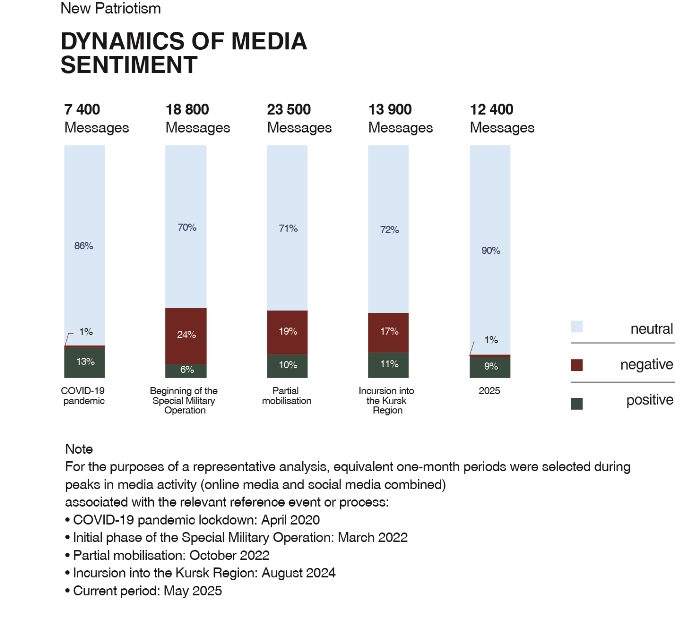
Media-analytical data indicate that this integrative understanding of patriotism occupies the dominant position both in terms of reach and in the overall distribution of sentiment. The core body of content consists of an immediate informational layer (news reports, announcements of events and comments by officials) classified under the descriptive (‘neutral’) modality. Against this background, periods of major social challenge intensify competition between consolidating narratives (‘positive’), which support a value framework centred on responsibility and solidarity, and critical (‘negative’) narratives, including subversive interpretations. Supportive interpretations nevertheless consistently outnumber critical ones, while during peak moments in the news cycle the proportion of positive mentions rises noticeably (see Fig. 1)10.
New Patriotism
DYNAMICS OF MEDIA SENTIMENT
Note
For the purposes of a representative analysis, equivalent one-month periods were selected during peaks in media activity (online media and social media combined) associated with the relevant reference event or process:
- COVID-19 pandemic lockdown: April 2020
- Initial phase of the Special Military Operation: March 2022
- Partial mobilisation: October 2022
- Incursion into the Kursk Region: August 2024
- Current period: May 2025
Fig. 1. Dynamics of Media Sentiment on the Theme of ‘New Patriotism’ (2020–2025).
For each period, the figure shows the total number of messages and the proportion of publications in each of the three modalities: supportive (‘positive’), critical and problematising (‘negative’), and immediate informational and factual (‘neutral’). The data reflect not an ‘assessment of the events themselves11’, but the structure of value-based discourse on patriotism within the media environment. The predominance of factual content (70–90%) is attributable to the prevalence of breaking news, news summaries and informational reports and does not imply an absence of public response. During periods of crisis, the proportion of evaluative publications, both supportive and critical, increases: in August 2024, for example, they accounted for a combined 28% of the total, compared with around 10% in the current period in 2025.
Critical platforms, both Russian and foreign, offer an alternative reading of these same values, interpreting the intensification of patriotic rhetoric as carrying a risk of ‘ideologisation’ and excessive mobilisation. Yet, first, this counter-narrative is concentrated within a limited pool of sources and, second, it functions more as a background for critical reflection than as the dominant interpretative lens. Taken as a whole, media coverage of patriotism displays a predominantly neutral-to-positive balance, in which statehood and service to the Motherland function not as situational markers of conflict but as resources for consolidation, particularly during periods of external and internal crisis.
The official agenda surrounding the second group of values follows a similar logic, although its configuration is more complex. Freedom is presented primarily as a collective good inseparable from sovereignty and security. This does not imply a rejection of individual rights, but rather their exercise within a stable legal order and under conditions in which the country is protected from external pressure and terrorism. Since 2022, the emphasis on the balance between ‘freedom and security’ has predictably become stronger: regulation of the digital environment, restrictions on hostile platforms and tighter controls are presented as necessary measures designed to protect citizens and critical infrastructure. At the same time, within the positive segment of the media environment, freedom is consistently embedded within a framework of responsibility and participation through a narrative of ‘freedom through service and order,’ in which personal choice is exercised through socially significant practices such as volunteering, work on state projects, participation in elections and referendums, and so forth.
Justice is presented in official discourse as a sphere of state responsibility towards its citizens. Positive narratives focus on mechanisms of social support, efforts to combat corruption at regional and federal levels, the protection of historical truth, and special support for participants in the Special Military Operation and their families. In this sense, justice is conceived not as an abstract ideal but as a set of concrete policies, from the indexation of benefits to the personal accountability of public officials. Alternative platforms, by contrast, emphasise particular failures and instances of inequality, thereby indirectly confirming that justice itself has become a key criterion by which the effectiveness of institutions is judged.
In state rhetoric, the value of solidarity is associated with support for the armed forces, a well-developed charitable and volunteering infrastructure, and the mobilisation of society in response to external challenges and major crises: the pandemic, terrorism and natural disasters. The media consistently give visibility to grassroots practices of mutual assistance, ranging from targeted support for the families of mobilised servicemen to local civic initiatives. This makes it possible to present solidarity as a sphere in which citizen initiative meets the coordinating role of the state. Critical discourse, present in some independent media, more often draws attention to the risks of the ‘formalisation’ of solidarity or to individual cases in which assistance has proved insufficient. At the same time, it also records the resilience of horizontal forms of mutual support, thereby broadening rather than negating the substantive meaning of this value (see Fig. 2)12.
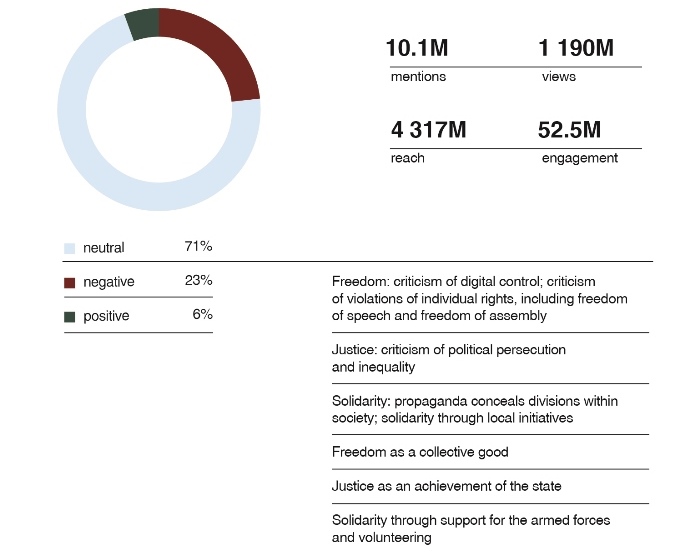
Fig. 2. Sentiment Structure and Key Narratives Concerning the Values of Freedom, Justice and Solidarity (2020–2025)
The diagram summarises the sentiment of references to the values of ‘Freedom/agency,’ ‘Justice’ and ‘Solidarity/Community’ in Russian media outlets, Telegram channels and social networks between 2020 and 2025. Neutral messages (light-grey sector) account for 71% of the total, negative messages (red sector) for 23%, and positive messages (dark-green sector) for 6%. The text accompanying the diagram identifies the principal thematic emphases. In official discourse, freedom is interpreted as a collective good inseparably linked to state security and sovereignty; justice as an achievement of the state, realised through social policy, support for vulnerable groups and anti-corruption measures; and solidarity as support for the armed forces and the development of volunteer initiatives. In the alternative segment of the media environment, critical narratives are also present: in relation to freedom, these focus on digital control and violations of individual rights, including freedom of speech and assembly; in relation to justice, on political persecution and social inequality; and in relation to solidarity, on its interpretation as a propaganda resource or, alternatively, on a shift of emphasis towards grassroots local initiatives. The proportions represented in the diagram show that, despite the presence of a substantial critical layer, the majority of messages remain neutral, while officially articulated positive interpretations of these values are consistently reproduced in the media environment, providing the framework within which narrower polemical debates take place.
Taken together, media data on the three values in the second group demonstrate the sustained predominance of neutral and moderately positive sentiment. The summary slide “Key Narratives across All Values” shows that 71% of messages are neutral in character, consisting primarily of news and analytical content; 23% are negative; and 6% are explicitly positive. Such a structure is typical of large information datasets and suggests that the fundamental values of freedom, justice and solidarity remain part of the normal, ‘working’ agenda around which expert and public dialogue takes place, rather than being discussed solely in the context of conflict.
At the same time, overall media statistics for 2020–2025 record more than 10.1 million mentions of these three values, with a combined potential reach exceeding 4.3 billion and around 1.19 billion views, demonstrating how firmly embedded they are in the information fabric of Russian media (see Fig. 3)13.
DYNAMICS OF MENTIONS
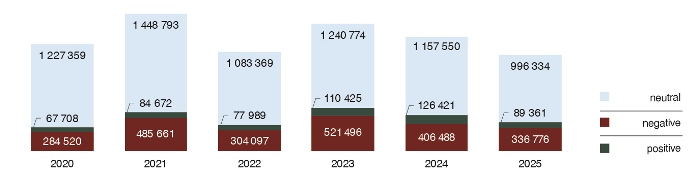
Fig. 3. Dynamics of Mentions of the Values of Freedom, Justice and Solidarity in Russian Media (2020–2025).
The figure shows that the volume of messages relating to these values remains high throughout the period, with individual peaks in 2021, 2023 and 2024 coinciding with major political developments and periods of crisis. The bottom of the slide presents the aggregate indicators: more than 10.1 million mentions, over 4.317 billion in potential reach, around 1.19 billion views and 52.5 million engagement actions, including reactions, comments and reposts. Fig. 3 can therefore serve as an empirical basis for the argument that the values of freedom, justice and solidarity are not peripheral themes, but form one of the central ‘frameworks’ of Russian media discourse in 2020–2025.
Between 2020 and 2025, the values of the third group gradually come to form the moral and ideological framework of the Russian media environment. Over the course of several years, they have been incorporated into a broader strategy aimed at strengthening national sovereignty in the informational, scientific, educational and humanitarian spheres. In public communication, these values become not only subjects of discussion but also instruments for consolidating society around a vision of Russia’s future.
During this period, the value of truth evolves from a predominantly abstract concept into a practical resource of information security. Under conditions of external pressure, the Russian authorities place increasing emphasis on the ‘struggle for truth’ as a response to disinformation campaigns and as an element of patriotic mobilisation. Official media systematically work to expose fake news, showing audiences the mechanisms of information attacks and emphasising the connection between truth and the defence of the country and its historical course. This strengthens public demand for information that can be checked and verified, making credibility a central issue in a significant proportion of media debate. At the same time, growing critical awareness and scepticism among part of the audience may be interpreted not as a ‘devaluation of truth,’ but as a natural consequence of a maturing information society and heightened sensitivity to manipulation of any kind. Media-monitoring data show sustained interest in this value and an increase in positive mentions across different types of platforms (see Figs. 4–6)14.
The value of knowledge fits naturally within the concept of scientific and technological sovereignty. In pro-government media, it is linked to the objectives of accelerating the development of Russian science, achieving technological independence, pursuing import substitution and introducing domestic solutions in artificial intelligence and advanced technologies. By 2025, knowledge has become firmly established in public discourse as a strategic resource and one of the principal foundations of national independence. Critical interpretations found in some independent sources generally focus not on rejecting the value itself, but on the risks of excessive ideologisation in education and on the gap between ambitious policy objectives and actual practice. Such assessments create a productive space for expert discussion and point to strong public expectations regarding the quality of governance in education, without calling into question the importance of knowledge as a foundation for the country’s development. The value of good, understood as compassion and benevolence, receives renewed impetus during the pandemic and the crises that follow. The widespread development of volunteering, mutual assistance and local initiatives demonstrates a high level of solidarity within Russian society. The state, for its part, seeks to institutionalise this potential by creating infrastructure for volunteering, targeted support programmes, and projects assisting the armed forces, servicemen’s families, refugees and others. Since 2022, particular emphasis has been placed on the idea that ‘good deeds’ are not episodic acts, but part of a sustained patriotic way of life. Sceptical assessments found in some independent commentary (concerning the sincerity of motivations or the extent of state involvement) testify to close public attention to questions of social justice. Overall, however, the predominant orientation is towards recognising good as one of the key foundations uniting citizens in difficult historical circumstances.
The value of creativity has traditionally occupied a central place in official Russian discourse and acquires additional substantive content during the period under consideration. The media systematically present major infrastructure projects, industrial modernisation, the development of transport and social infrastructure, and the reconstruction and integration of the new regions, including within the framework of long-term development.
Media
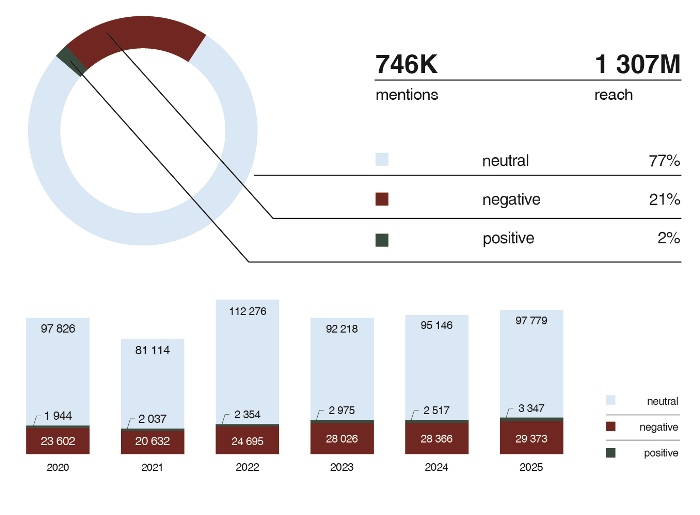
Fig. 4. Online Media: Dynamics of Sentiment in Mentions of the Value of Truth (2020–2025).
TELEGRAM
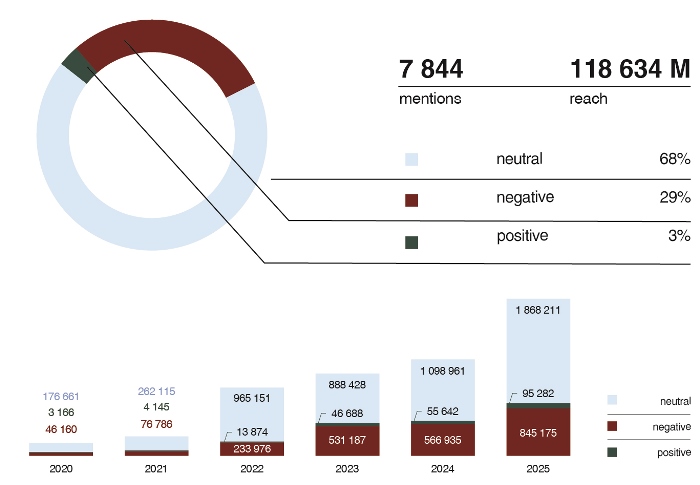
Fig. 5. Telegram Channels: Dynamics of Sentiment in Mentions of the Value of Truth (2020–2025).
SOCIAL MEDIA
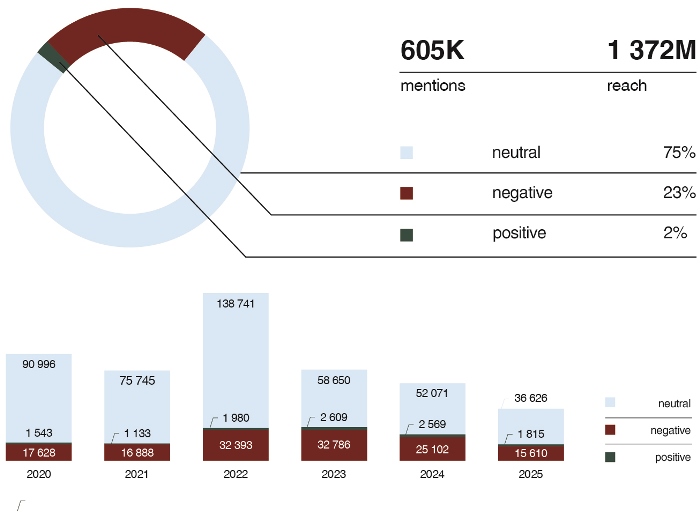
Fig. 6. Social Media: Dynamics of Sentiment in Mentions of the Value of Truth (2020–2025).
The infographic consists of two sections. The upper section presents aggregate indicators for online media, Telegram and social media over the period 2020–2025. The lower section shows monthly dynamics broken down by year (2020–2025) in the form of stacked bar charts. Online media display a moderately fluctuating pattern in the overall volume of discussion, alongside a steady increase in the number of positive mentions and some growth in the share of polemical and critical content, reflecting the increasing complexity of the information agenda. The Telegram chart records a sharp rise both in the overall number of mentions and in the positive segment, particularly after 2022, indicating Telegram’s growing role in shaping and defending ‘its own truth’ under conditions of external pressure. Activity on social media peaks in 2022, followed by a decline in the overall volume of discussion, while the number of positive mentions remains comparatively high. This may indicate a shift from an initial surge of emotional reactions towards a more reflective discussion of the value of truth within established communities.
ONLINE MEDIA. POSITIVE
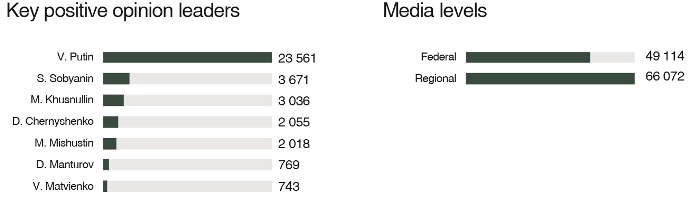
Fig. 7. Positive Narratives Concerning the Value of ‘Creativity’ in Online Media (2020–2025).
The first part of the figure presents a ranking of the principal positive opinion leaders associated with the theme of creativity. This reflects the personification of the narrative of constructive development around the federal leadership and officials responsible for infrastructure and economic development. The second part shows the distribution of publications by media level. The predominance of regional media underscores the practical dimension of the value of creativity, linking it to specific projects implemented ‘on the ground.’
After 2022, the emphasis shifts from the romantic imagery of ‘great construction projects’ towards the pragmatics of tangible results: achievements in import substitution, technological and food security, and the strengthening of defence capabilities are highlighted as direct outcomes of the constructive labour of millions of people (see Fig. 7)15. Critical statements found in opposition and foreign sources, addressing individual problematic cases such as corruption scandals or prolonged construction projects, do not, taken together, displace the normative ideal of labour ‘for the common cause’ that dominates the Russian media environment. On the contrary, the very debate over the quality of project implementation attests to the high importance attached to the value of creativity and to society’s desire to see the results of national development delivered as transparently as possible and distributed fairly.
Taken as a whole, the values of the third group appear in the Russian media environment not only as objects of ideological competition, but also as a space in which a collective vision of the country’s future is negotiated. The state seeks to give these values a stable institutional form through prizes and competitions devoted to truth, educational marathons organised by the Znanie Society, federal and regional volunteer programmes, and large-scale development projects, while society, through open discussion, refines the meaning of these values and the practical outcomes expected from them.
In 2020, the values of the fourth group moved to the forefront against the background of growing foreign-policy pressure. ‘Openness,’ previously understood primarily as a willingness to engage in dialogue with any partner, had by 2025 become established in public rhetoric as ‘sovereign openness’–a readiness to cooperate provided that national interests are fully respected and the key parameters of interaction remain under national control. Following the effective rupture with the collective West, the official agenda increasingly emphasises a turn towards the East and the Global South: partnerships with China, India, the BRICS countries, the EAEU and other non-Western centres of power are presented as a natural expansion of opportunities for mutually beneficial cooperation and as a contribution to strengthening a multipolar world, whereas the previous course of one-sided integration with the West is portrayed as having insufficiently taken Russia’s long-term interests into account (see Fig. 8)16.
In domestic politics, the emphasis shifts towards ‘internal openness’–the development of channels for direct feedback between the state and citizens. Public councils, direct-line broadcasts with the country’s leadership, and the expansion of digital services enabling participation in decision-making are presented as mechanisms for building dialogue between the authorities and society in a managed yet more transparent format. Here, openness is understood as a resource of resilience: the authorities seek to combine greater public visibility with responsibility for preserving the integrity of the state and preventing external manipulation of public opinion.
The value of faith likewise undergoes a noticeable evolution in the public sphere. In 2020, religious themes become more prominent in connection with discussions of the constitutional amendments and the completion of the Main Cathedral of the Russian Armed Forces. During this period, faith is actively framed as part of the historical and cultural foundations of statehood, which is reflected in the growing number of media mentions. In subsequent years, from 2022 to 2025, the discourse becomes more balanced: religion is increasingly established as a personal and cultural value supporting moral orientations and social solidarity, while direct political appeals to religious imagery recede into the background (see Fig. 9)17. At the same time, the media consistently emphasise the constructive role of traditional religious confessions in strengthening interethnic harmony and sustaining the moral foundations of public life.
The value of all-embracing universality understood in terms of scale and historical and spatial integrity is expressed through themes of great-power status, continuity and long-term development. In 2020–2021, the official agenda concentrates on symbols of historical scale: anniversaries of the Victory, the space programme, and major infrastructure and scientific-technological initiatives, constructing an image of Russia as a state capable of thinking in terms of decades and generations. Following the beginning of the Special Military Operation, the emphasis shifts towards mobilising domestic resources and relying on the country’s own scientific and technological potential. By 2025, the concept of all-embracing universality acquires a more practical dimension: national projects, space and transport corridors, and infrastructure development in the Arctic and the Far East are brought to the fore, all of them are concrete projects that bind the country’s territory together and integrate it into the emerging non-Western centres of growth18.
At the same time, public discussion also reveals a growing plurality of interpretations. For a significant part of society, the narrative of a ‘great power’ is naturally combined with demand for a ‘decent everyday life’ and improvements in the quality of public services; critical voices generally raise the question of how to balance the scale of national ambitions with the allocation of resources. Nevertheless, the ideas of historical continuity and all-embracing development remain the overarching framework of the dominant discourse, defining a horizon of the future in which Russia’s geopolitical agency is linked to the development of human potential within the country.
TELEGRAM. POSITIVE
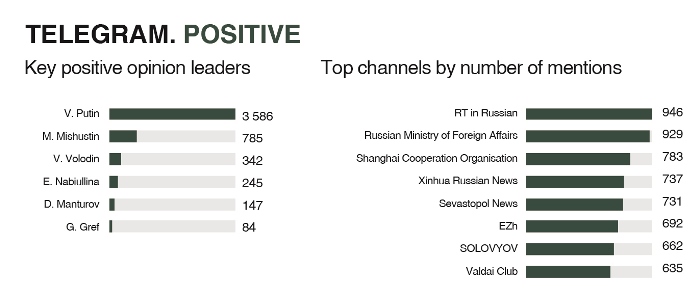
Fig. 819. Telegram: Positive Narratives Concerning the Value of ‘Openness’ (2020–2025).
The first part of the figure presents a ranking of the key positive opinion leaders in the Telegram agenda. The second part shows the leading Telegram channels by number of positive mentions of the value of openness.
Media
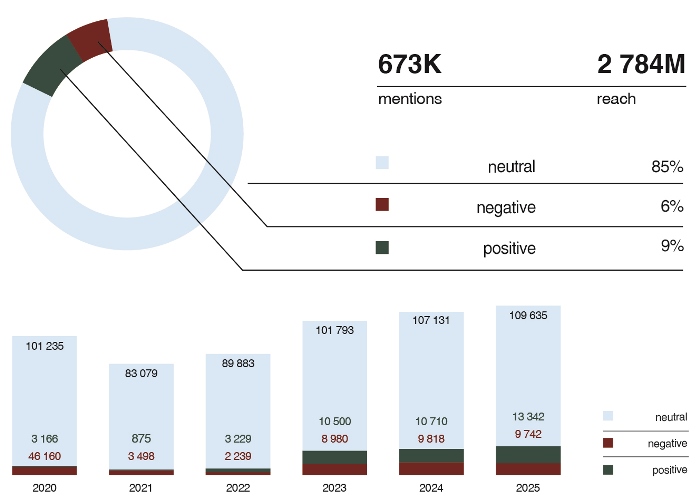
Fig. 9. Sentiment of Mentions of the Value of ‘Faith’ in Online Media (2020–2025).
The upper part of the figure presents the aggregate sentiment structure: in the pie chart, 85% of mentions are neutral, 9% positive and 6% negative. The aggregate figures for the period are shown on the left: 673,000 mentions with a combined reach of 2.784 billion contacts. The lower part contains a bar chart showing annual dynamics. In 2020, 101,235 mentions were recorded, including 1,089 positive and 6,531 negative mentions; in 2021, 83,079 mentions (875 positive and 3,498 negative); in 2022, 89,883 mentions (3,229 positive and 2,239 negative); in 2023, 101,793 mentions (10,500 positive and 8,980 negative); in 2024, 107,131 mentions (10,710 positive and 9,818 negative); and in 2025, 109,635 mentions (13,342 positive and 9,742 negative). The predominance of neutral content, combined with steady growth in positive mentions, indicates a gradual shift of religious themes away from political controversy and towards a more stable cultural and moral context.
Thus, each group of values within Russia’s digital media environment generates stable clusters of narratives combining themes of sovereignty, openness, spiritual continuity and large-scale development. Alternative platforms frequently offer their own interpretations of these values–for example, a commitment to freedom may be framed as protest, while justice may be associated with demands for greater political competition. Yet these interpretations, too, operate within a shared value framework. The analysis that follows focuses on how these core narratives are constructed in pro-government media, what counter-discourses emerge in independent and foreign media, and how their interaction shapes perceptions of Russia’s foreign and domestic policy.
Principal Narratives in the Media
Pro-government media and official spokespersons construct a relatively coherent value-based and ideological picture within the digital sphere, oriented towards strengthening Russian sovereignty, political stability and social cohesion. The dominant style is confident and markedly positive: key themes are associated with the country’s achievements, the stability of state institutions and the resilience of the chosen course of development. The principal lines of meaning through which fundamental values are articulated in the pro-government segment are outlined below.
Consolidation around the leader and the state
A recurrent motif in official rhetoric is the image of Russia as a cohesive community of peoples united around a strong state and national leader. The central figure, President Vladimir Putin, is presented as the personalised embodiment of sovereignty, a guarantor of security and a consistent defender of the country’s historical and cultural traditions. Pro-government media emphasise his strategic decisions: modernising and strengthening the Armed Forces, protecting historical territories, supporting socially vulnerable groups, developing infrastructure and so forth. These achievements are interpreted in the media as indicators of a broad social consensus. Within this logic, sovereignty acquires not only a legal but also a symbolic dimension: ‘the power of the people’ is represented through trust in a particular leader and in state institutions. This reinforces a paternalistic-patriotic image of Russia as a single family protected by strong and responsible authority (see Figs. 10 and 11)20.
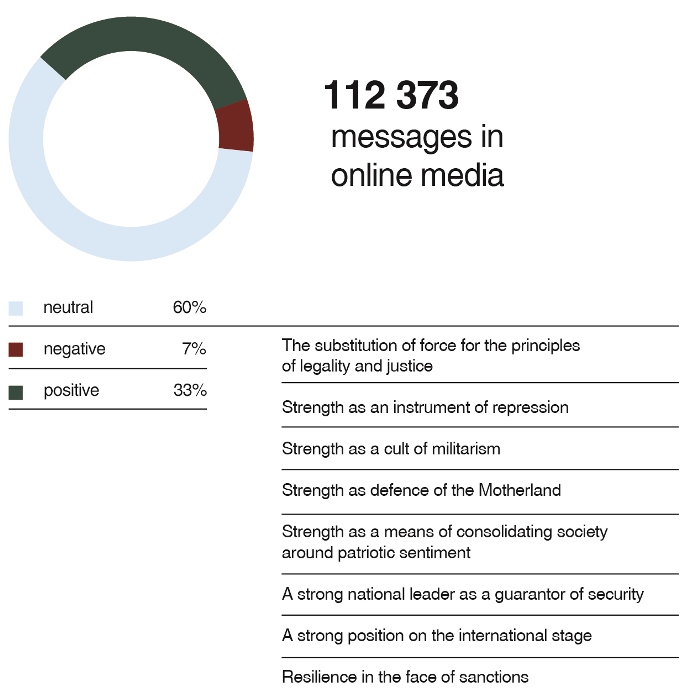
Fig. 10. The Value of ‘Strength’ in Pro-Government Online Media (2020–2025).
The doughnut chart shows the distribution of 112,373 media messages containing references to the value of ‘strength.’ Positive discourse accounts for 33% of the dataset and includes narratives such as ‘strength as a factor consolidating society around patriotic sentiment,’ ‘a strong leader as a guarantor of security,’ ‘resilience in the face of sanctions pressure’ and others. The relatively small critical segment (7%) is associated with interpretations of force as an instrument of repression and with the cultivation of militarism. The majority of publications (60%) are neutral and descriptive in character.
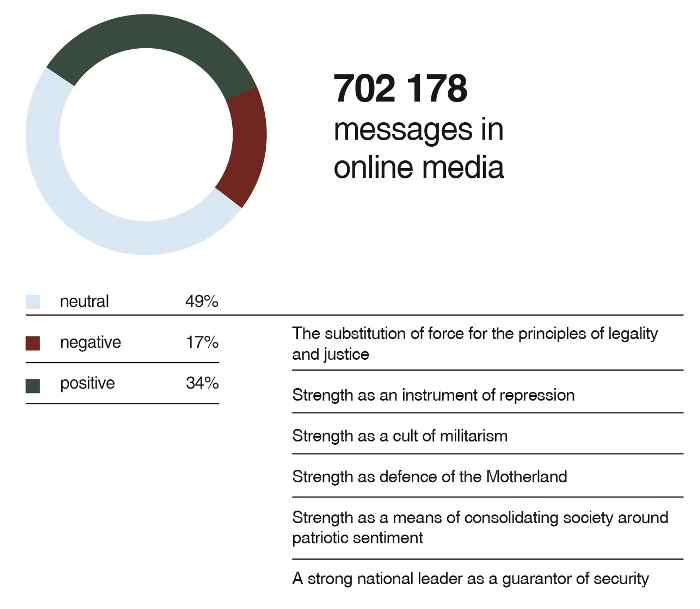
Fig. 11. The Value of ‘Strength’ in the Social Media Environment (2020–2025).
The diagram presents the results of a content analysis of 702,178 social-media messages. Positive assessments account for 34% and largely reproduce the official framework: strength is associated with the defence of the Motherland, social cohesion and strong state authority. Negative discourse is more extensive than in online media (17% of the dataset) and includes criticism of the ‘substitution of force for legality,’ as well as accusations of repression and militarisation. Neutral messages (49%) consist of discussions of news events, reposts of official material and comments without a clearly expressed evaluative position. Overall, even within the more polarised social-media environment, positive and neutral discourses clearly predominate.
Legitimation through tradition, historical memory and unity
The second fundamental cluster of narratives is built around appeals to traditional values. Pro-government media consistently emphasise the priority of family, faith, historical memory and collective responsibility. The idea of Russia’s ‘special path’ is linked to its rich cultural heritage, its historical experience of overcoming adversity and the preservation of spiritual and moral points of reference. Major political decisions and reforms are presented as a continuation of this tradition. Thus, discussion of the 2020 constitutional amendments, including provisions defining marriage as a union between a man and a woman, enshrining the memory of ancestors and protecting historical truth, was accompanied by rhetoric about strengthening the state’s ‘moral foundation.’ Media coverage presents a high degree of value consensus within society, emphasising that most Russians are proud of their country, consider themselves patriots and share the ideals of social justice, solidarity and mutual assistance (see Figs. 12 and 13)21.
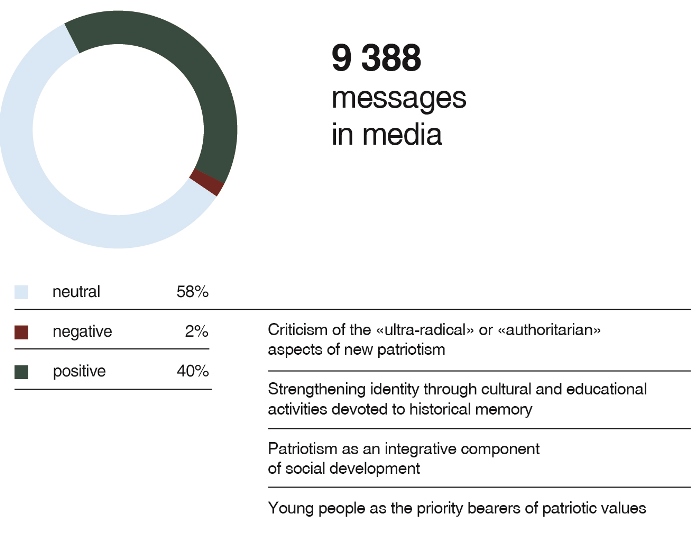
Fig. 12. The Value of ‘Patriotism’ in Pro-Government Online Media.
The chart is based on an analysis of 9,388 media messages devoted to patriotism. Positive publications account for 40%. The principal narratives are: ‘strengthening national identity through cultural and educational activities devoted to historical memory’; ‘patriotism as an integrative component of social development’; and ‘young people as the priority bearers of patriotic values.’ The small negative segment (2%) is associated with criticism of allegedly ‘ultra-radical’ or ‘authoritarian’ manifestations of new patriotism. The overwhelming majority of materials (58%) are informational and descriptive, and therefore neutral in character.
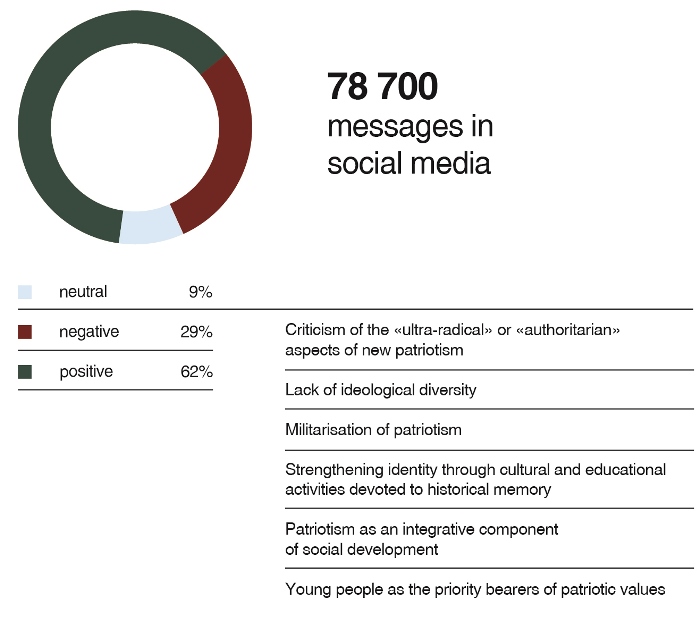
Fig. 13. ‘New Patriotism’ in the Social Media Environment.
The diagram presents an analysis of 78,700 social-media messages discussing ‘new patriotism.’ Positive discourse (62%) largely coincides with the official agenda: emphasis is placed on the role of cultural and educational activities, the importance of patriotism as a driver of social development, and the priority role of young people in embracing patriotic meanings. Critical statements (29%) concern fears of ‘authoritarianism,’ ‘ultra-radicalism’ and related tendencies. The neutral layer (9%) consists of news items and summaries of official statements.
Particular attention is paid to narratives of compassion and mutual support. State and public assistance campaigns receive extensive coverage, from humanitarian aid for residents of Donbas to volunteer initiatives during the pandemic and subsequent crises. The state is presented as the coordinator and initiator of such projects, while society appears as an active and responsive partner (see Figs. 14–16)22.
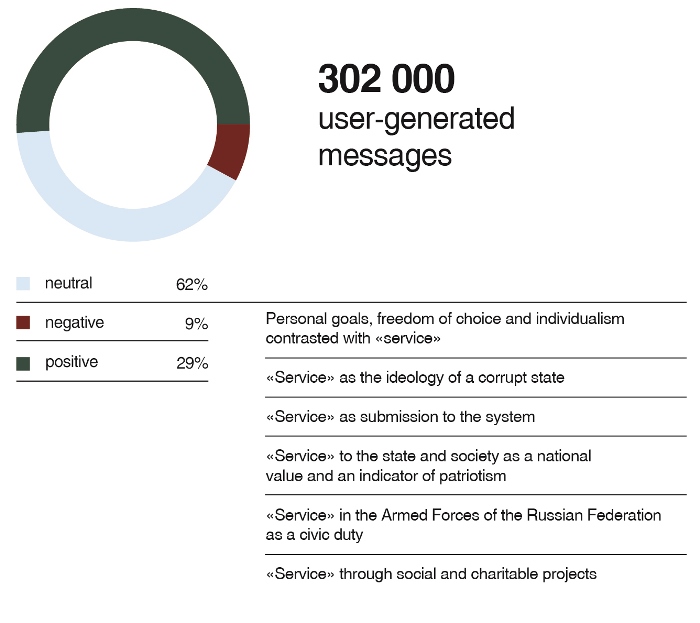
Fig. 14. The Value of ‘Service’ in User-Generated Discourse
Based on 302,000 user-generated messages (from social networks, forums and comments) the figure shows the distribution of assessments of the value of ‘service.’ The positive segment (51%) associates service with a national value and an indicator of patriotism, with the civic duty of serving in the Armed Forces of the Russian Federation, and with participation in social and charitable projects. A small proportion of critical statements (8%) contrasts service with individualistic values and priorities.
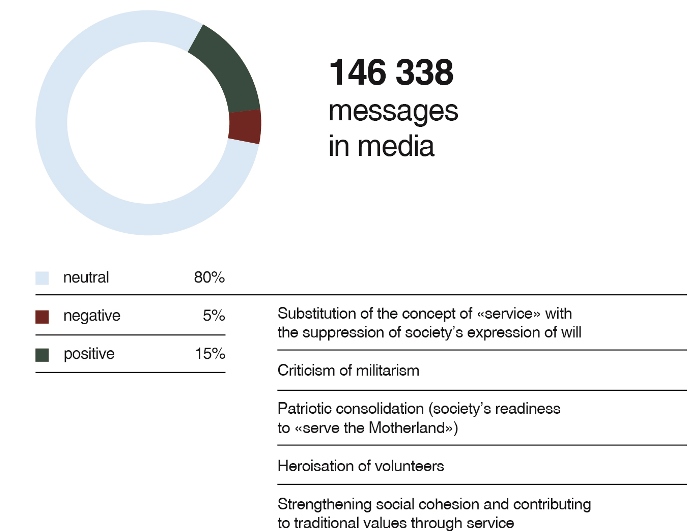
Fig. 15. The Value of ‘Service’ in Pro-Government Online Media
The diagram summarises 146,338 media messages addressing the theme of service. Positive narratives (15%) include ideas of patriotic consolidation: society’s readiness to ‘serve the Motherland,’ the heroisation of volunteers, and the strengthening of social cohesion and traditional values through service. The critical segment (5%) consists primarily of interpretations presenting ‘service’ as a substitute for society’s free expression of will, as well as criticism of militarism. A substantial majority of publications (80%) remain neutral.
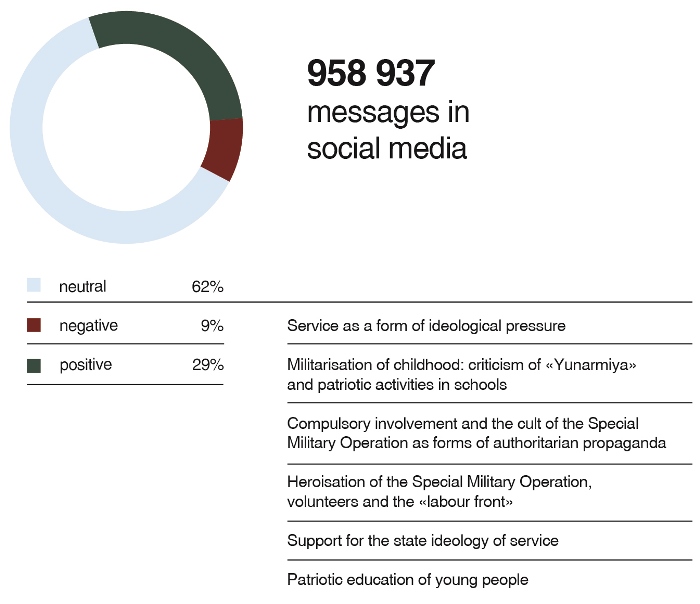
Fig. 16. The Value of ‘Service’ in Social Media.
The figure covers 958,937 social-media messages. Positive discourse (29%) focuses on the heroisation of participants in the Special Military Operation, volunteers and the ‘labour front,’ support for the state ideology of service, and the patriotic education of young people. Negative interpretations (9%) are associated with criticism of service as a form of ideological pressure and related themes.
Defending national values under conditions of external pressure
A significant element of official discourse is the theme of protecting Russian values from external ideological and political pressure. Pro-government media highlight the challenge posed by an unfavourable external environment (the ‘collective West’, NATO and unfriendly regimes in the post-Soviet space) portrayed as attempting to impose on Russia an alien model of development, a culture of radical individualism and consumerism, and a rejection of traditional morality. Within this framework, Russian foreign and defence policy is presented as a responsible choice aimed at preserving the country’s historical agency and cultural distinctiveness. The military operation in Ukraine is interpreted as a struggle against neo-Nazism, the protection of civilians and resistance to Western double standards. Russia presents itself as a defender of authentic values: truth, justice, dignity and security. The liberal-democratic model associated with Western countries is described as undergoing a profound crisis of values, with particular emphasis on the declining role of the family, secularisation, the promotion of an LGBT agenda23 and related developments. Public discourse thus establishes a binary opposition between ‘traditional values’ and ‘Western pseudo-culture,’ with Russia presented as one of the global centres defending a classical understanding of morality and justice (see Figs. 17 and 18)24.
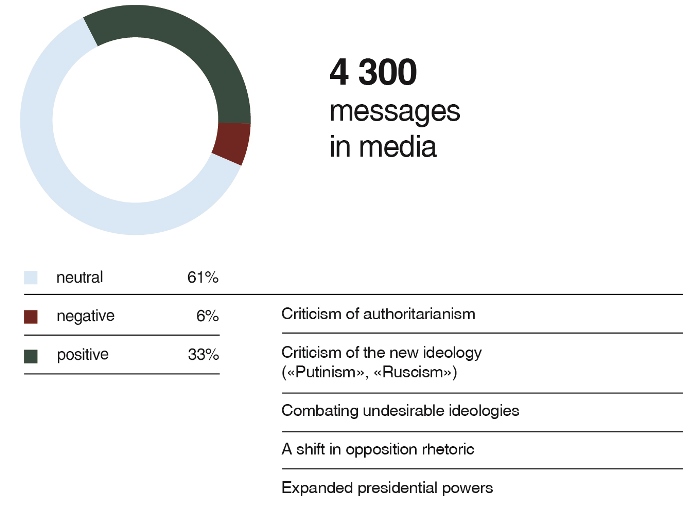
Fig. 17. The Value of ‘Statehood’ and Ideology in Online Media
The figure presents the results of an analysis of 4,300 media messages concerning ‘state ideology.’ The positive segment (33%) is associated with narratives about combating undesirable ideologies, the need for a shift in opposition rhetoric, and expanded presidential powers as a condition for effective governance and the protection of the country. Critical discourse accounts for 6%, while 61% of messages are neutral.
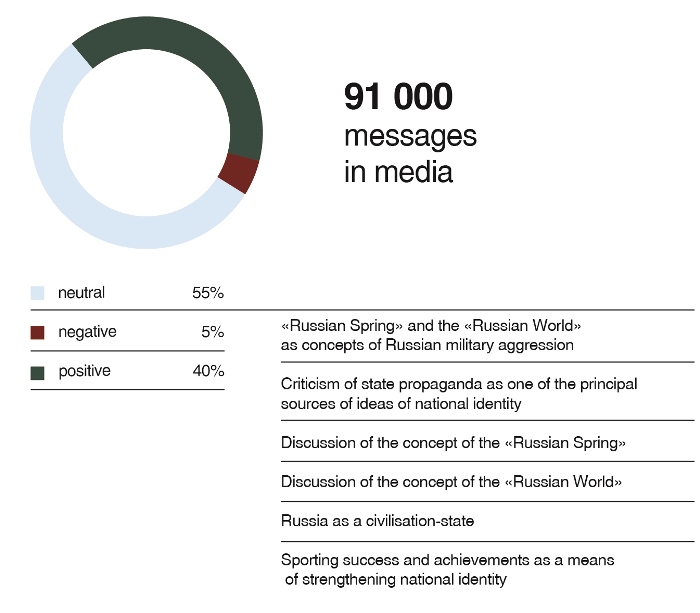
Fig. 18. The Value of ‘Statehood’ and the Crisis of Identity in Online Media
The diagram summarises 91,000 media messages discussing the concepts of the ‘Russian Spring,’ the ‘Russian World’ and broader questions of national identity. Positive narratives (40%) describe Russia as a civilisation-state and discuss the concepts of the ‘Russian Spring’ and the ‘Russian World’ in the context of protecting compatriots and strengthening a shared cultural and historical space, among other themes. The negative segment is relatively small (5%), while neutral material accounts for 55%.
Positive sentiment and narratives of success
Across virtually all major themes, pro-government media maintain an optimistic and future-oriented tone. Even when covering difficult socio-economic issues, the emphasis is placed on measures being taken and expected improvements. Reports on economic growth, import substitution, technological and scientific achievements, sporting victories and the construction of new infrastructure are interpreted as symbols of the country’s resilience and constructive potential. Public discourse is dominated by an emphasis on finding solutions rather than dramatising contradictions; negative issues are thereby incorporated into a broader narrative of control and manageability.
Appeals to the people and to the social justice of state authority
An important feature of official media rhetoric is the presentation of the authorities as responsive to the demands of the majority and committed to acting justly. Stories of social support are brought to the forefront: the indexation of pensions and benefits, assistance programmes for families with children, the development of healthcare and education, and support for frontline servicemen and their families. The result is a positive image of the state as a responsible guarantor of social justice and attentive concern for ordinary citizens.
Information unity in the face of external challenges
By presenting a united front, pro-government media establish a coherent value-based line within the information environment. Under conditions of intense foreign-policy and information competition, such unity is interpreted as an important resource for national security and internal cohesion. Critical positions are present but are generally framed as constructive discussion that does not call into question the fundamental principles of the state system or the country’s strategic course. Public discourse thereby reinforces an image of Russia as a morally and politically cohesive community supportive of traditional values, its historical mission and the current leadership (see Figs. 19–21)25.
The official media narrative surrounding the value of solidarity is particularly revealing. In pro-government media, solidarity is understood as citizens’ readiness to act together for the common good, support the armed forces and assist those facing difficult circumstances. Since 2022, positive discourse around this theme has increasingly been linked to the activities of the President, nationwide campaigns, volunteer initiatives and mass patriotic events. Analytical data from online media, Telegram channels and social media show that the concepts of ‘solidarity,’ ‘unity’ and ‘mutual support’ are consistently associated with state-patriotic meanings, while the authorities are presented as the principal initiator and coordinator of projects intended to bring people together (see Figs. 21–23)26. Society, in turn, is portrayed as an active participant and co-author of state policy, regarding participation in nationwide initiatives as a form of personal responsibility for the country’s future.
Consequently, a coherent paradigm emerges in which core values (strength, patriotism, service, solidarity and statehood) are presented as organic elements of Russia’s current course of development and its long-term national strategy.
Alternative Discourse in Social Media
Between 2020 and 2025, Russia’s digital media environment became noticeably more polyphonic. Alongside official and pro-government platforms, independent and semi-independent media actors have remained active, particularly on social networks and Telegram. They construct alternative interpretations of current developments while drawing on the same set of fundamental values (statehood, justice, freedom, solidarity and faith) and disagreeing primarily over how these values should be realised. Media analysis of the value clusters reveals a dual pattern. On the one hand, the alternative segment of social media contains sharply critical narratives; on the other, neutral and positive mentions predominate across most themes, while opposition rhetoric remains concentrated within a relatively narrow circle of users and channels.
Before turning to a more detailed analysis of critical discourse, one further point of fundamental importance should be established. The study conducted in 2025 by the REAL TIME media analytics agency and Ex Libris on behalf of the Philosophy Club Russia’s Civilisational Future examined not only the broad thematic contours of the narratives and the balance of their presence in the media environment between 2020 and 2025, but also positive and negative narratives as distinct configurations. Their substantive characteristics, principal sources of formation, key actors and leading promoters, as well as the dynamics and evolution of these narratives, were analysed separately.
Accordingly, the discussion below of individual critical narratives will focus specifically on their dynamics, evolution, content and supporting infrastructure rather than on the overall picture of the media environment, in which, as repeatedly noted above, positive narratives also occupy a significant place, with their own dynamics and substantial support. It is also necessary to take into account the combination of factors that exert a significant influence on the construction, development and promotion of critical narratives. Analysis of these factors begins in the present subsection and will be completed in the section devoted to the study’s principal conclusions.
ONLINE MEDIA. POSITIVE
Key positive opinion leaders
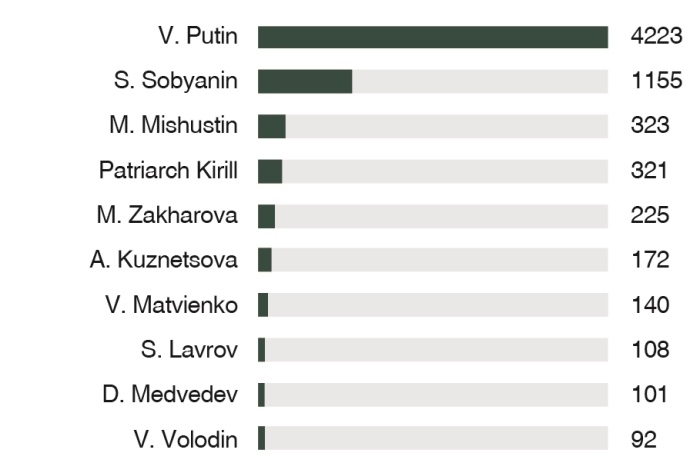
Fig. 19. Key Positive Narratives in Online Media Concerning the Value of ‘Solidarity’
Key positive opinion leaders in online media. The figure presents a ranked list of the principal positive opinion leaders associated in media discourse with solidarity and state support. The leading positions are occupied by V. Putin (4,223 positive mentions), S. Sobyanin (1,155), and others. This shows that the positive agenda of solidarity and unity is highly personalised around the country’s political and spiritual leadership, strengthening audience trust and identification with the current state course.
SOCIAL MEDIA. POSITIVE
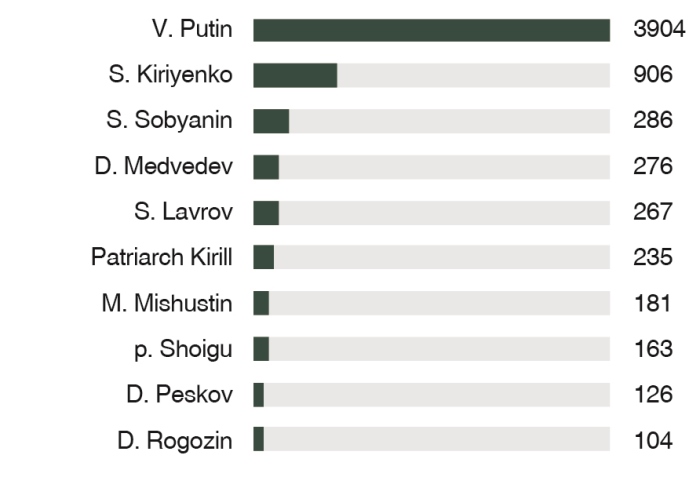
Key positive opinion leaders
Fig. 20. Key Positive Narratives and Opinion Leaders in Social Media Concerning the Value of ‘Solidarity’.
The figure shows the distribution of positive mentions of opinion leaders: V. Putin ranks first (3,904 mentions), followed by S. Kiriyenko (906), and others. This demonstrates that even within the more decentralised social-media environment, the positive agenda remains concentrated around the country’s senior leadership and key representatives of the political and spiritual elite.
TELEGRAM. POSITIVE
Key positive opinion leaders
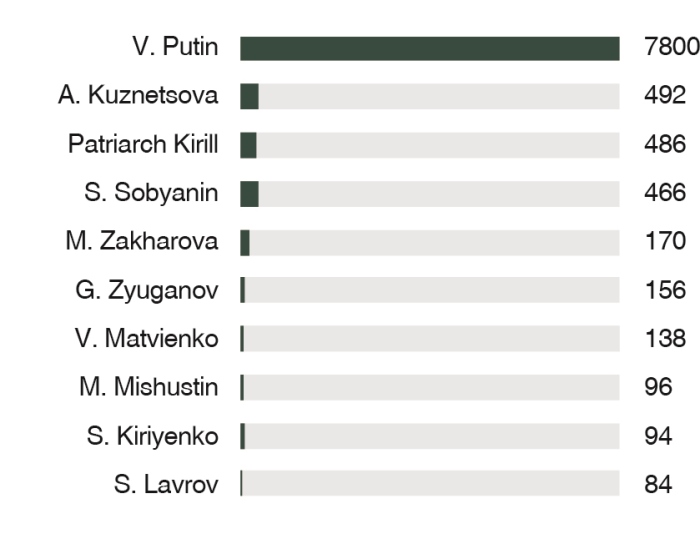
Fig. 21. Key Positive Narratives and Opinion Leaders on Telegram (the Value of ‘Solidarity’)
Key positive opinion leaders are shown on the right. The figure ranks individuals mentioned on Telegram in a positive context relating to solidarity. V. Putin ranks first by a wide margin, with 7,800 positive mentions, indicating a high degree of personalisation of trust and support within this environment, among other findings. The figure shows that the principal carriers of the positive agenda on Telegram are representatives of the country’s senior political and spiritual leadership, while the platform itself reproduces to a considerable extent the same state-patriotic emphases as pro-government media.
Statehood and trust in institutions
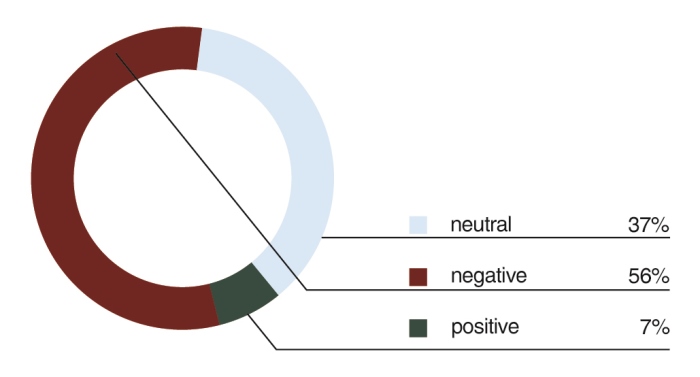
Discussion of statehood and institutions of authority within the alternative segment centres on high expectations regarding the effectiveness and fairness of the state. In relation to the judicial system, the media data do indeed show a predominance of negatively framed messages on social media, accounting for 56% of all mentions. Alongside these, however, there is a substantial neutral background (37%) and a stable positive segment (7%) (see Fig. 22)27.
This points not only to criticism, but also to a far more important feature of the independent media segment. With the rapid development of digital technologies, media content has become extremely vulnerable to various forms of manipulation. This is illustrated, in particular, by numerous information-related controversies surrounding the conflict in the Gaza Strip and attempts by Israel to influence American audiences on digital platforms popular with young people. A characteristic example is the controversial and provocative ‘Esther’ project28, which, while only one of a number of such cases, received extensive public attention. Accordingly, when analysing the independent media segment in this subsection, it is necessary to proceed from the fact that it is structurally susceptible to manipulative influence. For virtually every value cluster under consideration, discrepancies can be expected between the findings of media studies and the results of sociological surveys. The study returns to this problem and possible ways of addressing it in the conclusion.
A number of representative sociological surveys reflecting changes in trust towards state institutions are particularly relevant to the analysis of this cluster. According to VCIOM, for example, around 62% of Russians trust the police in their region, almost twice the relevant figure recorded in 201229. This suggests a long-term increase in institutional trust in the sphere of law enforcement. The findings of the Institutional Trust: September 2025 study30 may also be used as an additional reference point: it records trust in the judicial system at approximately 50%.
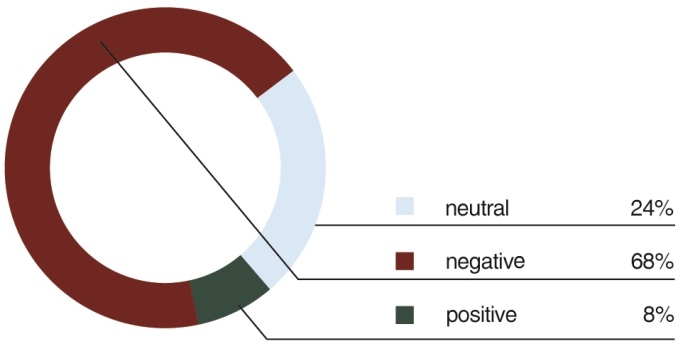
A similar picture emerges around elections. Within alternative discourse on social media, there is a noticeable layer of sceptical commentary. In the dataset examined, critical interpretations of the electoral process account for 68%, compared with 24% positive and 8% neutral assessments (see Fig. 2331).
PERCEPTIONS OF RUSSIAN COURTS
Social-media users assess the performance of the judicial system negatively. A widespread view is that the courts are influenced by the authorities and act in their interests. Citizens express distrust in the fairness of judicial decisions, particularly in cases involving opposition figures and activists. The judicial system is perceived as corrupt and excessively formalistic.
Perceptions of independence and corruption
- Users believe that the courts are heavily influenced by the country’s leadership and fail to perform their proper function, with the separation of powers effectively absent;
- According to users, corruption is widespread in Russian courts, with a majority of judges allegedly accepting bribes.
Distrust in the fairness of decisions
- Users believe that courts issue rulings not on the basis of the law, but in response to political or administrative instructions;
- A widespread view is that ‘the outcome of the case is predetermined,’ particularly in cases involving opposition figures, activists or ordinary citizens in conflict with the authorities.
Inequality before the law
- Confidence in the equality of the parties before the court is extremely low: influential individuals are assumed to have a greater chance of securing a favourable outcome.
Formalism and lack of transparency
- Court proceedings are often perceived as formalistic, without genuine consideration of the evidence;
- Information about cases, particularly high-profile ones, is either restricted or presented in a one-sided manner, reinforcing perceptions of injustice.
Fig. 22. The Value of ‘Statehood’: Perceptions of Russian Courts in Social Media (2020–2025)
The pie chart shows the distribution of messages concerning the Russian judicial system by sentiment: 56% of messages are negative, 37% neutral, and 7% positive. The accompanying text indicates that criticism is dominated by themes of judicial dependence on the executive authorities, allegations of corruption and perceptions of inequality between the parties in court proceedings. The chart therefore visualises the concentration of public attention on the fairness of judicial decisions, while also showing a smaller but stable positive segment that associates the courts with the protection of rights.
Representative survey data, however, provide an important counterpoint: among citizens who actually vote, two-thirds believe that elections in their region are conducted fairly and without serious violations and trust the results; nationwide, the proportion who trust the official voting results reaches 60–61% and has increased in recent years32. Digital scepticism therefore does not negate, but rather underscores the significance of elections and the courts as core institutions of Russian statehood.
ATTITUDES TOWARDS ELECTIONS IN RUSSIA
Research into social-media users’ opinions indicates a profound crisis of confidence in Russia’s electoral system. The overall tone of comments is predominantly negative, suggesting widespread distrust of elections as a mechanism of political participation and influence.
- Distrust of the legitimacy and fairness of the process
- The most frequent theme is the conviction that election results are known in advance and controlled by the authorities. Users write that ‘elections are a sham,’ ‘a circus’ and ‘just a box-ticking performance’;
- A widespread view is that ‘votes are rewritten’ or that turnout and results are ‘fabricated,’ particularly at regional level.
- Appeals to previous experience
- Users recall cases of fraud and manipulation, including from their own observations: ‘I worked as an election observer,so I know how it is done,’ ‘I saw ballot stuffing last year’;
- Expressions such as ‘the same old mistakes again’ and ‘nothing ever changes’ are frequently used.
- Association with authoritarian rule and the absence of genuine choice
- The impossibility of a change of power and total control by the Kremlin are frequently mentioned: ‘They will not offer us anyone but Putin,’ ‘All the candidates are spoilers’;
- Some users respond ironically: ‘Putin is president forever,’ ‘there is no point voting–someone has already voted for you.’
4, Administrative resources:
- Court proceedings are often perceived as formalistic, without genuine consideration of the evidence;
- Information about cases, particularly high-profile ones, is either restricted or presented in a one-sided manner, reinforcing perceptions of injustice.
Fig. 23. The Value of ‘Statehood’: Attitudes towards Elections in Russia in Social Media (2020–2025).
The diagram shows the distribution of sentiment in discussions of elections: 68% of mentions are negative, 24% positive, and 8% neutral. The explanatory section identifies four principal clusters of criticism: doubts about the fairness and legitimacy of the process, references to past experience of electoral fraud, and so forth. Against this background, a positive layer of commentary is also recorded, in which elections are regarded as a necessary procedure for political participation and a means of affirming trust in the current authorities.
Freedom, rights and justice: the search for balance
Discourse on freedom and rights in social media cannot be reduced to human-rights criticism alone. The media study of the value of ‘Freedom (agency)’ shows that, within the overall body of social-media messages from 2020 to 2025, neutral interpretations predominate at 83%, while negative interpretations account for 14%, and positive ones for 3% (see Fig. 24)33.
On platforms characterised by positive sentiment, freedom is consistently incorporated into a framework of order, responsibility and collective outcomes: the emphasis falls on volunteering, participation in state and public projects, and the right to take initiative within shared rules. In the alternative segment, by contrast, the focus is on restrictions, censorship and risks to private autonomy. Yet this critical dimension exists against the broader background of a public shift towards seeking a balance between freedom and security. Importantly, mass surveys associate the idea of justice primarily with social support and state care rather than solely with a set of individual rights34. This creates a framework in which even sharp criticism on social media of particular cases of corruption or inequality can be read as a demand for ‘more justice from the state,’ rather than as a rejection of the value itself.
Truth and knowledge: competing interpretations
The value of truth generates some of the most emotionally charged discussion in social media. The negative segment aggregates narratives of exposés, investigations and scepticism towards official accounts of events (see Fig. 25)35. At the same time, the very fact that a substantial proportion of opposition content is constructed around the language of ‘truth’ and ‘facts’ shows that the value of reliable information itself is not disputed; the disagreement concerns the right to interpret events and the source of legitimate truth. In parallel, a positive discourse around truth is developing, centred on state and public institutions that demonstrate openness of data, the operation of volunteer and human-rights mechanisms, public reporting and the investigation of abuses. This strand is less visible in terms of emotional intensity, but remains important as a resource of institutional trust and as a channel for involving citizens in verifiable practices, from public election observation to initiatives aimed at combating fake news.
Good, solidarity and social sensitivity
The value of ‘Good’ manifests itself in two ways in the digital environment. The negative segment reflects fatigue with ‘officially sanctioned good’ and criticism of cases in which charitable and volunteer campaigns are perceived as administratively imposed or excessively media-driven (see Fig. 26)36. Yet this very criticism demonstrates the high expectations society places on the authenticity and targeted nature of assistance. At the same time, media studies reveal a substantial positive body of ‘grassroots good’: stories of volunteers, mutual-aid campaigns, #WeAreTogether initiatives, support programmes for families and servicemen, and local mutual-aid communities.
SOCIAL MEDIA
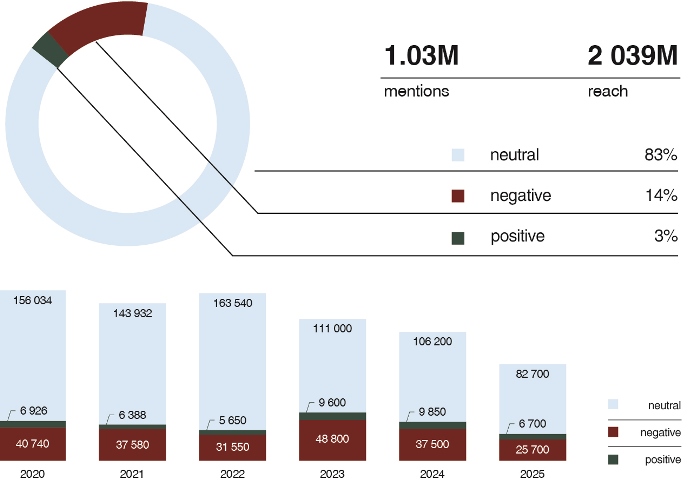
Fig. 24. Overall Sentiment of Discourse on Freedom in Social Media (2020–2025)
The summary chart for the value of ‘Freedom’ combines a pie chart with annual bar-chart dynamics. The pie chart shows that 83% of messages are neutral, 14% negative, and 3% positive. The lower section presents annual volumes: between 2020 and 2022, the overall number of mentions increases from 156,000 to 163,000, followed by a slight decline by 2025 to 82,700. In absolute terms, both negative and positive mentions remain substantially lower than the neutral background, indicating the predominance of descriptive and informational content and the concentration of conflict-driven discussion within a comparatively narrow audience segment.
SOCIAL MEDIA. NEGATIVE
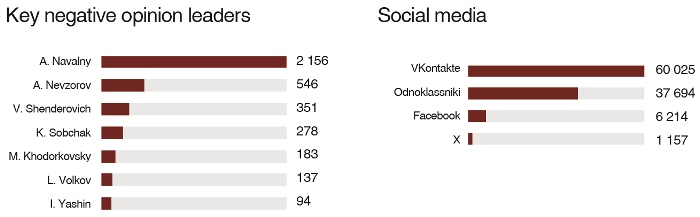
Fig. 2537, 38. Negative Segment Concerning the Value of truth in Social Media (2020–2025)
The negative segment concerning the value of truth in social media (2020–2025). The figure presents a ranking of the principal negative opinion leaders, together with the number of associated mentions. The second part shows the distribution of messages by platform: the largest volume of critical discussion occurs on VKontakte and Odnoklassniki.
For a significant proportion of social-media users, good is not an abstract slogan but a concrete action close at hand: helping neighbours, contributing to fundraising campaigns and taking part in charitable projects. In this sense, the online environment reinforces Russia’s traditional orientation towards communal solidarity and mutual assistance, transforming it into a visually and emotionally salient norm of everyday life. Sociological data likewise indicate that citizens are increasingly likely to regard Russian society as just and to believe that government policy contributes to strengthening social justice, a perception directly associated with initiatives supporting families, participants in the Special Military Operation and vulnerable groups39.
Faith: between cultural norm and personal choice
The most stable positive strand in social media is formed around the value of ‘Faith.’ The aggregate chart for social media (see Fig. 27)40 shows that, out of nearly 900,000 mentions with a reach of more than 2.2 billion, positive messages account for around 19%, negative messages for only 4%, while the overwhelming majority (77%) are neutral. Analysis of this theme reveals an evolution from faith as a primarily symbolic point of reference towards everyday religiosity: parish life, charitable projects, and family and calendar rituals. By 2024–2025, the link between ‘faith–service–patriotism’ becomes firmly established in online discourse: narratives about military chaplains, humanitarian missions and interfaith initiatives construct faith as a moral resource for national consolidation. Sociological data confirm a high level of religious self-identification: according to VCIOM surveys, around 83% of Russians describe themselves as believers, with two-thirds identifying as Orthodox Christians; religion is understood primarily as a source of moral norms and cultural belonging41.
In online discussions, this is reflected in the predominance of ‘quiet’ narratives, like religious holidays, charity, and accounts of personal experience. Criticism of the ‘church–state’ relationship and of individual cases involving displays of wealth or disciplinary decisions is present, but does not undermine the core value; on the contrary, it highlights a public demand for political decisions to remain consistent with society’s moral expectations.
SOCIAL MEDIA. NEGATIVE
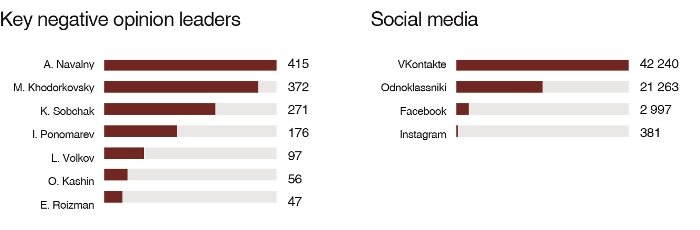
Fig. 2642. Negative Narrative Concerning the Value of ‘Good’ in Social Media (2020–2025)
Negative narrative concerning the value of ‘Good’ in social media (2020–2025) The group of negative opinion leaders includes opposition politicians, public figures and journalists whose messages set a critical tone in discussions of charitable and humanitarian programmes. Social-media figures show that VKontakte and Odnoklassniki account for the largest volume of negative publications, while Facebook43 and Instagram44 play a smaller but still noticeable role. Criticism of the official discourse on good is concentrated primarily within the liberal and émigré media segment.
SOCIAL MEDIA
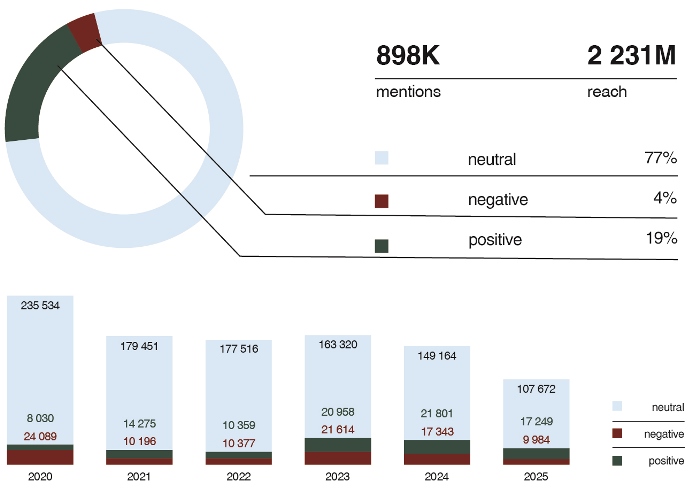
Fig. 27. Discourse on Faith in Social Media (2020–2025)
The pie chart shows the distribution of sentiment: 19% of messages concerning faith are positive, 4% negative, and 77% neutral. The combined line-and-bar chart below shows the annual dynamics of mentions: the overall volume of messages remains high throughout the period, ranging from 107,000 to 235,000 mentions per year, with discussion peaking in 2022–2023 as the theme of faith became incorporated into the ‘major’ public agenda: the Special Military Operation, humanitarian missions and related issues. In social media, ‘faith’ functions primarily as an infrastructure of everyday solidarity and cultural identity: positive and neutral discourse substantially outweighs critical discourse, while the legitimacy of religious themes is greatest where they are grounded in verifiable practices of assistance and ritual rather than purely declarative statements.
Competition between Narratives and External Influences
The contemporary Russian digital media environment is a field in which several value narratives compete. At its centre is the state-patriotic discourse, which establishes the framework for discussing security, sovereignty and historical memory and thereby performs an integrative function for society. Alongside it are alternative interpretations, often drawing on the agendas of external actors and global digital platforms. Under conditions of information globalisation, competition for audience attention acquires strategic importance: the resilience of Russia’s model of information sovereignty and the state’s ability to pursue long-term policy depend on which narrative becomes the ‘default’ for the majority (see Figs. 28–31).
Confrontation without Dialogue
The pro-government and alternative media environments are developing as two largely autonomous segments. One section of the population places its primary trust in official media and state-aligned Telegram channels, while another turns to bloggers on global platforms, opposition websites and online communities. In effect, two distinct systems of reference are emerging, within which the same events receive different interpretations. At the same time, the pro-government narrative remains the normative centre of the public sphere: it is grounded in constitutional values, institutional responsibility and the need to ensure national security. Alternative platforms more often employ emotionally charged language and protest-oriented frames, contributing to polarisation without always offering a constructive agenda. This is particularly evident in relation to patriotism and the Special Military Operation. A quantitative analysis of 47,500 social-media messages shows that the combined share of positive and neutral interpretations (60%) exceeds that of explicitly negative ones (40%). The positive cluster brings together messages concerning dealing with disinformation, the need to consolidate Russian society, and support for the Special Military Operation as a legitimate instrument for defending national interests. The negative cluster is associated with criticism of the state’s position and attempts to portray patriotism as a mechanism for ‘restricting freedom’. Thus, despite the presence of opposing narratives, the core of the discourse remains broadly loyal to the state (see Fig. 28).
In this sense, it is worth emphasising once again that the picture is better described not as a fundamental divide, but as the coexistence of several value worlds, with the state-patriotic world functioning as the system-forming core and alternative worlds remaining peripheral, operating primarily within niche audiences.
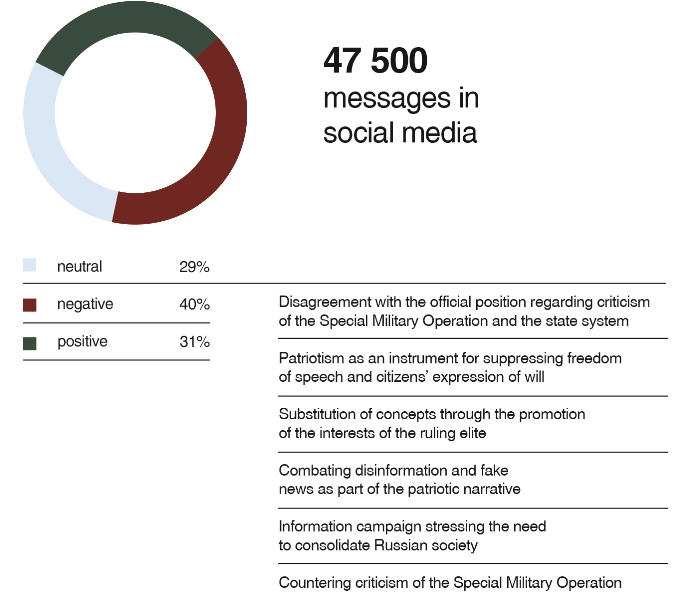
Fig. 2845. Competition between Narratives in Social Media Concerning the Value of ‘Patriotism’ (2020–2025)
The doughnut chart is based on a dataset of 47,500 messages and shows the distribution of sentiment in discussions of patriotism and the Special Military Operation: 31% of messages are positive, 40% negative, and 29% neutral. The outer ring is divided into two thematic blocks. The diagram demonstrates the simultaneous presence of a consolidating state-patriotic narrative and critical interpretations, while positive and neutral content combined remains quantitatively predominant.
The Struggle for the Agenda and the Framing of Debate
Competition between narratives is manifested above all in the struggle to interpret key events. In practice, pro-government digital resources establish the initial frame, offering a rationalised explanation of events and linking them to the country’s long-term development goals. Thus, within this discourse, the partial mobilisation of 2022 was presented as a forced but necessary measure to ensure security and protect residents of the new territories, directly associated with the values of duty and service to the Motherland. Alternative platforms respond to such events through the lens of distrust towards state institutions, deliberately emphasising individual cases and personal fears. This is how narratives of a ‘broken promise,’ ‘social injustice’ and similar themes are formed. These interpretations actively compete for public attention, but their durability depends on the extent to which they are supported by facts and correspond to the everyday experience of the majority of citizens. A similar dynamic can be observed around other issues, from the integration of the new regions and constitutional amendments to the country’s foreign-policy course. Every value-based proposition advanced by the authorities is met by a counter-proposition in opposition discourse. Yet it is the pro-government narrative that possesses the resources of institutional support and educational and cultural infrastructure. This enables it to remain the dominant framework within which both individual problems and conflict-related themes are reinterpreted (see Fig. 29). In the sphere of youth policy, the measurements reveal an even greater potential for a positive agenda. Within a dataset of 1.85 million messages devoted to ‘Youth and Patriotism’, two-thirds of the content is positive or neutral in sentiment–29% and 38%, respectively. Positive messages concentrate on preserving historical memory, young people’s participation in patriotic activities, and the interpretation of Victory in the Great Patriotic War as a central element of civic identity. The negative segment (33%) attempts to frame patriotic education as ‘propaganda’ or an instrument of pressure, but remains a quantitative minority.
Information Warfare and the Role of Digital Platforms
External factors further intensify competition between narratives. Today, alternative discourse within Russia is fuelled to a considerable extent by external sources: Russian-language editorial teams of foreign media, official Ukrainian accounts and bloggers, as well as content produced by émigré communities, circulate narratives within the Russian social-media segment that construct a consistently negative image of Russian statehood and military policy. These narratives repeatedly draw on negative rhetoric concerning Russia. The Russian leadership openly acknowledges the existence of large-scale information campaigns originating from Western states and media structures affiliated with them. In response, a system of legal and technological barriers has been developed, including ‘foreign agent’ status and restrictions on particular platforms and media outlets, aimed at protecting the information environment and reducing society’s vulnerability to external interference.
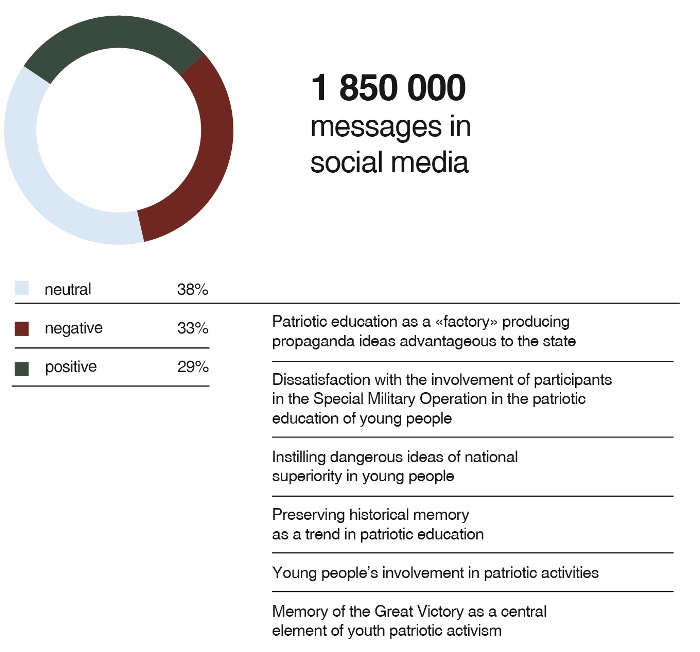
Fig. 2946. Competition between Narratives in Social Media Concerning the Value of ‘Patriotism’ (2020–2025)
The diagram is based on an analysis of 1,850,000 messages. The inner ring shows the sentiment structure of the discourse: 29% of messages are positive, 33% negative, and 38% neutral. The outer ring structures the substantive thematic clusters. The diagram shows that, despite the presence of criticism, the state agenda of strengthening historical memory and involving young people in patriotic practices defines the principal substantive field of discussion.
The structure of the principal sources shows that this competition unfolds between two well-organised blocs (Fig. 32). On the one hand, are systemic Russian resources (RIA Novosti, TASS, Tsargrad, the Special Operation Z channel, Izvestia and others) represented on Telegram, Yandex.Zen, VKontakte and other domestic ecosystems. Their combined audience numbers in the millions and ensures the stable presence of the state-patriotic narrative. On the other hand, substantial reach is enjoyed by platforms that systematically circulate critical or explicitly anti-Russian discourse: TV Rain, Current Time, Navalny LIVE, Popular Politics, Khodorkovsky LIVE, DW Russian and others47. Most are based outside Russia and function as channels of external influence, although formally addressing a Russian audience.
The configuration of platforms is also of fundamental importance to the resilience of the national narrative (see Fig. 31). Domestic social networks account for the largest share of discussion of the value of service: around 48% of all relevant messages appear on VKontakte, and a further 33% on Odnoklassniki. Another 13% are generated on Telegram. The remaining global platforms (Yandex.Zen, YouTube, Facebook48, Instagram49, TikTok, Rutube and LiveJournal) together account for approximately 7% of messages. This means that the principal communication flows surrounding service and patriotism are already largely anchored in Russian digital infrastructure, objectively strengthening the state’s information sovereignty. At the same time, critical discourse is concentrated precisely within less widely used but more conflict-oriented segments: YouTube, individual Telegram channels and Facebook50, among others. Digital infrastructure therefore becomes a space in which a narrative broadly supported by the majority of citizens competes with alternative interpretations, but does so increasingly on the basis of predominantly domestic platforms.
The resulting situation suggests that the struggle for attention (the new scarce resource of the digital age) is taking place under conditions in which the Russian side possesses both its own strategic-communication tools and institutional mechanisms for protection against the most aggressive forms of external information attack.
Comparative Table of Pro-Government and Liberal-Opposition Narratives in Digital Media
For clarity, the key narratives of the two media segments are compared below, together with several points of overlap. The table presents the most polarised propositions, the critical side of which enjoys only limited support. They have been selected to demonstrate that, despite the substantial gap between positive and negative narratives, both continue to gravitate towards certain shared value orientations. Regardless of the scale of disagreement, these orientations continue to perform a consolidating function for both types of discourse (see Fig. 32).
INFORMATION ATTACKS
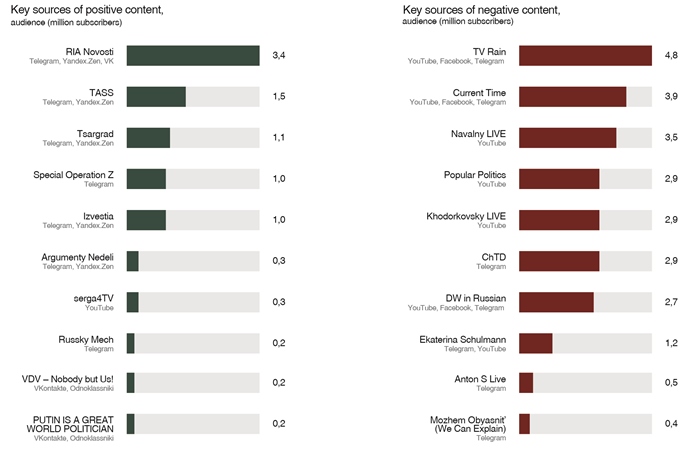
Fig. 3051, 52. Key Sources of Positive and Negative Messages Concerning the Value of ‘Patriotism’ in the Context of Information Attacks (2020–2025).
The chart consists of two columns. The left-hand column presents ‘sources of positive content,’ indicating their potential audience in millions of subscribers, while the right-hand column presents ‘sources of negative content.’ The bar chart demonstrates the existence of two blocs with broadly comparable reach–loyal and critical–while, unlike the ‘negative’ bloc, the ‘positive’ bloc consists predominantly of Russian media outlets and online communities.
SERVICE AS A STATE IDEOLOGY AND VALUE ORIENTATION
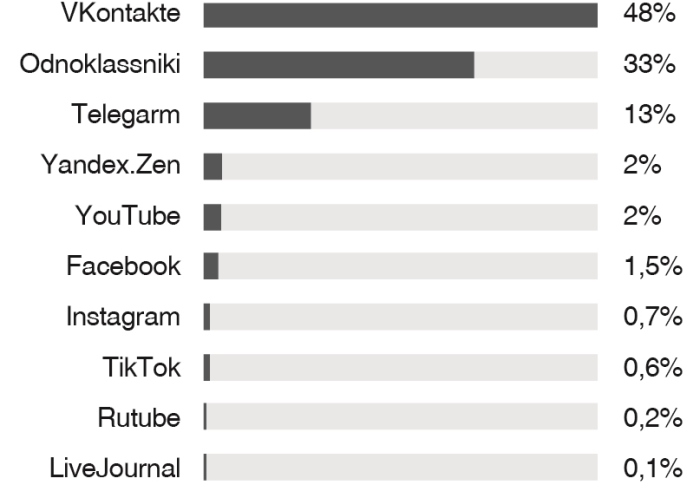
Discussion of service as a state ideology on social media displays the polarisation characteristic of the digital environment, in which the dominant loyal narrative encounters alternative and critical interpretations.
In terms of the platforms on which positive or negative attitudes towards the value of service circulate most actively, social media can broadly be divided into two groups:
Positive discourse, most visible on VKontakte, Odnoklassniki and Rutube, continues the line established by official media, emphasising the principal themes associated with service;
Negative discourse, concentrated in smaller but active segments with more limited reach (YouTube, Telegram, Facebook), criticises:
- Critical pressure;
- The substitution of values, whereby historical examples of service, such as Victory in the Great Patriotic War, are used to justify current policy.
Fig. 3153, 54 ‘Service’ as a State Ideology and Value Orientation: Top 10 Social-Media Platforms
The doughnut chart shows the distribution of platforms on which the value of service is discussed. VKontakte accounts for the largest segment, with 48% of all relevant messages. Odnoklassniki accounts for 33%, and Telegram for 13%. Thus, more than 94% of all communication concerning service is concentrated on Russian social networks and Telegram, highlighting the dominance of national platforms in shaping value discourse and strengthening the state’s capacity to maintain information control and ideological consistency.
As the table shows, within the first group of values the central image is that of Russia as a single family of peoples united around strong statehood and personalised leadership. Official discourse emphasises that patriotism is not merely a feeling but also a citizen’s moral duty, expressed in a readiness to work for the good of the country and to treat its history and cultural diversity with care. From this perspective, the national leader appears as a symbol of national unity and an expression of the interests of the majority. Public discussion also contains other emphases: some actors seek to broaden the understanding of patriotism by linking it to civic responsibility, attention to social problems and demand for greater institutional effectiveness. A distinction is also drawn between the state and the Motherland; yet even within this approach, belonging to Russia and love for the country remain unquestioned. Despite differences in rhetoric, the point of convergence between the two approaches remains recognition of the key role played by love of country, patriotism, family and traditional values as foundations of social consolidation. The principal difference lies in how these values are to be realised in practice – either through support for the current course or through efforts to alter the forms and balance of participation by the state and society in putting them into effect.
RUSSIA’S MEDIA LANDSCAPE
TWO DIMENSIONS OF DISCOURSE
Points of convergence. Different interpretations
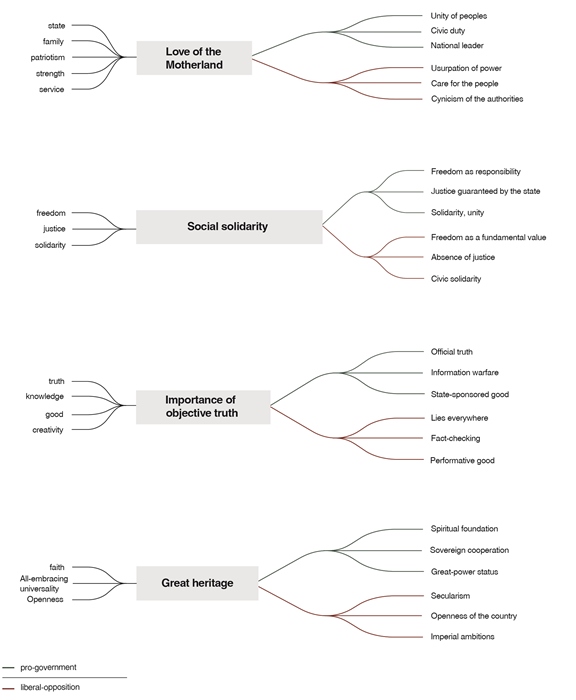
Fig. 3255. Comparative Table of Pro-Government and Liberal-Opposition Narratives in the Media across Four Groups of Values, Indicating Points of Convergence where the Narratives of the Two Media Segments Coincide or Partially Overlap in Their Value Orientations
Within the second group of values, the pro-government narrative interprets freedom primarily as responsible freedom, inseparably linked to security, social stability and national unity. Individual rights are situated within the broader context of the common good, while justice is understood as the outcome of a stable system of governance in which the state acts as the principal guarantor of order and the protection of the vulnerable. Solidarity is conceived here as citizens’ willingness to support state initiatives, from volunteer and charitable programmes to assistance for the armed forces and participation in large-scale public campaigns. Alternative interpretations place greater emphasis on individual autonomy and the development of civil society, which is expected to complement the efforts of the state by raising pressing social issues and fostering horizontal practices of mutual assistance. According to this approach, the law should protect citizens and the state in equal measure, minimising the risk of abuse. Despite all the differences in their assessments of the current situation and the distribution of responsibility, both approaches converge in recognising the importance of justice, solidarity and respect for human dignity. The dispute concerns, in essence, the relative roles of the state and civil society as agents in achieving these goals, opening up possibilities for a future synthesis of vertical and horizontal forms of solidarity. Within the third group of values, official rhetoric is built around the imperative of defending truth and national interests amid intense information competition. The official interpretation of events is positioned as a point of reference grounded in state institutions, expert resources and historical responsibility. Pro-government media and educational initiatives are intended to strengthen information sovereignty, foster a culture of responsible media consumption, support nationally oriented educational initiatives and promote patriotic education. Particular importance is attached to preserving historical memory and establishing fundamental assessments of key events through legal and institutional mechanisms. Alternative discourse emphasises the importance of pluralism of opinion, independent journalism and public investigations, as well as the need for continuous source verification and open expert debate. It also addresses questions of academic autonomy and the role of universities and research centres in global scholarly exchange. Ultimately, both sides converge in recognising the fundamental value of objective truth, knowledge and a high level of information culture, as well as the need for critical engagement with media content. They differ primarily in the criteria used to determine the ‘correct’ outcome of such analysis, but the very commitment to a considered approach to information becomes an important potential area of consensus.
Within the fourth group of values, the official position interprets faith and spirituality as foundations of social stability and moral order, with Orthodoxy occupying a particular place as an important element of Russia’s historical and cultural identity. At the same time, spiritual tradition is understood more broadly than confessional boundaries–as a basis for respect for the family, older generations, cultural heritage and service to the Motherland. Openness to the world is interpreted as sovereign and selective cooperation with states willing to engage in dialogue on equal terms, and as the development of a multipolar order. Great-power status and scale are understood positively as an aspiration to leadership in science, culture and advanced technologies, and to participation in addressing global challenges. Alternative approaches place greater emphasis on the need for a clear separation between religious and state institutions, the preservation of freedom of conscience and Russia’s fullest possible participation in global cultural and economic exchange. At the same time, both state and alternative discourses recognise the value of development, modernisation and respect for the country’s great historical heritage. National unity, the memory of Victory in the Great Patriotic War, and achievements in space exploration, science and culture are regarded as a shared basis for pride, while the debate centres on which institutional forms and priorities can most fully realise this potential in the twenty-first century.
The table clearly demonstrates that, despite significant differences in assessments and emphases, a stable shared value framework remains. Both discourses appeal to patriotism, justice, knowledge, human dignity and pride in the country’s history, although they describe the mechanisms for realising these values differently. The existence of shared categories creates a resource for long-term dialogue and a gradual convergence of positions, provided that mutual polemical hostility is reduced, and institutional platforms emerge on which state and independent experts can discuss the country’s future constructively. Information pressure and external support for alternative narratives intensify polarisation, making the development of more nuanced and strategically calibrated approaches to governing the media environment increasingly important. The task concerns not only the protection of information sovereignty, but also the creation of an architecture of public communication that, while preserving pluralism, simultaneously strengthens trust, social cohesion and Russia’s sustainable development.
Conclusion
In Russia’s digital media environment in 2025, an overall constructive model is taking shape in which reliance on traditional ideals is combined with a growing public demand for their deeper interpretation and renewal. Despite the diversity of interpretations surrounding fundamental values, the media environment retains a stable value core: pro-government media construct positive narratives of national unity, historical continuity and cultural distinctiveness, while alternative platforms, although offering a critical perspective, remain part of the broader discussion about the country’s strategic development. Differences in emphasis reflect a natural stage in the alignment of a national value framework, rather than a fundamental divide, during the formation of Russia’s model of digital sovereignty, as the media shift from being a passive ‘mirror’ to becoming a space for active meaning-making and the strengthening of social cohesion.
Under these conditions, the further modernisation of value-oriented media policy acquires particular importance. Building on existing legal mechanisms and established practices of strategic communication, there is a need to refine more nuanced and targeted tools for engaging with audiences, so that traditional values move beyond declarative formulas and become stable everyday attitudes genuinely embedded in mass consciousness and capable of supporting the long-term goals of Russian society in the digital age.
The contemporary digital environment, characterised by a high degree of openness and the rapid circulation of information, is inherently vulnerable to manipulation. In the present circumstances, it is therefore critically important for Russia to protect its information space from such practices, and the continued development of ‘digital sovereignty’ is becoming a key instrument for ensuring such protection. International experience demonstrates that a value agenda can be successfully embedded in the digital environment provided that it is supported by sovereign, proactive oversight and a carefully designed innovation policy. China offers a particularly illustrative example: it has developed a comprehensive system of ideological governance of the internet. Chinese laws require online platforms to promote the ‘core socialist values’ and cultivate a healthy internet culture while strictly filtering destructive content56. Content oversight prohibits the dissemination of information deemed to undermine the foundations of the political system, while positive patriotic narratives are encouraged. Special censorship algorithms and teams of moderators ensure that only ‘positive energy’ enters the trends, while undesirable information is rapidly removed. Moreover, since 2022 all major applications have been required by the regulator to reconfigure their recommendation systems so that patriotic and morally positive content is prioritised, while undesirable themes (violence, sexual depravity, protest-oriented agendas and similar material) are automatically suppressed57. A real-name identification system also operates, while the well-known ‘Great Firewall’ completely blocks access to many global services, insulating the Chinese segment of the internet from external influence. As a result, China’s media environment functions according to a unified ideological code maintained by both human actors and algorithms, thereby reinforcing collective consciousness and social integration.
These innovations have made it possible to manage information flows to a degree considerably greater than that achieved in the Russian Federation by 2025. At the same time, key instruments used abroad (user identification, algorithmic selection of ‘appropriate’ content, national internet segments and similar measures) have either not yet been fully implemented in Russia or remain absent. Unlike China, for example, where virtually all global platforms have long since been displaced and replaced by domestic equivalents, Russian users until recently retained access to foreign social networks and services. The Russian Federation also lacks a universal mandatory real-name register for internet users: the 2014 law on bloggers applied only to popular authors, and anonymity on social networks remains far more widespread than in China. Russian law likewise has no direct equivalent of Chinese regulation governing recommendation algorithms: domestic platforms operate according to commercial rather than ideological criteria, and no dedicated ‘algorithmic policy code’ requiring them to promote value-oriented content has yet been adopted. There are therefore several areas in which foreign experience points to potential opportunities for Russia, naturally subject to adaptation to Russian legal norms and cultural circumstances.
On the basis of the analysis conducted and existing practice, a number of proposals can be advanced for improving Russia’s media environment and the mechanisms through which values are implemented. It is essential to pursue a sovereign, educational and proactive approach while preserving national distinctiveness and ideological continuity.
First, digital sovereignty must be strengthened further through the development of domestic information infrastructure and the reduction of critical dependence on foreign platforms. This involves not only continuing the policy of import substitution in software and content, but also creating integrated national platforms capable of becoming a universal digital environment for citizens. One promising avenue would be the development of a domestic ‘super-app’ similar to WeChat, combining the functions of a social network, messenger, video-hosting service and public-services portal. Filling this niche would allow the state to promote values in a form that is familiar and convenient for citizens–effectively becoming part of their digital lives not merely as a supervisory authority but also as a partner providing useful services and moderating public dialogue. At the same time, mechanisms of oversight should be strengthened, including online identification. This could help curb the flood of anonymous destructive content and fake information. Mandatory verification is a complex issue and would require targeted implementation (for example, by court order or within a special status framework for popular content creators) in order to preserve a balance with the right to privacy. Yet under conditions of information warfare, such a mechanism could increase accountability for the dissemination of content.
Second, there is a growing need for normative regulation of algorithmic recommendation systems from the standpoint of the public good. An ‘algorithmic code’ should be developed: a set of rules requiring platforms to take traditional values into account when configuring feeds and content recommendations. By analogy with Chinese approaches, this could mean, for example, increasing the visibility of educational and patriotic material while simultaneously restricting the reach of content that clearly contradicts basic moral norms. Such a measure would transform the architecture of digital media services into an instrument of positive selection rather than one driven solely by profit, while allowing a constructive agenda to be promoted proactively. Algorithmic moderation would, of course, need to be introduced cautiously, alongside explanatory work and with criteria made transparent to the public, in order to prevent abuse and avoid undermining citizens’ trust.
Third, educational work and support for high-quality, value-oriented content must become a major priority. Media-literacy programmes should be introduced to teach audiences to approach information critically through the prism of ethical values and to develop resilience to destructive influences. Particular attention should be given to young people and vulnerable groups, who should be taught to recognise manipulation and distinguish constructive meanings from antisocial ones. At the same time, the professional culture of content creators themselves should be strengthened through specialised courses and methodological guidance for journalists, bloggers, and editors on how to represent traditional values accurately and creatively. The creation of a unified online portal aggregating high-quality value-oriented content across fields such as culture, science, history and charity, and integrating it into popular platforms, could also help saturate the media environment with positive meanings. More broadly, the aim is to create a favourable ecosystem in which traditional values are communicated in diverse and creative ways rather than through purely directive forms, making them more accessible and appealing to different groups within the population.
Finally, a proactive value-oriented approach requires the development of a managed dialogue between the state and society in the digital environment. To strengthen trust, citizens should be provided with channels of feedback through which they can express suggestions and concerns while remaining confident that they will be heard. International experience demonstrates the usefulness of institutionalised platforms for releasing social pressure within a controlled space. In China, for example, alongside the suppression of opposition criticism, an electronic message board allows people to raise local problems openly while the authorities demonstrate a rapid response58. Adapting elements of such a model in Russia–for example, by developing official communities for citizens’ appeals and complaints through the Gosuslugi public-services portal or social networks–could help channel public dissatisfaction in a constructive direction. Managed discussions of sensitive issues involving representatives of the authorities (online forums, live broadcasts with moderated questions and similar formats) would allow society to feel involved without displacing discourse onto uncontrolled and potentially destructive platforms. Another important step could be the creation of a permanent centre for monitoring value-oriented content, involving both state and public representatives, in order to identify information threats rapidly and coordinate responses.
All the proposed measures should be implemented without sacrificing their national focus and in accordance with ideological continuity. Traditional Russian values have been recognised by the state as a foundation of social unity and national sovereignty. The adoption of the best international practices should therefore take place through the prism of domestic realities, with due regard for the constitutional and legal model of the Russian Federation and the cultural and historical characteristics of its people. Such a sovereignty-oriented, educational and proactive course would make it possible to move from declarations to a living value environment. In the longer term, it is precisely the combination of updated instruments (from national digital platforms and algorithmic filters to educational programmes and dialogue-based platforms) with the preservation of national identity that can create conditions in which traditional values become an integral and organic part of mass consciousness in contemporary Russia.
The analysis of sociological and media studies therefore shows that contemporary Russian society is experiencing not only a period of value polarisation but also a phase in which ideas about the country’s future are being actively structured. Several stable discursive fields coexist within the digital media environment and mass consciousness, with different groups of citizens employing their own narratives, linguistic codes and interpretative lenses. By reflecting and amplifying this diversity, the media often construct contrasting images of the world (‘ours’ and ‘theirs’) which are registered as ideological divergence. At the same time, this differentiation is largely driven by the internal dynamics of Russian society: differences in the value orientations and interests of social groups, amplified by the abundance of information channels. External ideological influences and global information flows are also present, but play a more auxiliary role, testing rather than dismantling the national system of reference. On certain issues, this manifests itself in confrontation and emotionally charged perceptions of opponents, reinforcing previously established positions. Yet even amid intense debate, the study identifies a stable core of agreement on key values: notwithstanding the diversity of views, the fundamental orientations of the majority of citizens coincide, while the value core of Russian society remains substantially unchanged and demonstrates a high degree of resilience.
Sociological measurements confirm this resilience and make it possible to speak of a fundamental set of values shared by broad sections of society. It is this set that serves as the value-based and semantic ‘framework’ of national self-awareness and as the internal backbone of Russian social solidarity. This core can provide a solid foundation for a nationwide dialogue and the development of a unified, integrative value framework. By analogy with the international ESG concept (Environmental, Social and Governance) in Russia, a sovereign conceptual system could be institutionalised at the national level, bringing diverse value orientations together under a set of shared principles. This would amount to the creation of a kind of value meta-language understandable and acceptable to different social and age groups. Just as ESG simplifies the articulation and implementation of responsible-development norms at the global level, a domestic integrative framework could facilitate the interpretation, dissemination and acceptance of fundamental Russian values among broad sections of the population. A broadly intelligible value code could serve as a point of reference for the media, education system, cultural policy and public life, allowing important ideas to be communicated in a language that resonates with audiences. The existence of such a consensual framework would shift the emphasis from differences towards common ground and create space for constructive dialogue between different ideological camps. Crucially, this does not imply imposing uniformity or suppressing pluralism. Rather, it envisages a shared platform on which productive discussion and collective development can take place while preserving a diversity of views. A consolidating value framework built around an already shared core could therefore serve as a kind of ‘point of assembly’ for Russia’s media and ideological landscape.
In this context, the metaphor of a unified value–matryoshka–offers a conceptually productive model. Combining different value ‘blocks’ and ideological levels within a single multi-layered structure modelled on a matryoshka allows them to be understood as parts of one symbolic whole. Each layer of such a matryoshka contains a particular set of values–from the most universal, shared by virtually everyone, to more specific values characteristic of particular groups and professional communities. The matryoshka has traditionally been one of Russia’s most recognisable symbols and is associated with the preservation of enduring spiritual meanings, continuity between generations and the organic connection between past, present and future. In value terms, this image provides a model of synthesis: different elements do not displace one another but complement each other, combining to form an integrated whole. The proposed approach therefore envisages the hierarchical embedding of diverse value systems within one another without diminishing their individual significance. This helps soften contradictions between particular value emphases: rather than being treated as mutually exclusive, they are understood as belonging to different levels of a single system. Integrating multiple sets of values within a unified matryoshka can reduce the distance between polarised positions, improve mutual understanding and thereby strengthen national value consensus. In essence, this creates a symbolic model of the national idea in which traditional spiritual and moral orientations, statehood and family values are organically combined with innovative, technological and creative aspirations, thereby supporting the integrity of Russian society. Such a synthesis does not eliminate differences, but shifts them from a source of division to a resource, transforming diversity into a driver of development beneath a common ‘umbrella’ of shared meanings. At the same time, the analysis shows that the effective implementation of values requires transformation not only of their content but also of the form in which they are communicated. Simple declarations, even when based on attitudes shared by the majority, do not produce genuine unity if they remain dry slogans. A transition is needed towards a new form of value communication centred on accessibility and emotional engagement. Values should therefore be conveyed through forms of communication that are understandable, relatable and engaging for people of different ages, regions and social groups, while reflecting the cultural diversity of Russian civilisation. This requires a contemporary, vivid and humane language in place of didactic clichés and abstractions. Priority should shift towards stories, powerful symbols and metaphors, real-life examples and enduring cultural codes capable of generating trust and a sense of belonging. In the media sphere, this implies developing new genres and formats (social advertising, viral videos, interactive platforms and similar forms) capable of communicating value-based messages unobtrusively through emotion, empathy and the demonstration of positive practices. Within education, there is a need for interactive methods and project-based forms of learning that allow young people to experience and discover the significance of particular ideals for themselves and relate them to their own lives. Public discourse, meanwhile, needs to move away from confrontational rhetoric towards a positive narrative demonstrating both the appeal and the practical benefits of shared values in everyday life. Within this logic, values appear not as abstract dogmas imposed ‘from above,’ but as points of orientation relevant to individuals themselves, helping them realise their potential, earn respect and improve the social environment around them. Only by giving values a living, emotionally resonant form can their broad internalisation and reproduction within society be ensured; otherwise, value-based appeals risk remaining peripheral to public attention or being treated merely as formal rhetoric. Renewing the language and forms of value discourse is therefore a necessary condition for the successful embedding of an agreed system of values in mass consciousness.
In conclusion, the findings presented in the articles support an overarching conclusion. Contemporary Russian society, despite the visible polarisation of public opinion and the media environment, possesses a strong core of shared values that can and should become the basis for further consolidation. The value consensus identified creates an opportunity to develop a unified integrative framework–a kind of ‘value standard’ capable of facilitating communication and the acceptance of these ideals across all groups of the population, in accordance with the broader objective of strengthening Russian statehood and civic solidarity. The concept of the symbolic matryoshka provides a vivid illustration of the principle of incorporating diversity within unity, offering a path towards easing contradictions and strengthening nationwide consensus on the basis of shared meanings.
References:
- Non-Public Media Studies (Commissioned Reports)
- REAL TIME Media Analytics Agency. Media Analysis of the Value of ‘Patriotism’ for 2020–2025: Analytical Report Commissioned by the Philosophy Club Russia’s Civilisational Future. 2025.
- REAL TIME Media Analytics Agency. Media Analysis of the Value of ‘State’ for 2020–2025: Analytical Report Commissioned by the Philosophy Club Russia’s Civilisational Future. 2025.
- REAL TIME Media Analytics Agency. Media Analysis of the Values of ‘Service’ and ‘Strength’ for 2020–2025: Analytical Report Commissioned by the Philosophy Club Russia’s Civilisational Future. 2025.
- Ex Libris Communications Agency. Media Analysis of the Values of ‘Freedom’, ‘Agency’, ‘Justice’ and ‘Solidarity’ for 2020–2025: Analytical Report Commissioned by the Philosophy Club Russia’s Civilisational Future. 2025.
- Ex Libris Communications Agency. Media Analysis of the Values of ‘Truth’, ‘Knowledge’, ‘Good’ and ‘Creativity’ for 2020–2025: Analytical Report Commissioned by the Philosophy Club Russia’s Civilisational Future. 2025.
- Ex Libris Communications Agency. Media Analysis of the Values of ‘Openness’, ‘Faith’ and ‘All-Embracing Universality’ for 2020–2025: Analytical Report Commissioned by the Philosophy Club Russia’s Civilisational Future. 2025. [Unpublished material].
- “Profession: Police Officer”, VCIOM, 7 November 2024. URL: https://wciom.ru/analytical-reviews/analiticheskii-obzor/professija-policeiskii-1 (accessed on 19 November 2025).
- “Elections in Russia: Participation, Legitimacy and Trust”, VCIOM. 15 November 2023. URL: https://wciom.ru/analytical-reviews/analiticheskii-obzor/vybory-v-rossii-uchastie-legitimnost-doverie? (accessed on 15 November 2025.)
- “Social Justice: Monitoring”, VCIOM, 7 May 2025. URL: https://wciom.ru/analytical-reviews/analiticheskiiobzor/ socialnaja-spravedlivost-monitoring-07052025? (accessed on 20 November 2025.)
- “Social Justice: Monitoring”, VCIOM, 27 February 2024. URL: https://wciom.ru/analytical-reviews/analiticheskiiobzor/socialnaja-spravedlivost-monitoring? (accessed on 20 November 2025.)
- “Religion and Society: Monitoring”, VCIOM, 09 June 2025. URL: https://wciom.ru/analytical-reviews/analiticheskii-obzor/religija-i-obshchestvomonitoring-09062025 (accessed on 10 November 2025).
- Decision of the Tverskoy District Court of Moscow of 21 March 2022, No. 02-2473/2022 (designating Meta Platforms Inc. an extremist organisation and prohibiting the activities of Facebook and Instagram in the Russian Federation).
- Provisions on the Governance of the Online Information Content Ecosystem: Order No. 5 of the Cyberspace Administration of China, 15 December 2019 (effective 1 March 2020), Stanford WILMAP. URL: https://wilmap.stanford.edu/entries/provisionsgovernance-online-information-content-ecosystem (accessed on 11 November 2025).
- Internet Information Service Algorithmic Recommendation Management Provisions: Order No. 9, 31 December 2021 (effective 1 March 2022) // DigiChina (Stanford University). URL: https:// digichina.stanford.edu/work/translationinternet-information-service-algorithmic-recommendation-managementprovisions-effective-march-1-2022/ (accessed on 11 November 2025).
- Regulations on Letters and Visits: State Council Decree No. 431, adopted 5 January 2005, effective 1 May 2005 // State Bureau for Letters and Calls. URL: https://www.gjxfj.gov.cn/gjxfj/xxgk/fgwj/ xftl/webinfo/2016/03/146041622247730
- htm (accessed on 12 November 2025).5. 人民网股份有限公司. “领导留言板”用 户协议 [User Agreement for the ‘Leader’s Appeals Board’ Service], 人民网·领导留言板. URL: https://liuyan. people.com.cn/help (accessed on 12 November 2025).
- ARA Complaint Alleges U.S-Based Social Media Influencers Are Acting as Agents of Israeli Government. 12.11.2025. URL: https://www.citizen.org/article/fara-complaint-alleges-us-based-social- mediainfluencers-are-acting-as-agents-of-israel/ / (accessed on 14 November 2025).
Notes:
- For the purposes of the present analysis, the term ‘media’ is operationalised as the digital segment of the national information environment, encompassing online media outlets, social networks, user-generated content platforms and other networked communication services. Traditional broadcast formats (television and radio) as well as the relevant state information agenda fall outside the scope of this study and are not included in the empirical sample used.
- It is methodologically important to clarify that, within the present study, the terms ‘online media’ and ‘internet media’ are used in a strictly institutional sense and refer to media outlets duly registered in accordance with the established procedure and operating in the digital environment through their own websites and affiliated official accounts on networked communication platforms. Online media therefore include both the digital versions of traditional editorial organisations (newspapers, magazines, television channels and others) and digital-native publications possessing formal media status. Personal blogs, informal communities and other forms of user-generated content are deliberately excluded from this category.
- Meta Platforms Inc. has been designated an extremist organisation, and its activities, including the social networks Facebook and Instagram, are prohibited in the Russian Federation (Decision of the Tverskoy District Court of Moscow of 21 March 2022, No. 02-2473/2022).
- The selection of material and formulation of conclusions were based on the most visible messages, that is, publications with the highest reach, view and engagement figures, where platform metrics were available, while the relevance of the selected dataset was additionally verified manually. The resulting findings therefore describe the structure of discourse within the segment of maximum visibility rather than providing an ‘average picture’ of all content published online.
- The present analysis is based on the latest media studies prepared in 2025 by the REAL TIME media analytics agency and the Ex Libris communications agency on behalf of the Philosophy Club Russia’s Civilisational Future. The studies covered four groups of values: ‘State, Patriotism, Service, Strength, Family’ (REAL TIME); ‘Justice, Solidarity, Agency’ (Ex Libris); ‘Truth, Knowledge, Good, Creativity’ (Ex Libris); and ‘Openness, Faith, All-Embracing Universality’ (Ex Libris).
- Hereafter, the term ‘positive’ is used to mean supportive and consolidating: it refers to statements oriented towards reproducing and reinforcing a value narrative (patriotism, solidarity, service, responsibility and so forth) rather than to emotional ‘approval’ of the event itself, particularly in the context of crises or tragic events.
- Hereafter, the term ‘negative’ is used in the sense of critical or problematising and refers to statements that call into question the value itself, its institutional implementation, or the legitimacy of the practices associated with it. It is not synonymous with an emotionally negative audience response and does not include cases of forceful rhetoric aimed at defending a value through condemnation of an external adversary or threat.
- Hereafter, the term ‘neutral’ is used to mean immediate informational and factual: it refers to a news-style presentation without an explicit evaluative modality, rather than to audience ‘indifference’ towards the event or the value concerned.
- Hereafter, the concept of ‘new patriotism’ is used as an analytical label for the discursive shifts of 2020–2025 rather than as a normative characteristic. Within the supportive discourse, it is expressed through a number of stable indicators: the strengthening of identity through cultural and educational activities connected with historical memory; the interpretation of patriotism as an integrative component of social development; and an emphasis on involving young people in educational and volunteer practices. The critical discourse, by contrast, focuses on problematising these forms through claims of ‘ideologisation,’ ‘ultra-radical’ or ‘authoritarian’ tendencies, and the substitution of genuine education with communication constructs.
- The infographic is drawn from an extensive media analysis of the value of ‘Patriotism’ covering the period 2020–2025, prepared by the REAL TIME media analytics agency on behalf of the Philosophy Club Russia’s Civilisational Future.
- The example of the Kursk Region requires separate clarification: the 11% share of ‘supportive’ messages recorded in the sample primarily reflects consolidating responses relating to the value of ‘patriotism’ (an emphasis on mutual assistance, support for residents of border areas, trust in state and public institutions, and the mobilisation of solidarity) rather than a ‘positive attitude’ towards the crisis itself. During this period, the critical segment was formed to a considerable extent by foreign and opposition sources, as confirmed by the structure of sources covering the topic.
- The infographic is drawn from an extensive media analysis of the values of ‘Freedom, Agency, Justice and Solidarity’ covering the period 2020–2025, prepared by the Ex Libris communications agency on behalf of the Philosophy Club Russia’s Civilisational Future.
- The infographic is drawn from an extensive media analysis of the values of ‘Freedom, Agency, Justice and Solidarity’ covering the period 2020–2025, prepared by the Ex Libris communications agency on behalf of the Philosophy Club Russia’s Civilisational Future.
- The infographic is drawn from an extensive media analysis of the third group of values (‘Truth, Knowledge, Good and Creativity’) covering the period 2020–2025, prepared by the Ex Libris communications agency on behalf of the Philosophy Club Russia’s Civilisational Future.
- The infographic is drawn from an extensive media analysis of the values of ‘Truth, Knowledge, Good and Creativity’ covering the period 2020–2025, prepared by the Ex Libris communications agency on behalf of the Philosophy Club Russia’s Civilisational Future.
- The infographic is drawn from an extensive media analysis of the values of ‘Openness, Faith and All-Embracing Universality’ covering the period 2020–2025, prepared by the Ex Libris communications agency on behalf of the Philosophy Club Russia’s Civilisational Future.
- The infographic is drawn from an extensive media analysis of the values of ‘Openness, Faith and All-Embracing Universality’ covering the period 2020–2025, prepared by the Ex Libris communications agency on behalf of the Philosophy Club Russia’s Civilisational Future.
- The infographic is drawn from an extensive media analysis of the values of ‘Openness, Faith and All-Embracing Universality’ covering the period 2020–2025, prepared by the Ex Libris communications agency on behalf of the Philosophy Club Russia’s Civilisational Future.
- The Telegram channel ‘EZh’ has been included by the Ministry of Justice of the Russian Federation in the register of foreign agents.
- The infographic is drawn from an extensive media analysis of the values of ‘Service’ and ‘Strength’ covering the period 2020–2025, prepared by the REAL TIME media analytics agency on behalf of the Philosophy Club Russia’s Civilisational Future.
- The infographic is drawn from an extensive media analysis of the value of ‘Patriotism’ covering the period 2020–2025, prepared by the REAL TIME media analytics agency on behalf of the Philosophy Club Russia’s Civilisational Future.
- The infographic is drawn from an extensive media analysis of the values of ‘Service’ and ‘Strength’ covering the period 2020–2025, prepared by the REAL TIME media analytics agency on behalf of the Philosophy Club Russia’s Civilisational Future.
- The ‘LGBT movement’ has been designated extremist and is prohibited in Russia.
- The infographic is drawn from an extensive media analysis of the value of ‘Statehood’ covering the period 2020–2025, prepared by the REAL TIME media analytics agency on behalf of the Philosophy Club Russia’s Civilisational Future.
- The infographic is drawn from an extensive media analysis of the values of ‘Freedom, Agency, Justice and Solidarity’ covering the period 2020–2025, prepared by the Ex Libris communications agency on behalf of the Philosophy Club Russia’s Civilisational Future.
- The infographic is drawn from an extensive media analysis of the values of ‘Freedom, Agency, Justice and Solidarity’ covering the period 2020–2025, prepared by the Ex Libris communications agency on behalf of the Philosophy Club Russia’s Civilisational Future.
- The infographic is drawn from an extensive media analysis of the value of ‘Statehood’ covering the period 2020–2025, prepared by the REAL TIME media analytics agency on behalf of the Philosophy Club Russia’s Civilisational Future.
- Formal submission to the U.S. Department of Justice; see: “FARA Complaint Alleges U.S.-Based Social Media Influencers Are Acting as Agents of Israeli Government”. 12 November 2025. URL: https://www.citizen.org/article/fara-complaint-alleges-us-based-social-media-influencers-are-acting-as-agents-of-israel/ (accessed 14 November 2025).
- For further details, see: “Profession: Police Officer”, VCIOM, 7 November 2024. URL: https://wciom.ru/analytical-reviews/analiticheskii-obzor/professija-policeiskii-1 (accessed 19 November 2025).
- In this chapter, the findings of this study are used only as an additional reference point for comparing trends, rather than as the principal source for describing public attitudes. For further details, see: “Institutional Trust: September 2025”, Levada Center, 16 October 2025. URL: https://www.levada.ru/2025/10/16/institutsionalnoe-doverie-sentyabr-2025/ (accessed 19 November 2025). The Autonomous Non-Profit Organisation Levada Center has been included by the Ministry of Justice of the Russian Federation in the register of non-profit organisations performing the functions of a foreign agent.
- The infographic is drawn from an extensive media analysis of the value of ‘Statehood’ covering the period 2020–2025, prepared by the REAL TIME media analytics agency on behalf of the Philosophy Club Russia’s Civilisational Future.
- For further details, see: “Elections in Russia: Participation, Legitimacy and Trust”, VCIOM. 15 November 2023. URL: https://wciom.ru/analytical-reviews/analiticheskii-obzor/vybory-v-rossii-uchastie-legitimnost-doverie (accessed 15 November 2025), among other sources.
- The infographic is drawn from an extensive media analysis of the values of ‘Freedom, Agency, Justice and Solidarity’ covering the period 2020–2025, prepared by the Ex Libris communications agency on behalf of the Philosophy Club Russia’s Civilisational Future.
- For further details, see: “Social Justice: Monitoring”, VCIOM, 7 May 2025. URL: https://wciom.ru/analytical-reviews/analiticheskii-obzor/socialnaja-spravedlivost-monitoring-07052025 (accessed 20 November 2025). (Hereafter: “Social Justice: Monitoring,” VCIOM, 7 May 2025); “Social Justice: Monitoring,” VCIOM, 27 February 2024. URL: https://wciom.ru/analytical-reviews/ analiticheskii-obzor/socialnaja-spravedlivost-monitoring? (accessed 20 November 2025). (Hereafter: “Social Justice: Monitoring,” VCIOM, 27 February 2024.)
- The infographic is drawn from an extensive media analysis of the values of ‘Truth, Knowledge, Good and Creativity’ covering the period 2020–2025, prepared by the Ex Libris communications agency on behalf of the Philosophy Club Russia’s Civilisational Future.
- The infographic is drawn from an extensive media analysis of the values of ‘Truth, Knowledge, Good and Creativity’ covering the period 2020–2025, prepared by the Ex Libris communications agency on behalf of the Philosophy Club Russia’s Civilisational Future.
- Access to the social network Facebook is restricted in the Russian Federation; the activities of Meta Platforms Inc., which owns Facebook, have been designated extremist and are prohibited in the Russian Federation. Access to the social network Instagram is likewise restricted in the Russian Federation; the activities of Meta Platforms Inc., which owns Instagram, have been designated extremist and are prohibited in the Russian Federation. Access to the social network Twitter (now X) is restricted in the Russian Federation. Roskomnadzor has reported that the service is fully blocked in the country. The non-profit organisation Anti-Corruption Foundation has been designated an extremist organisation and its activities are prohibited in the Russian Federation (Decision of the Moscow City Court of 9 June 2021).
- Aleksandr Glebovich Nevzorov has been included by the Ministry of Justice of the Russian Federation in the register of foreign agents; Viktor Anatolyevich Shenderovich has been included by the Ministry of Justice of the Russian Federation in the register of foreign agents; Mikhail Borisovich Khodorkovsky has been included by the Ministry of Justice of the Russian Federation in the register of foreign agents; Leonid Mikhailovich Volkov has been included by the Ministry of Justice of the Russian Federation in the register of foreign agents; Ilya Valeryevich Yashin has been included by the Ministry of Justice of the Russian Federation in the register of foreign agents.
- For further details, see: “Social Justice: Monitoring”, VCIOM, 27 February 2024); “Social Justice: Monitoring”, VCIOM, 07 May 2025.
- The infographic is drawn from an extensive media analysis of the values of ‘Openness, Faith and All-Embracing Universality’ covering the period 2020–2025, prepared by the Ex Libris communications agency on behalf of the Philosophy Club Russia’s Civilisational Future.
- We examined this sociological study in “Sociological Analysis of the Reflection of Priority Values in Mass Consciousness”. For further details, see: “Religion and Society: Monitoring”, VCIOM, 09 June 2025, among other sources.
- Mikhail Borisovich Khodorkovsky has been included by the Ministry of Justice of the Russian Federation in the register of foreign agents; Ilya Vladimirovich Ponomarev has been included by the Ministry of Justice of the Russian Federation in the register of foreign agents; Leonid Mikhailovich Volkov has been included by the Ministry of Justice of the Russian Federation in the register of foreign agents; Oleg Vladimirovich Kashin has been included by the Ministry of Justice of the Russian Federation in the register of foreign agents; Yevgeny Vadimovich Roizman has been included by the Ministry of Justice of the Russian Federation in the register of foreign agents; TV Rain has been included by the Ministry of Justice of the Russian Federation in the register of foreign agents. The activities of SIA TV Rain and TVR Studios B.V. have been designated undesirable in the Russian Federation; Radio Free Europe/Radio Liberty has been included by the Ministry of Justice of the Russian Federation in the register of foreign agents. The activities of the organisation have been designated undesirable in the Russian Federation; the non-profit organisation Anti-Corruption Foundation has been designated an extremist organisation and its activities are prohibited in the Russian Federation; Dmitry Aleksandrovich Nizovtsev has been included by the Ministry of Justice of the Russian Federation in the register of foreign agents.
- Meta Platforms Inc. has been designated an extremist organisation, and its activities, including the social networks Facebook and Instagram, are prohibited in the Russian Federation (Decision of the Tverskoy District Court of Moscow of 21 March 2022, No. 02-2473/2022).
- Meta Platforms Inc. has been designated an extremist organisation, and its activities, including the social networks Facebook and Instagram, are prohibited in the Russian Federation (Decision of the Tverskoy District Court of Moscow of 21 March 2022, No. 02-2473/2022).
- The infographic is drawn from an extensive media analysis of the value of ‘Patriotism’ covering the period 2020–2025, prepared by the REAL TIME media analytics agency on behalf of the Philosophy Club Russia’s Civilisational Future.
- The infographic is drawn from an extensive media analysis of the value of ‘Patriotism’ covering the period 2020–2025, prepared by the REAL TIME media analytics agency on behalf of the Philosophy Club Russia’s Civilisational Future.
- TV Rain has been included by the Ministry of Justice of the Russian Federation in the register of foreign agents. The activities of SIA TV Rain and TVR Studios B.V. have been designated undesirable in the Russian Federation; Current Time has been included by the Ministry of Justice of the Russian Federation in the register of foreign agents. The activities of the affiliated organisation Radio Free Europe/Radio Liberty have been designated undesirable in the Russian Federation; Deutsche Welle has been included by the Ministry of Justice of the Russian Federation in the register of foreign agents. The activities of Deutsche Welle have been designated undesirable in the Russian Federation; Ekaterina Mikhailovna Schulmann has been included by the Ministry of Justice of the Russian Federation in the register of foreign agents; the We Can Explain project has been included by the Ministry of Justice of the Russian Federation in the register of foreign agents; Mikhail Borisovich Khodorkovsky has been included by the Ministry of Justice of the Russian Federation in the register of foreign agents; the Navalny LIVE information resource is affiliated with structures associated with A. A. Navalny; related organisations, including the Anti-Corruption Foundation, have been designated extremist and their activities are prohibited in the Russian Federation (Decision of the Moscow City Court of 9 June 2021); the Popular Politics information resource is affiliated with structures associated with A. A. Navalny; related organisations have been designated extremist and their activities are prohibited in the Russian Federation (Decision of the Moscow City Court of 9 June 2021); the ChTD information resource has been included by the Ministry of Justice of the Russian Federation in the register of foreign agents; the Anton S Live information resource is associated with Anton Schulz (Anton S), who has been included by the Ministry of Justice of the Russian Federation in the register of foreign agents.
- Meta Platforms Inc. has been designated an extremist organisation, and its activities, including the social networks Facebook and Instagram, are prohibited in the Russian Federation (Decision of the Tverskoy District Court of Moscow of 21 March 2022, No. 02-2473/2022).
- Meta Platforms Inc. has been designated an extremist organisation, and its activities, including the social networks Facebook and Instagram, are prohibited in the Russian Federation (Decision of the Tverskoy District Court of Moscow of 21 March 2022, No. 02-2473/2022).
- Meta Platforms Inc. has been designated an extremist organisation, and its activities, including the social networks Facebook and Instagram, are prohibited in the Russian Federation (Decision of the Tverskoy District Court of Moscow of 21 March 2022, No. 02-2473/2022).
- The infographic is drawn from an extensive media analysis of the value of ‘Patriotism’ covering the period 2020–2025, prepared by the REAL TIME media analytics agency on behalf of the Philosophy Club Russia’s Civilisational Future.
- TV Rain has been included by the Ministry of Justice of the Russian Federation in the register of foreign agents. The activities of SIA TV Rain and TVR Studios B.V. have been designated undesirable in the Russian Federation; Current Time has been included by the Ministry of Justice of the Russian Federation in the register of foreign agents. The activities of the affiliated organisation Radio Free Europe/Radio Liberty have been designated undesirable in the Russian Federation; Deutsche Welle has been included by the Ministry of Justice of the Russian Federation in the register of foreign agents. The activities of Deutsche Welle have been designated undesirable in the Russian Federation; Ekaterina Mikhailovna Schulmann has been included by the Ministry of Justice of the Russian Federation in the register of foreign agents; the We Can Explain project has been included by the Ministry of Justice of the Russian Federation in the register of foreign agents; Mikhail Borisovich Khodorkovsky has been included by the Ministry of Justice of the Russian Federation in the register of foreign agents; the Navalny LIVE information resource is affiliated with structures associated with A. A. Navalny; related organisations, including the Anti-Corruption Foundation, have been designated extremist and their activities are prohibited in the Russian Federation (Decision of the Moscow City Court of 9 June 2021); the Popular Politics information resource is affiliated with structures associated with A. A. Navalny; related organisations have been designated extremist and their activities are prohibited in the Russian Federation (Decision of the Moscow City Court of 9 June 2021); the ChTD information resource has been included by the Ministry of Justice of the Russian Federation in the register of foreign agents; the Anton S Live information resource is associated with Anton Schulz (Anton S), who has been included by the Ministry of Justice of the Russian Federation in the register of foreign agents.
- The infographic is drawn from an extensive media analysis of the values of ‘Service’ and ‘Strength’ covering the period 2020–2025, prepared by the REAL TIME media analytics agency on behalf of the Philosophy Club Russia’s Civilisational Future.
- Meta Platforms Inc. has been designated an extremist organisation, and its activities, including the social networks Facebook and Instagram, are prohibited in the Russian Federation (Decision of the Tverskoy District Court of Moscow of 21 March 2022, No. 02-2473/2022).
- The summary table is based on the findings of media studies of the values in the First, Second, Third and Fourth Groups covering the period 2020–2025, conducted by the Ex Libris communications agency in 2025 on behalf of the Philosophy Club Russia’s Civilisational Future. Prepared by Sergei A. Spartak, who is the author-expert of the Philosophy Club Russia’s Civilisational Future.
- See: Provisions on the Governance of the Online Information Content Ecosystem: Order No. 5 of the Cyberspace Administration of China, 15 December 2019 (effective 1 March 2020), Stanford WILMAP. URL: https://wilmap.stanford.edu/entries/provisions-governance- online-information-content-ecosystem (accessed on 11 November 2025).
- See: Internet Information Service Algorithmic Recommendation Management Provisions: Order No. 9, 31 December 2021 (effective 1 March 2022), DigiChina (Stanford University). URL: https://digichina.stanford.edu/work/translation-internet-information-service- algorithmic-recommendation-management-provisions-effective-march-1–2022/ (accessed on 11 November 2025).
- For further details, see: Regulations on Letters and Visits: State Council Decree No. 431, adopted 5 January 2005, effective 1 May 2005. State Bureau for Letters and Calls. URL: https://www. gjxfj.gov.cn/gjxfj/xxgk/fgwj/xftl/webinfo/2016/03/1460416222477305.htm (accessed on 12 November 2025); 人民网股份有限公司. “领导留言板”用户协议 [User Agreement for the ‘Leader’s Appeals Board’ Service], 人民网·领导留言板.URL: https://liuyan. people.com.cn/help (accessed on 12 November 2025).